
Luxury Meets Soul: Exploring the Spirit of India
Beautiful, Complex, and Completely Unforgettable — The Journey That Changes You.
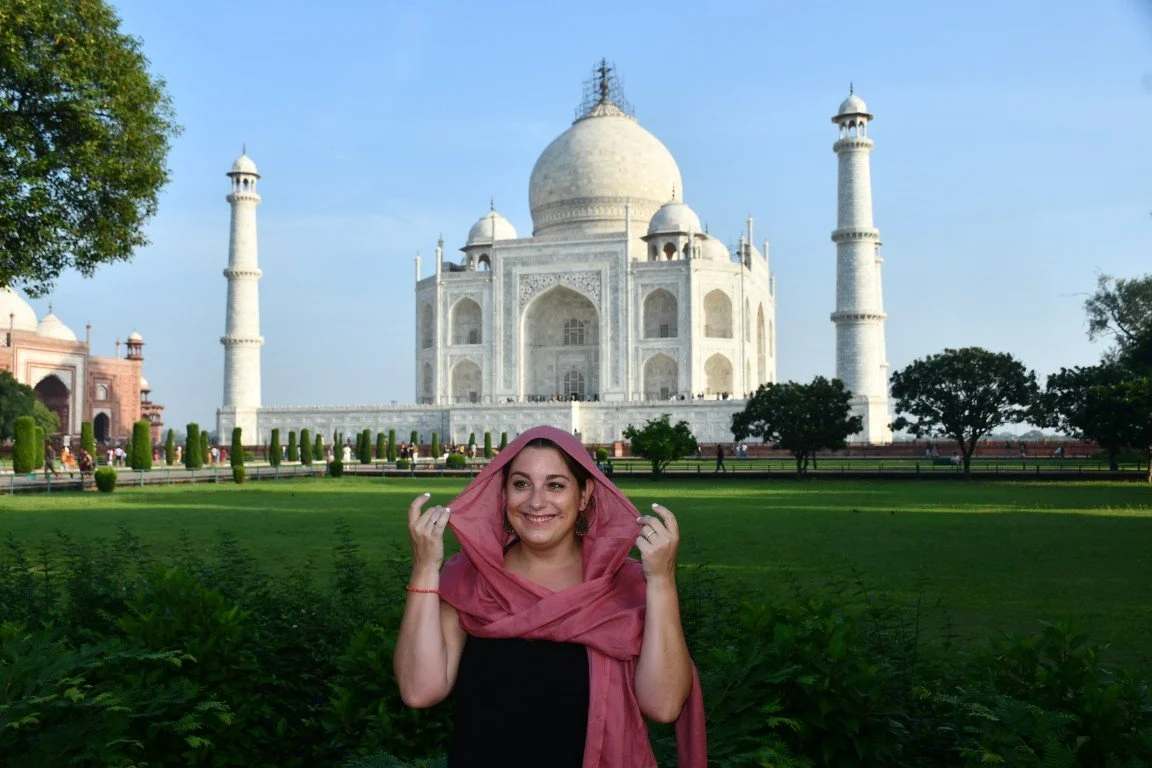
I'll be honest— India wasn't a destination that had ever been high on my bucket list. But when I received an invitation from Abercrombie & Kent, one of the world's premier luxury travel companies, it was an opportunity I couldn't pass up. Looking back, I'm so glad I said yes.
This is a longer read than usual, but there was simply no way to sum up this incredible journey any better. From breathtaking monuments and vibrant cities to meaningful cultural experiences and unforgettable moments with the people we met along the way, every part of this trip left a lasting impression.
I hope you'll grab a cup of chai and come along for the adventure.❤️

Just getting to India was an adventure. After about 20 hours of travel, including a layover in Newark and an overnight flight, I finally arrived in Delhi late that evening.
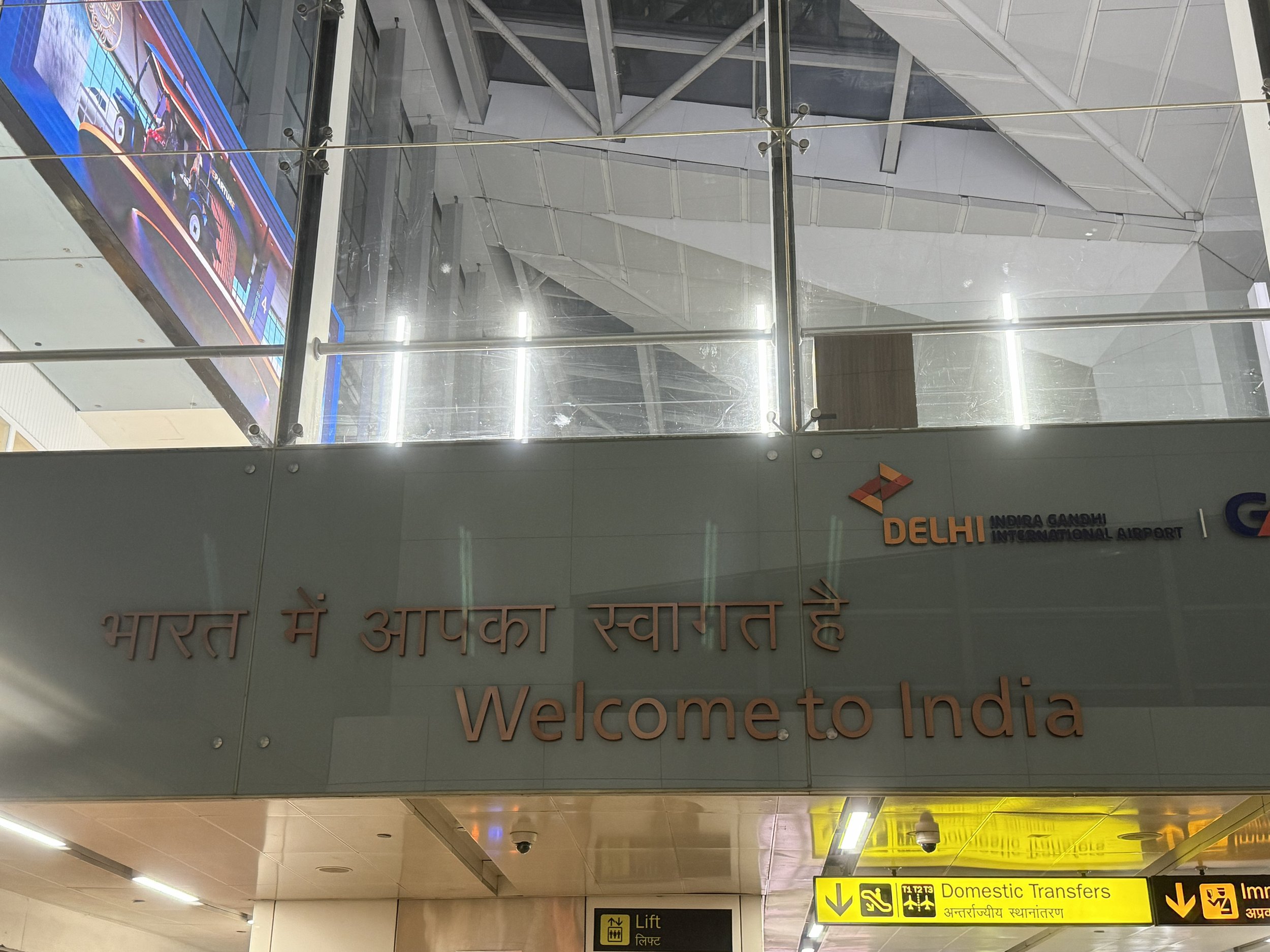
Don't forget! A valid visa is required for U.S. travelers visiting India.
As excited as I was to be there, all I wanted was a good night's sleep before waking up to experience India for the very first time.
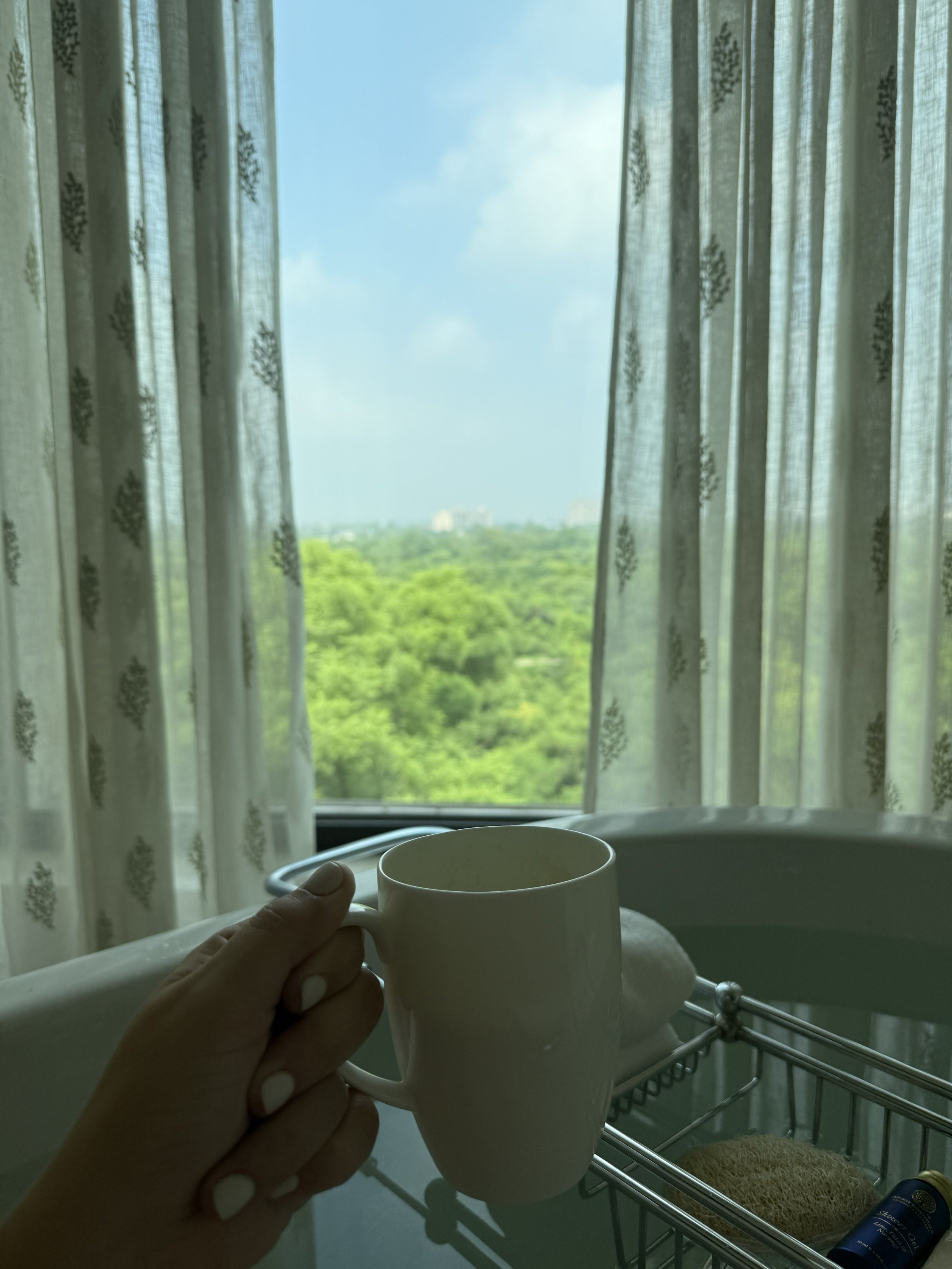
The next morning, I started my free day off slowly with a great cup of coffee and a long bath while watching kites soar past my window.
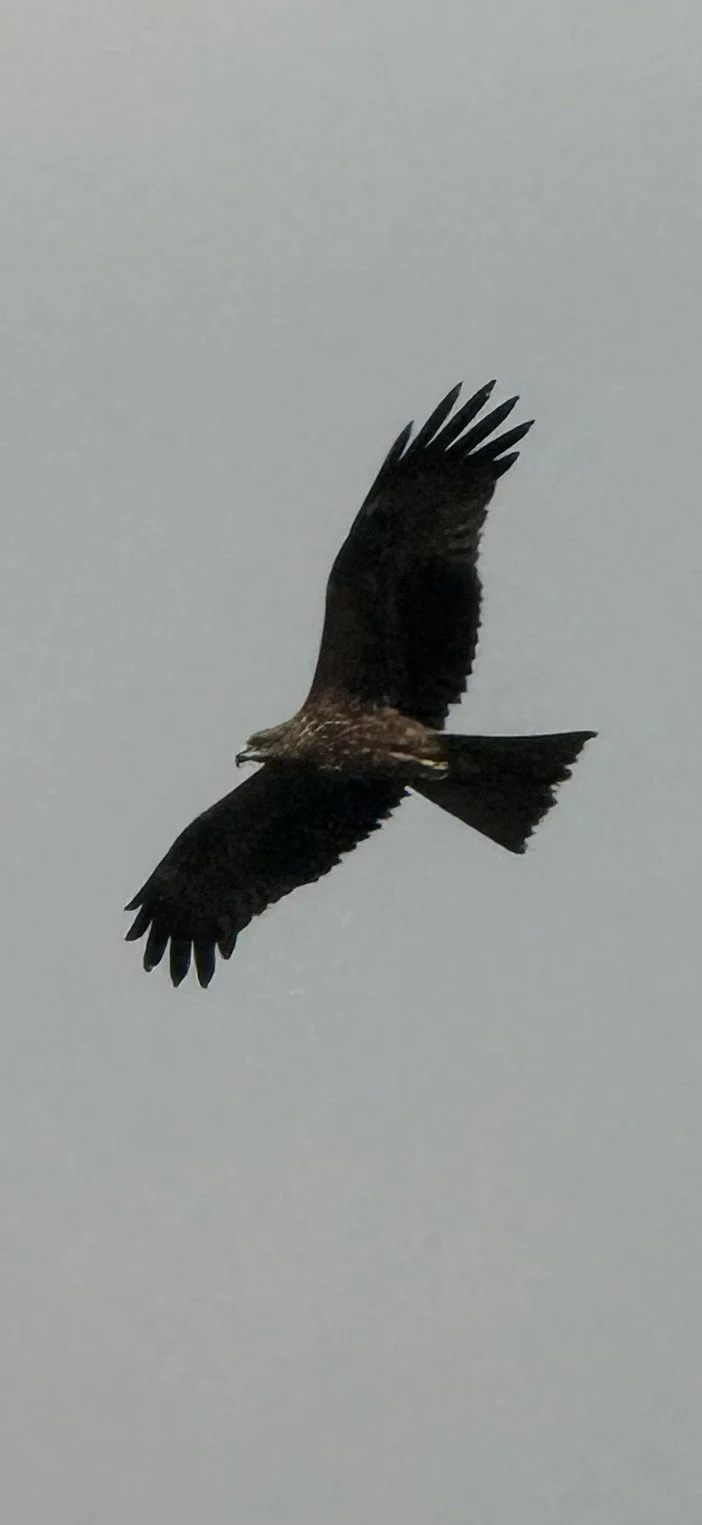
Delhi is home to one of the world's largest urban populations of Black Kites.
My room was spacious and comfortable, with large windows overlooking beautiful green spaces.
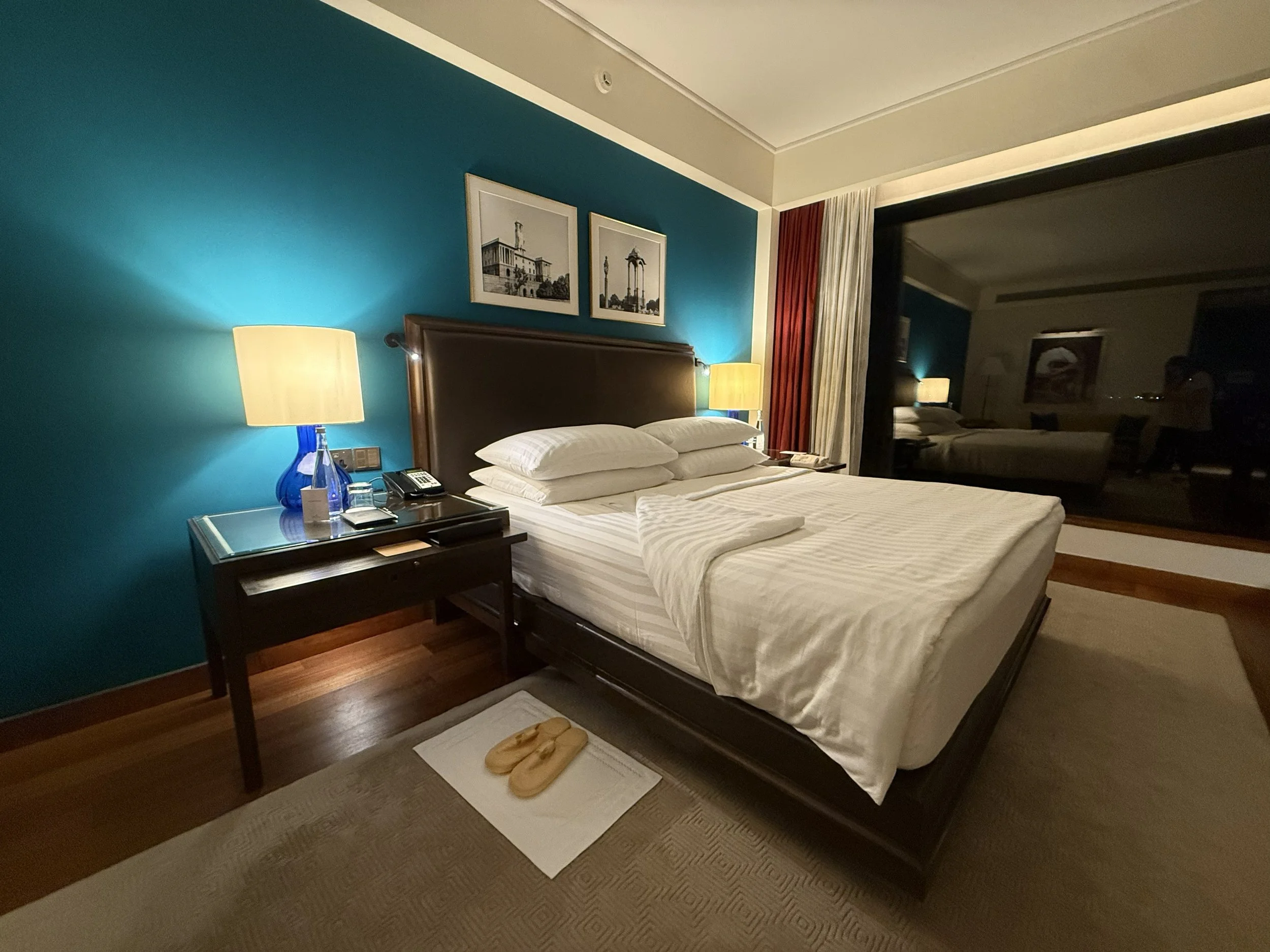
With a free day ahead, I had a delicious breakfast and wandered around the hotel, adjusting to time difference and soaking up the fact that I was finally in India! I was so glad I arrived a day early, before jumping into the action.
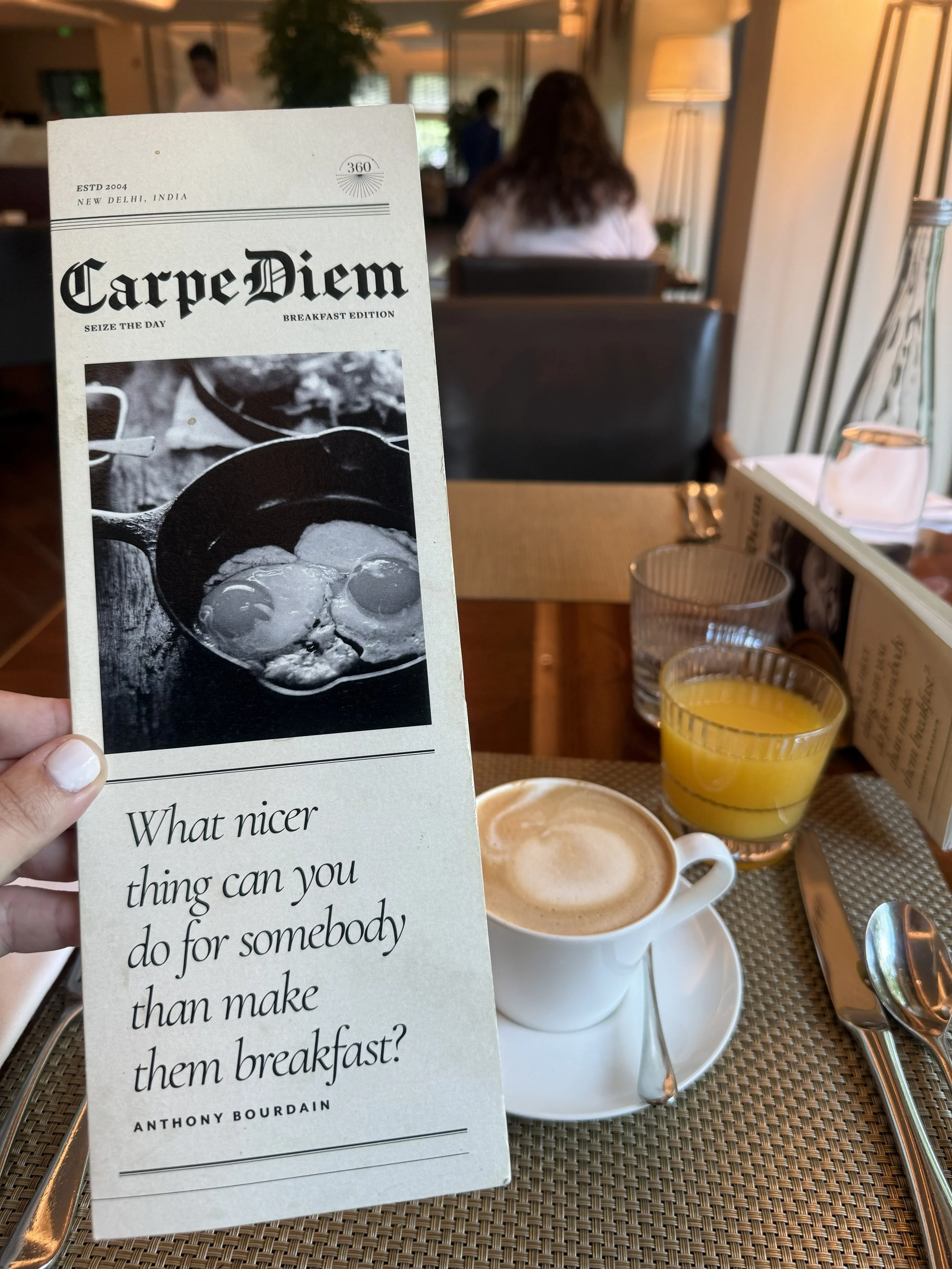
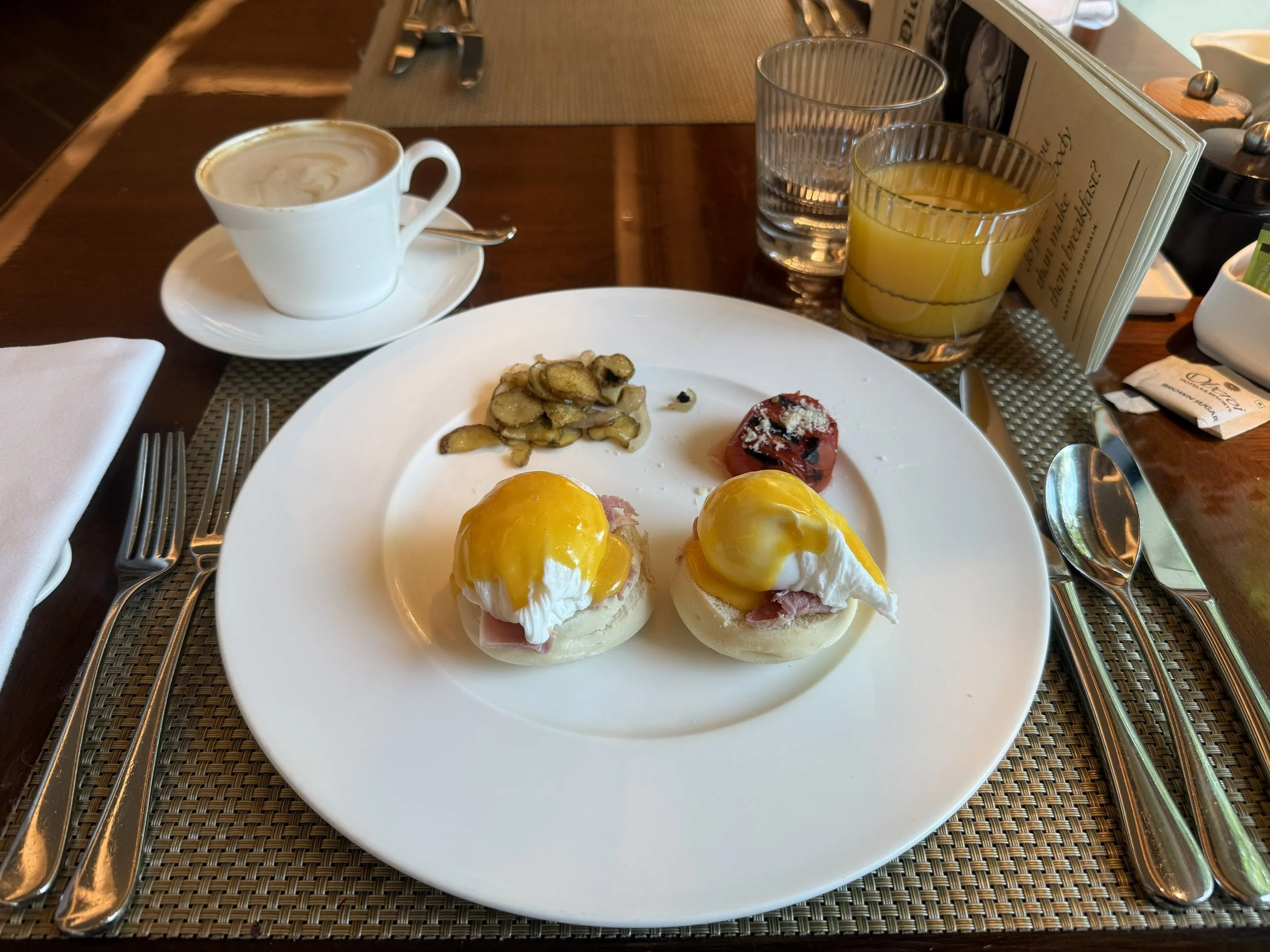
The Oberoi, New Delhi, perfectly balances modern luxury with understated elegance. It was a welcome escape from the vibrant pace of Delhi, offering beautiful gardens, exceptional dining, and the kind of personalized service that makes you feel genuinely cared for.
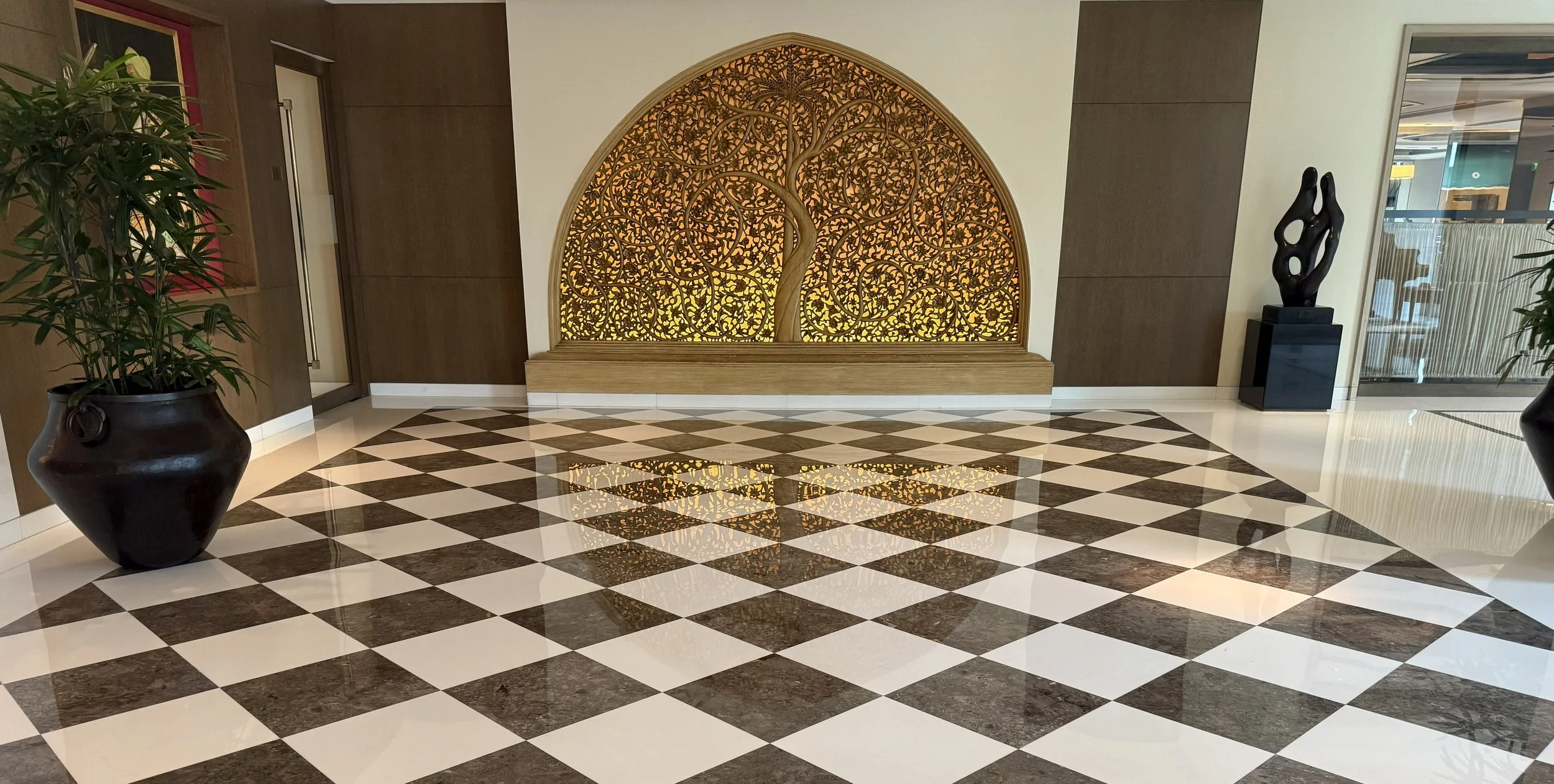
The Lobby is gorgeous!
That evening, I enjoyed dinner at one of the hotel's Asian restaurants, Baoshaun, before making my way to the rooftop bar. It just so happened to be the night of a lunar eclipse, so I settled in with a cocktail and watched the show. It was the perfect ending to my first day in India.

The next morning, I met the rest of our group before heading to our first stop—a Sikh temple. I had never visited one before, so I wasn't quite sure what to expect. It was fascinating to learn about the Sikh faith and traditions and get a glimpse into a part of India's culture that was completely new to me.
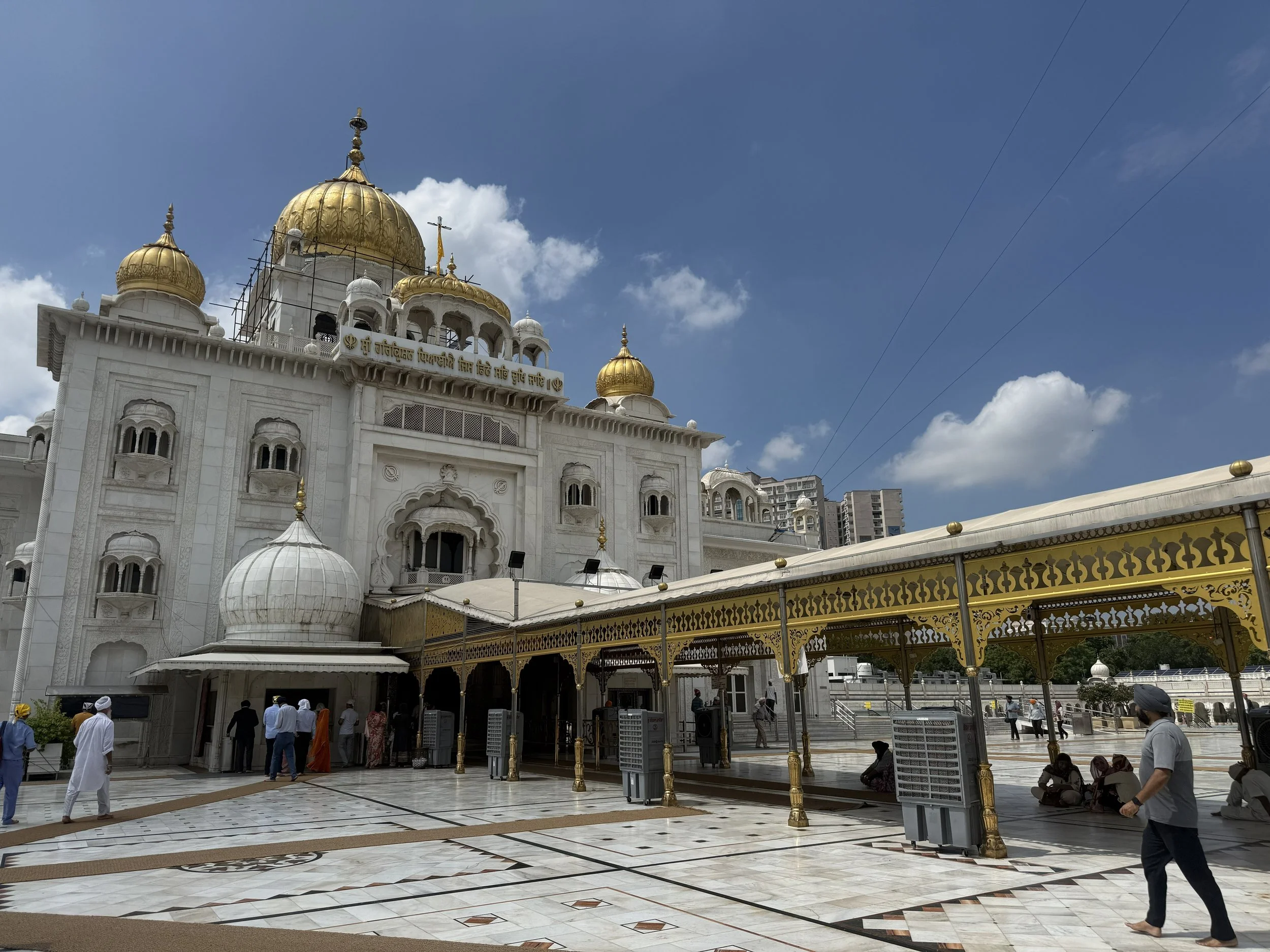
Gurudwara Bangla Sahib is one of the most important Sikh temples in India and welcomes visitors of all faiths.
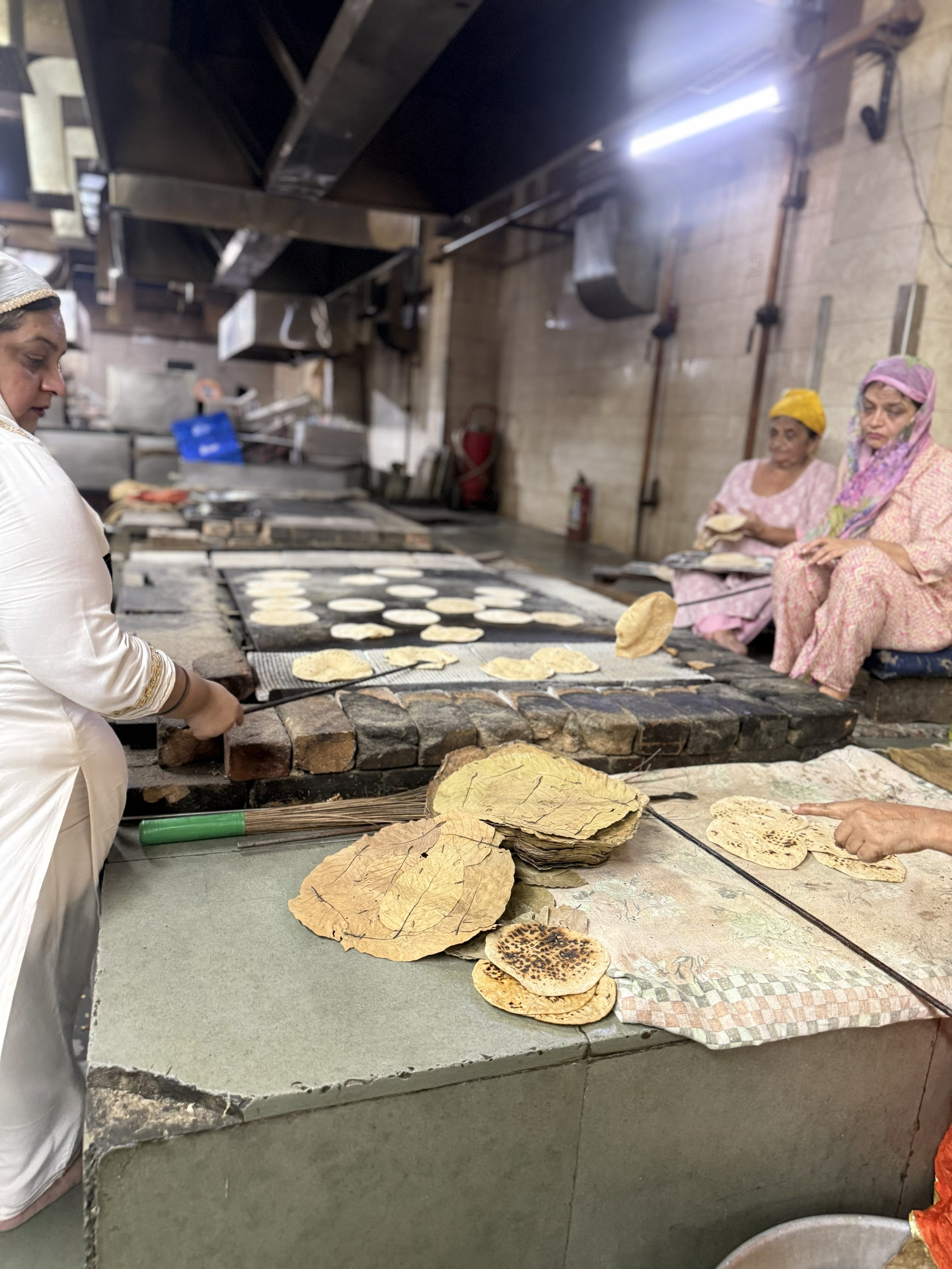
One of the most incredible parts was visiting the community kitchen, where volunteers prepare and serve free vegetarian meals to anyone who walks through the doors—regardless of religion, background, or income.
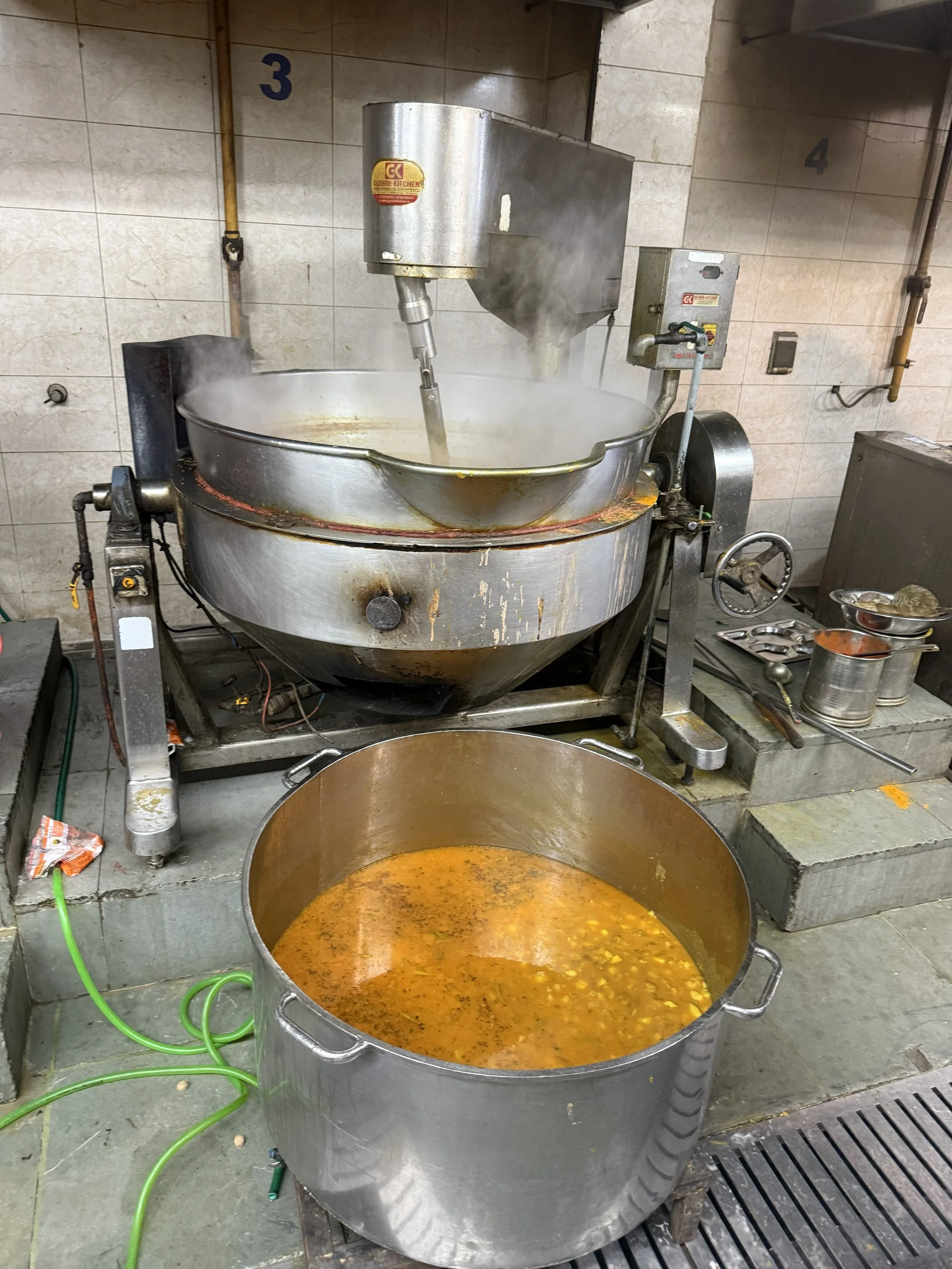
The entire kitchen is funded by donations and run by volunteers, serving tens of thousands of free meals every single day. Watching it all come together was incredible. The scale of the operation was impressive, but what really stood out was the generosity behind it.
Next, we visited Jama Masjid, a red sandstone mosque in the heart of Delhi. It was definitely beautiful and worth seeing, but if I'm being honest, it was my least favorite stop. Between the intense heat, constantly being approached by people asking for money and by locals wanting photos with us (which made it feel more overwhelming than enjoyable) and not being able to enter certain areas as a woman, it was hard to fully appreciate.
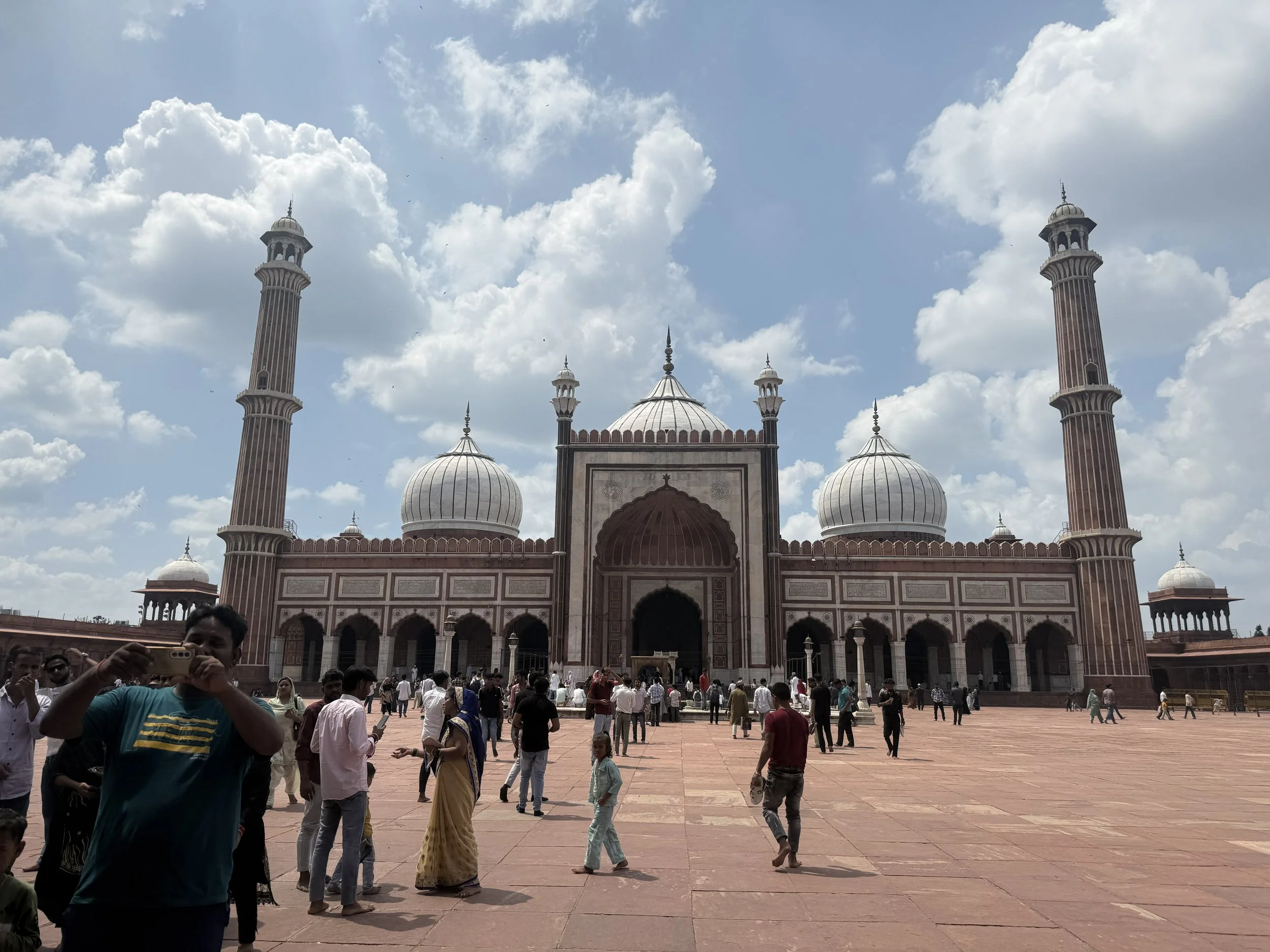
Completed in 1656, Jama Masjid is one of the largest and most famous mosques in India.
From there, we climbed aboard bicycle rickshaws and wound our way through the busy streets of Old Delhi.
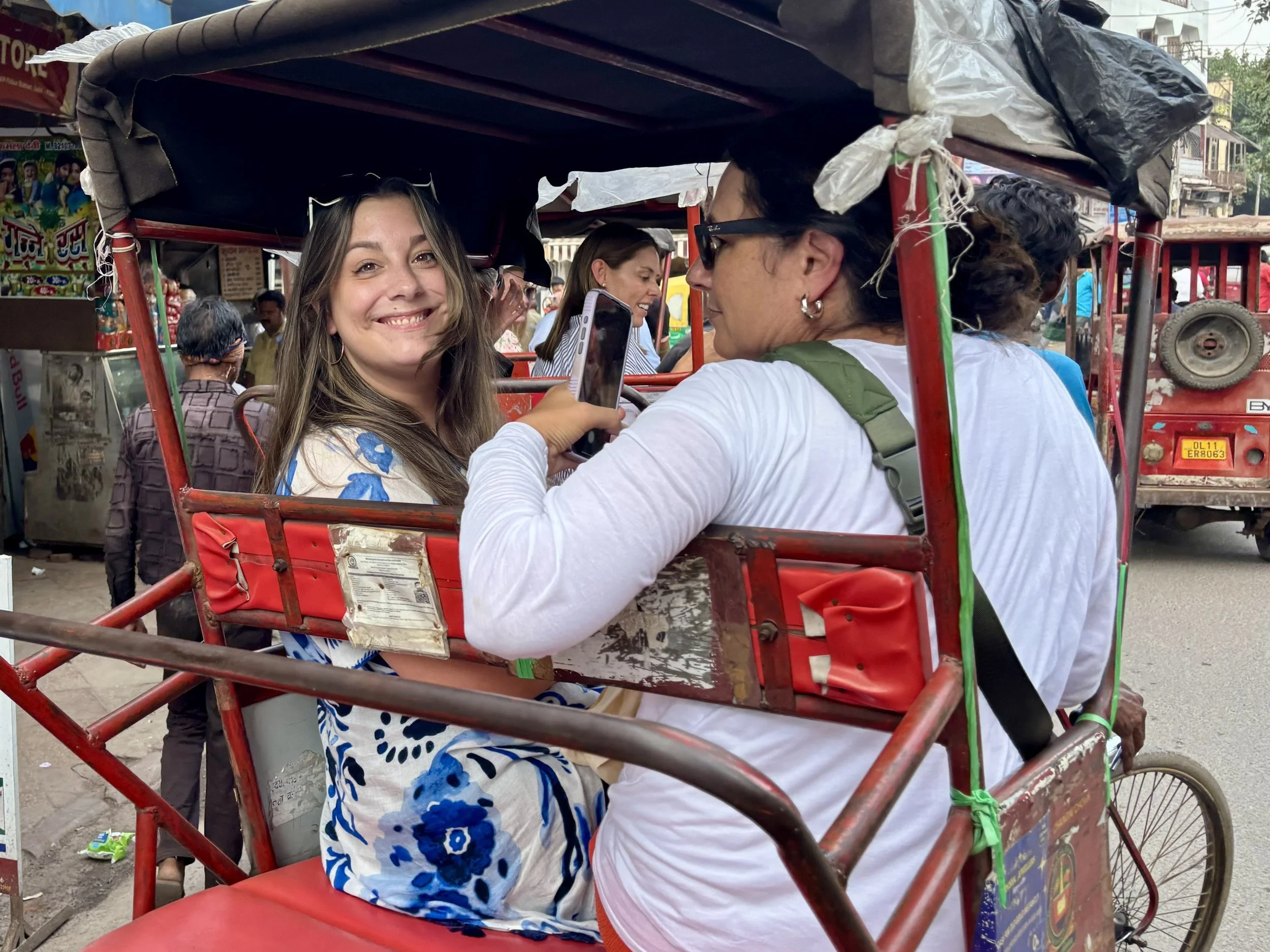
Cycle rickshaws have been a staple of Old Delhi's streets for more than a century. Estimates place the total number between 500,000 and 600,000 in Delhi alone!
Before long, we were weaving through the narrow market lanes, passing vendors selling just about everything imaginable. It was loud, busy, chaotic, and unlike anything I'd ever experienced.
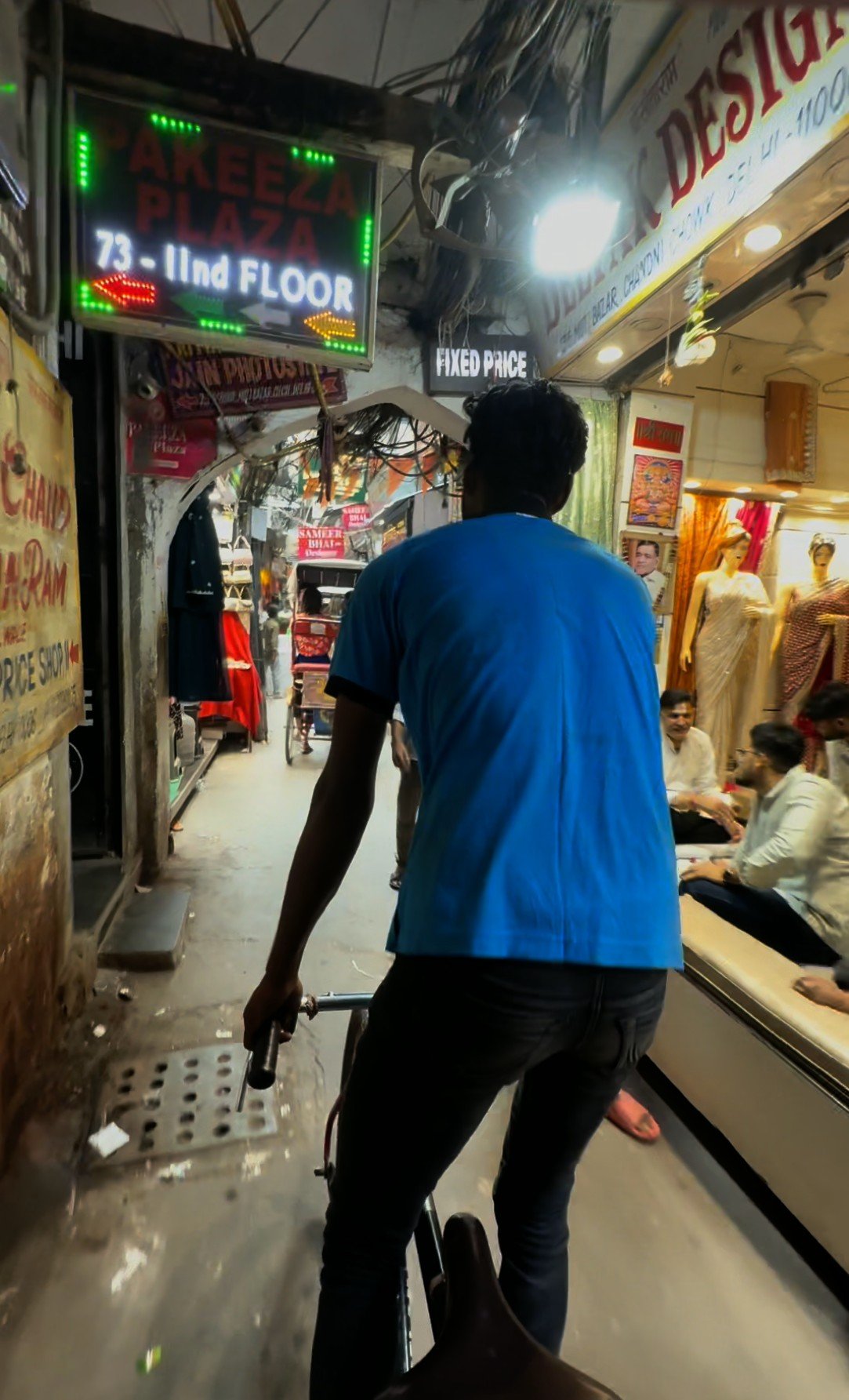
By lunchtime, we were more than ready for a break. We stopped at a beautifully restored heritage hotel for a traditional multi-course Indian lunch.
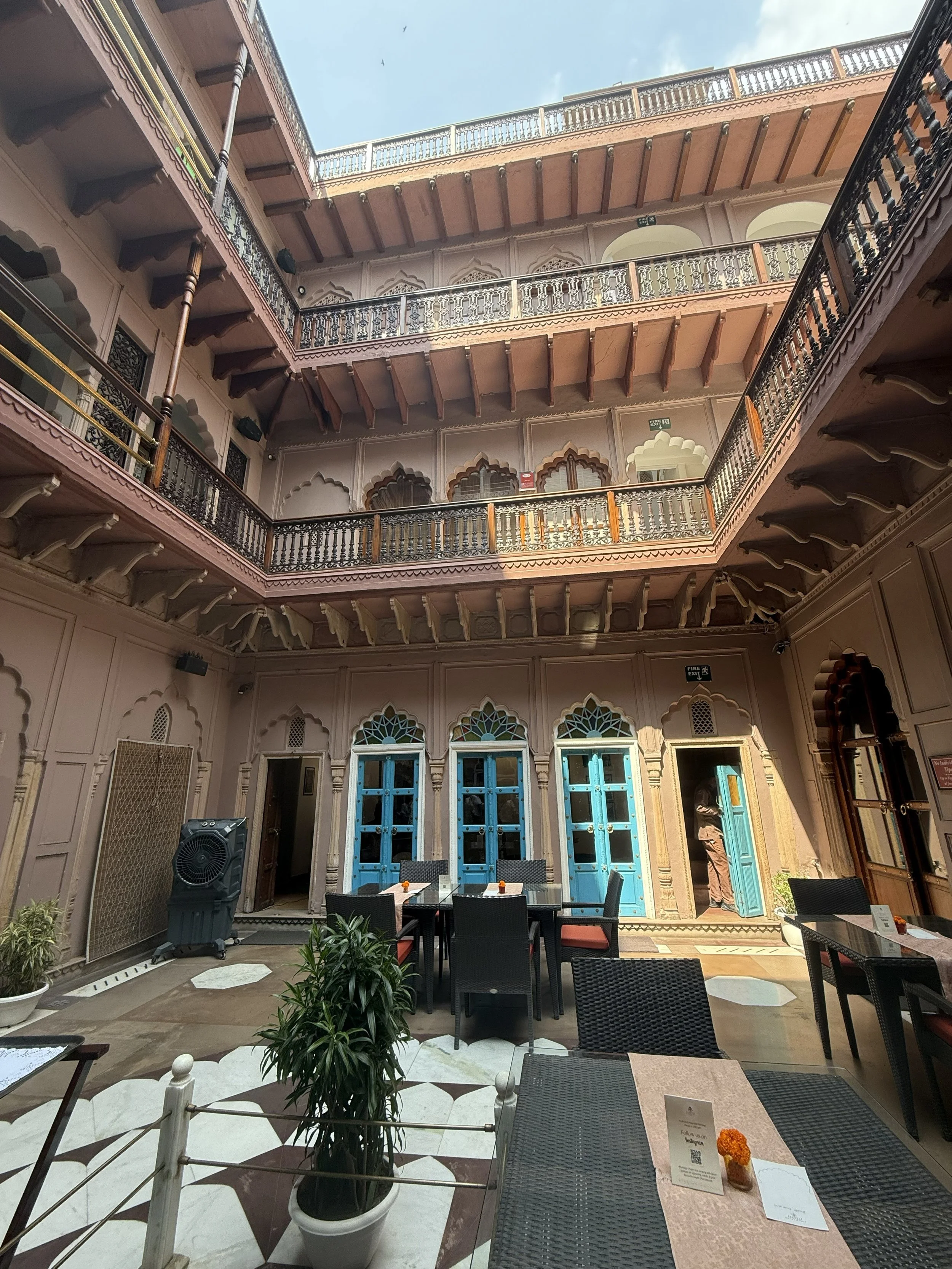
The Haveli Dharampura is one of the few heritage mansions in Old Delhi to be meticulously restored and transformed into a luxury hotel.
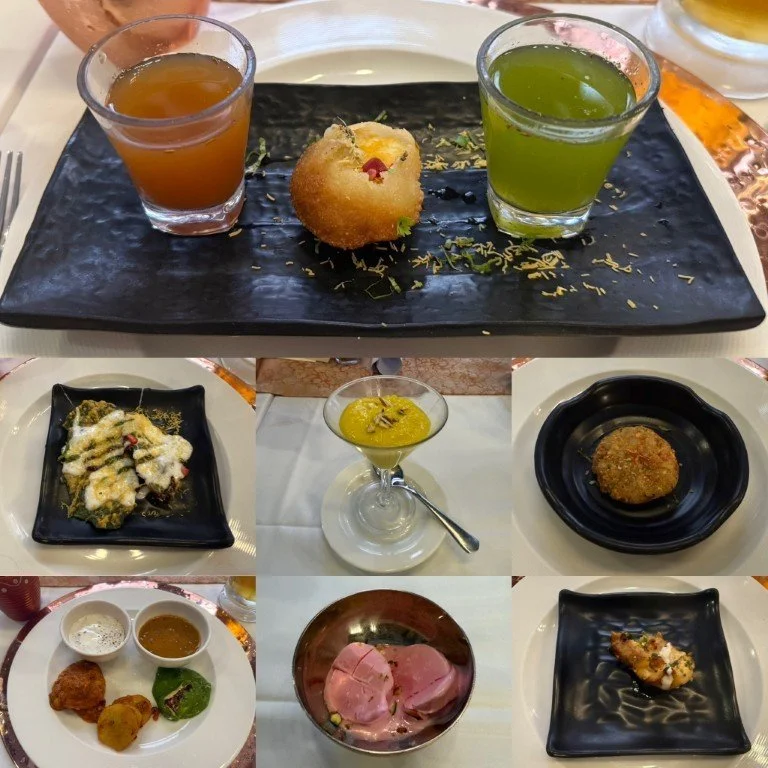
The meal included authentic Indian dishes, from fresh naan and roti to creamy lentils, tikka masala chicken, and vegetable dishes. Dessert was homemade rose ice cream—a unique treat that was a first for me.
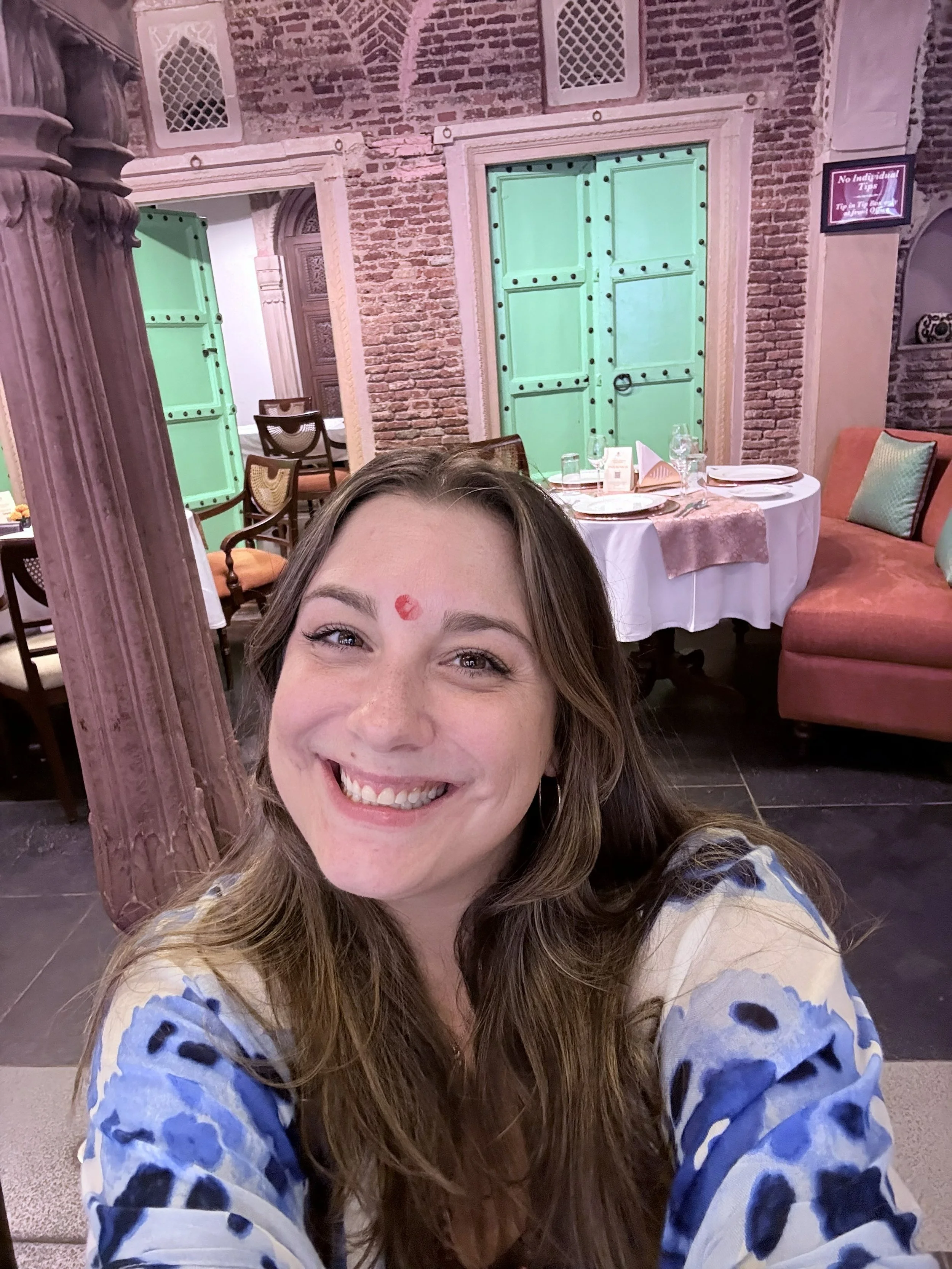
Indian hotels and restaurants give you a red dot, called a tilak or bindi, on your forehead as a traditional welcome. This custom shows deep respect to guests.
After lunch, we toured the property, a beautifully restored 19th-century haveli that has received a UNESCO Award of Merit for its restoration.
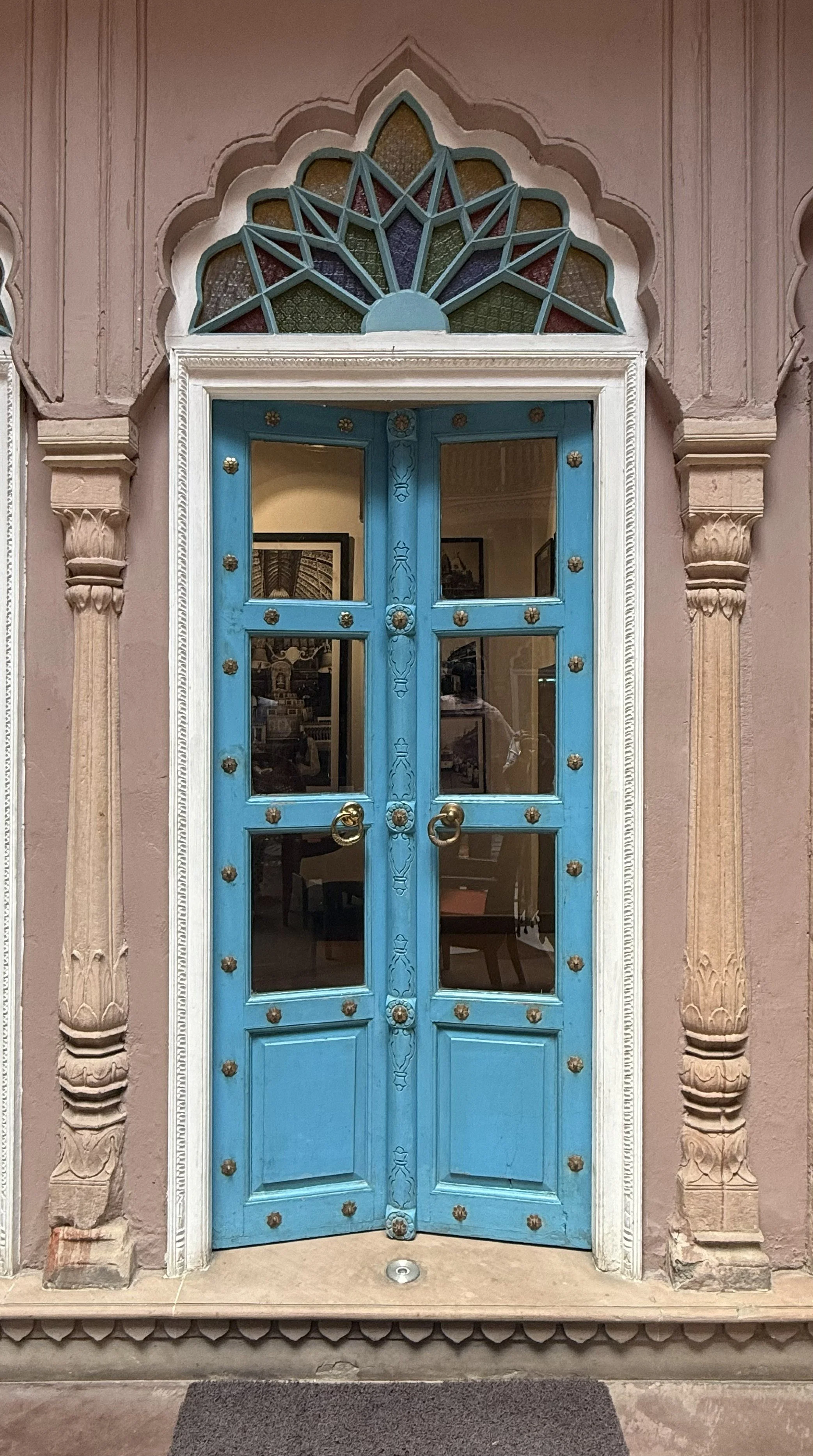
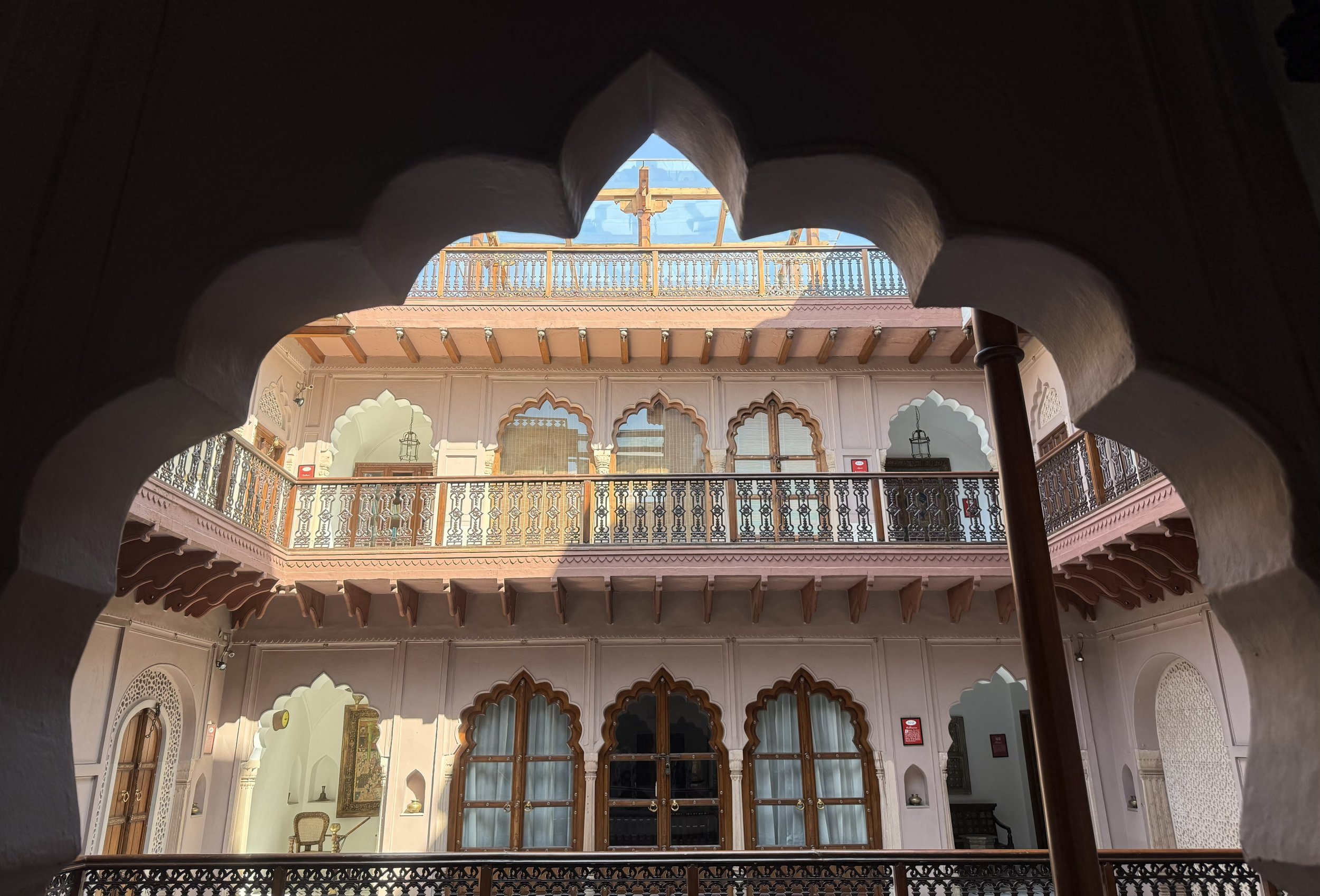
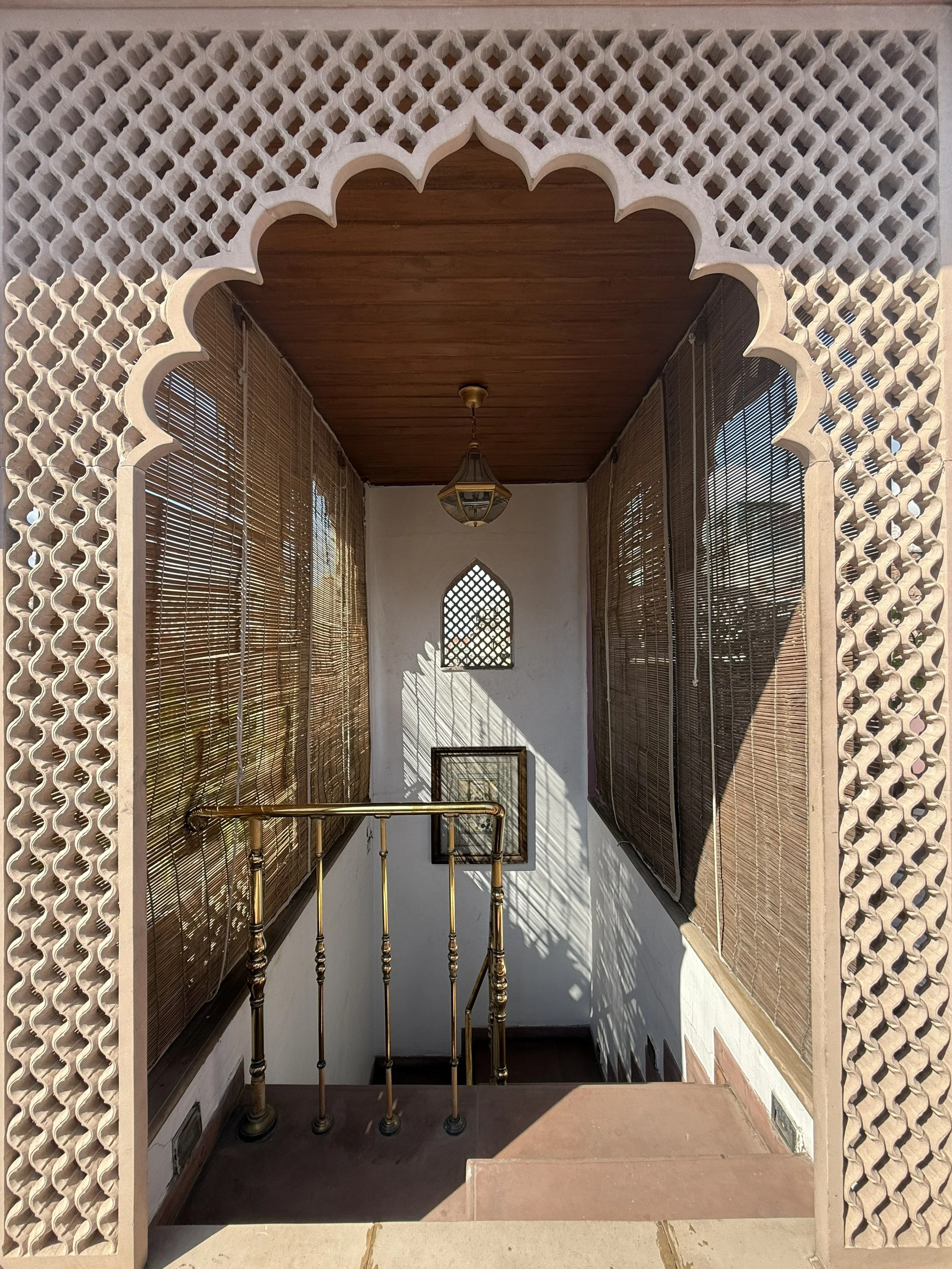
Its architecture showcases traditional Mughal design, with intricate carvings, colorful stained glass, and elegant courtyards.
Our next stop was a demonstration on how hand-knotted Kashmiri silk rugs are made. Watching artisans tie every single knot by hand was incredible. Some rugs take months—or even years—to complete.
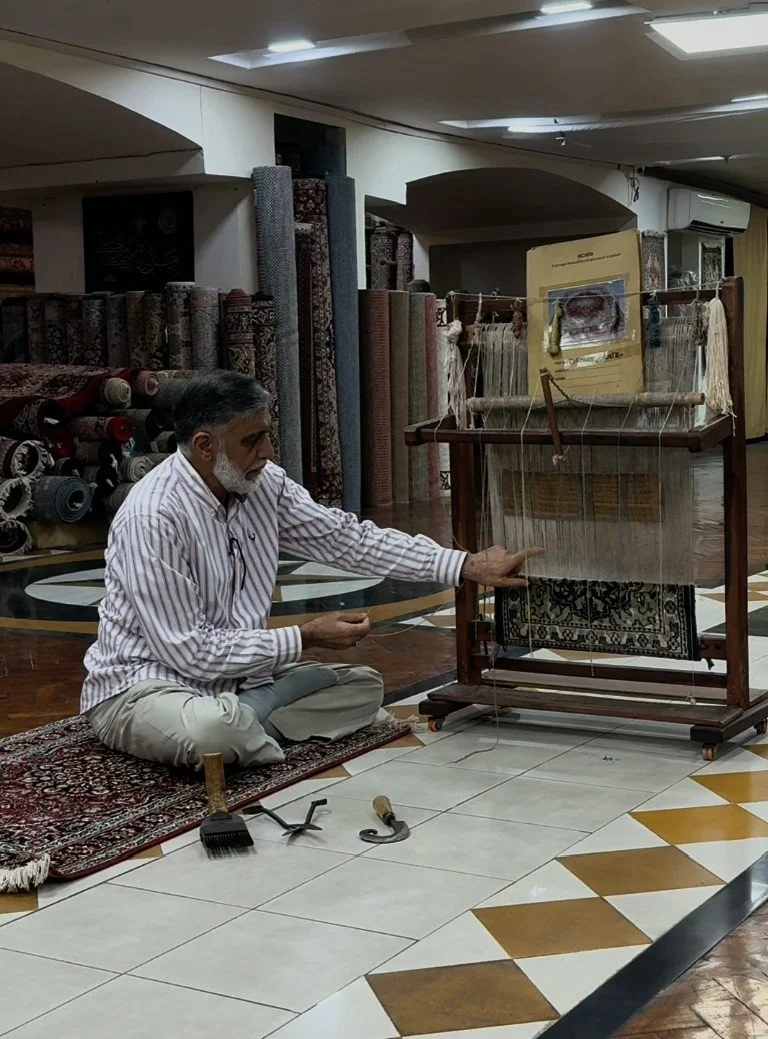
I even found one I absolutely loved... until I saw the $4,500+ price tag! It was beautiful, but it stayed in India.
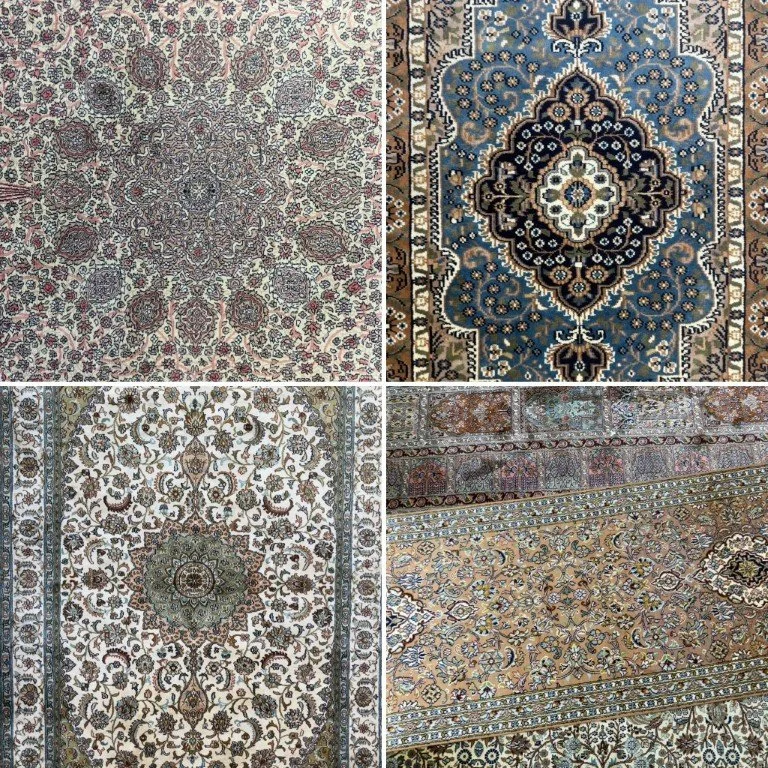
Prices can range from a few thousand dollars to well over six figures depending on the size, materials, and craftsmanship. Once I saw how every single knot is tied by hand, I had a whole new appreciation for them.
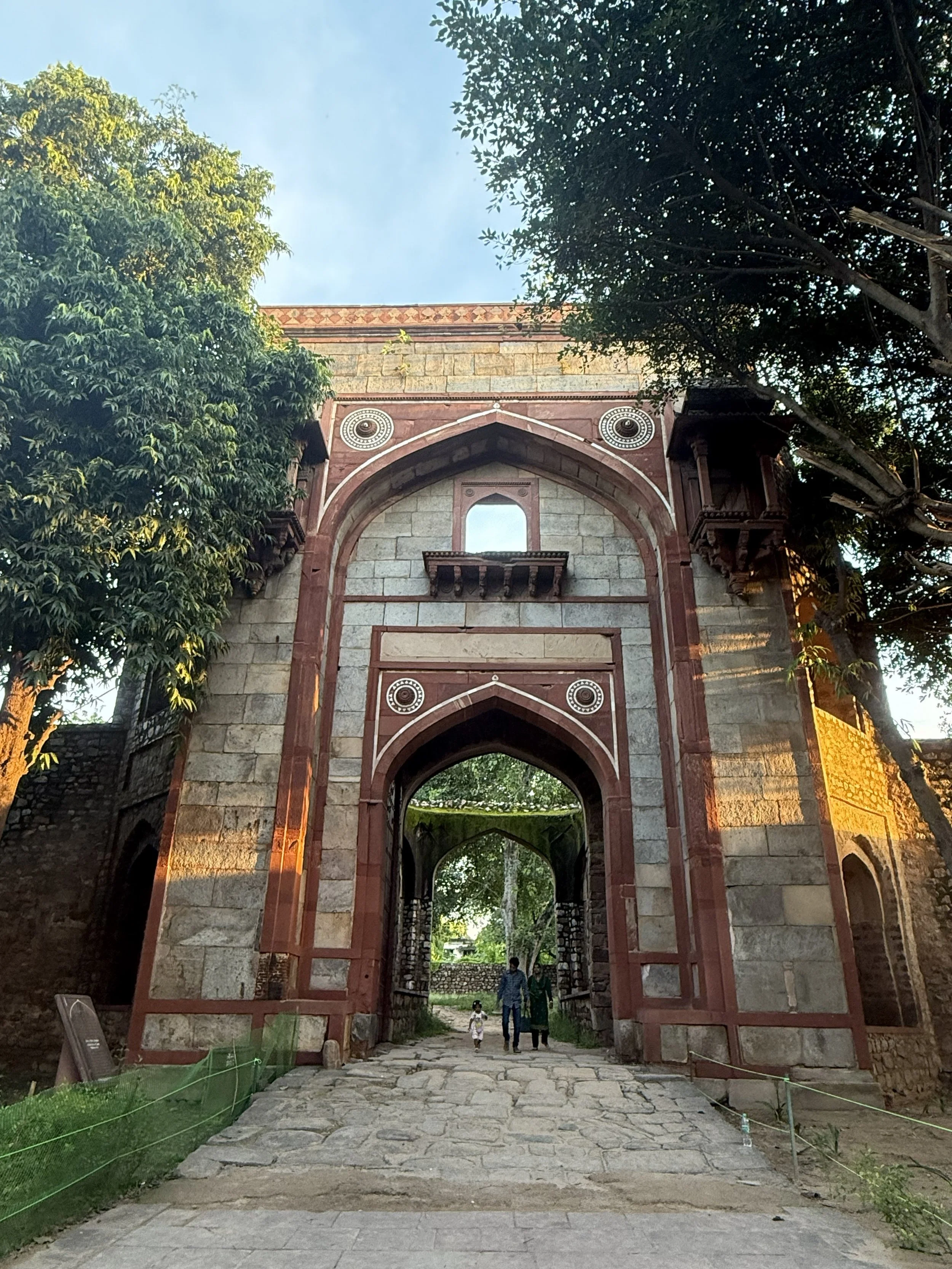
Completed in 1570, Humayun's Tomb was the first grand garden tomb built on the Indian subcontinent.
Our last stop of the day was Humayun's Tomb. Arriving just before sunset made all the difference. The golden light brought out the rich reds and warm amber tones of the sandstone. It was so beautiful!
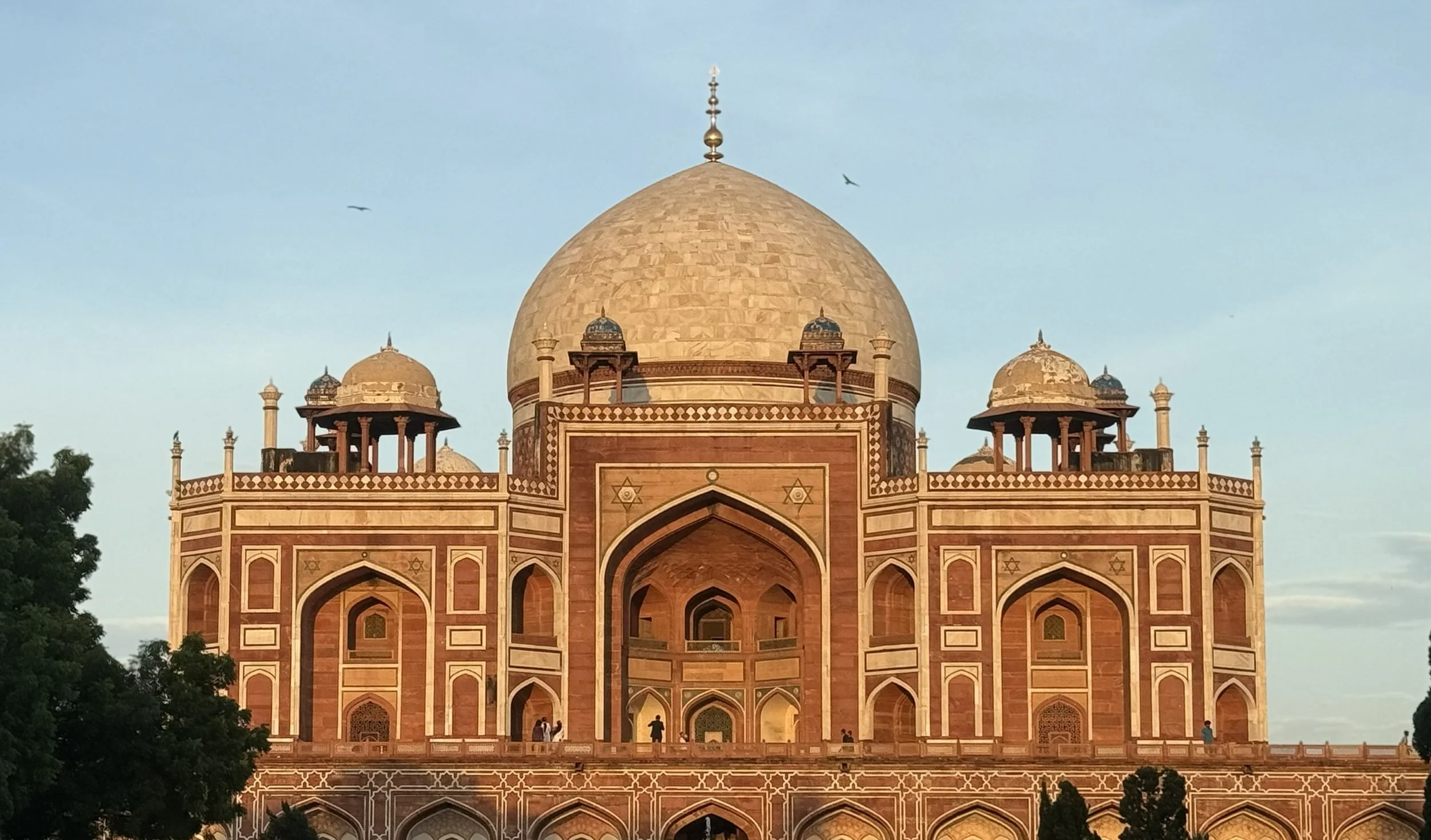
This UNESCO World Heritage Site inspired the design of the Taj Mahal nearly 70 years later.
By the end of day one, I was completely exhausted—but in the best way. It had been a whirlwind of history, culture, incredible food, and experiences, and I couldn't wait to see what the rest of India had in store.
The next morning, after breakfast, we said goodbye to Delhi and made the three-and-a-half-hour drive to Agra. The journey was smooth, and before long, we were checking into The Oberoi Amarvilas.
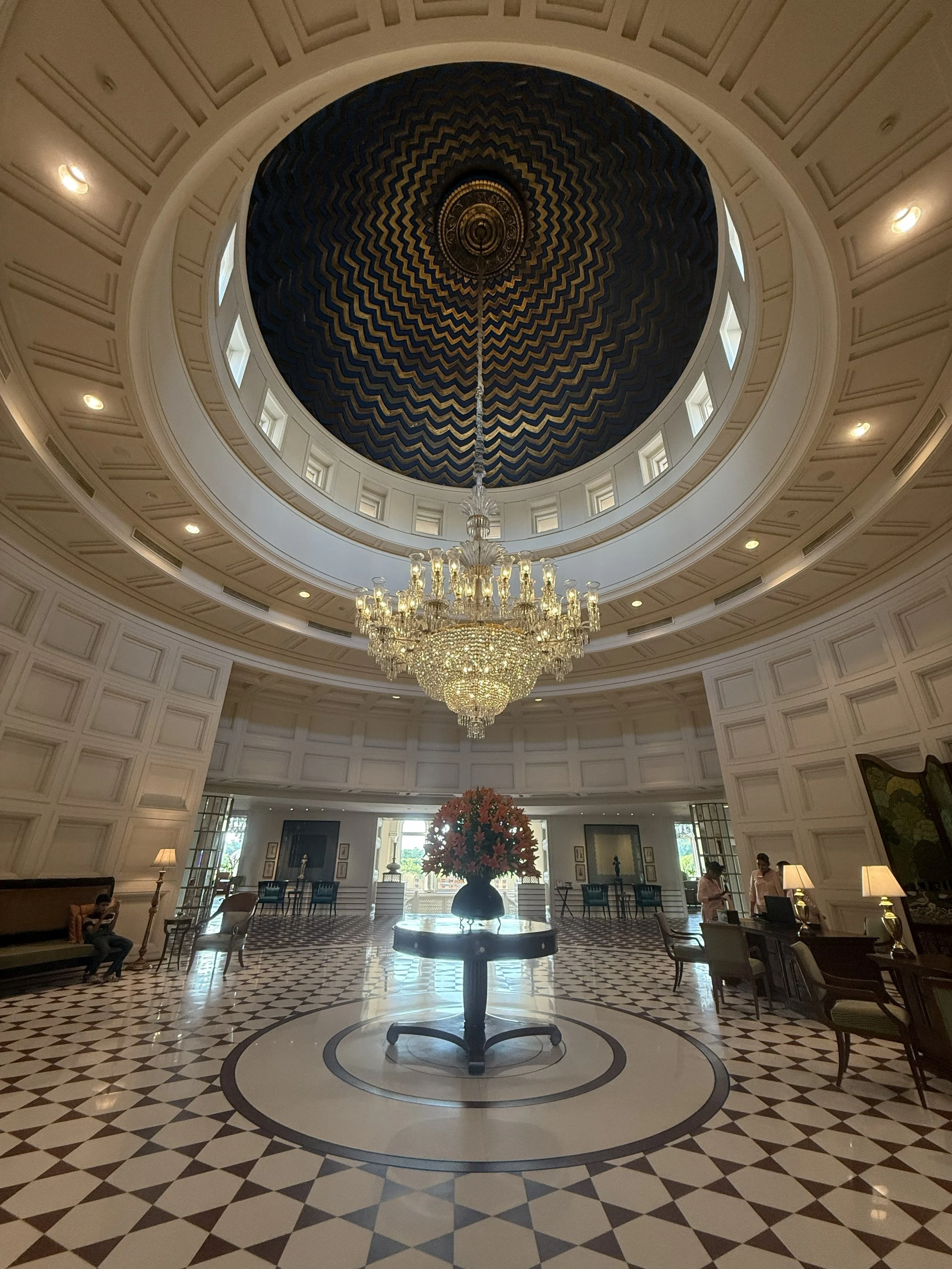
From the moment we arrived, I was blown away. The property is absolutely breathtaking!
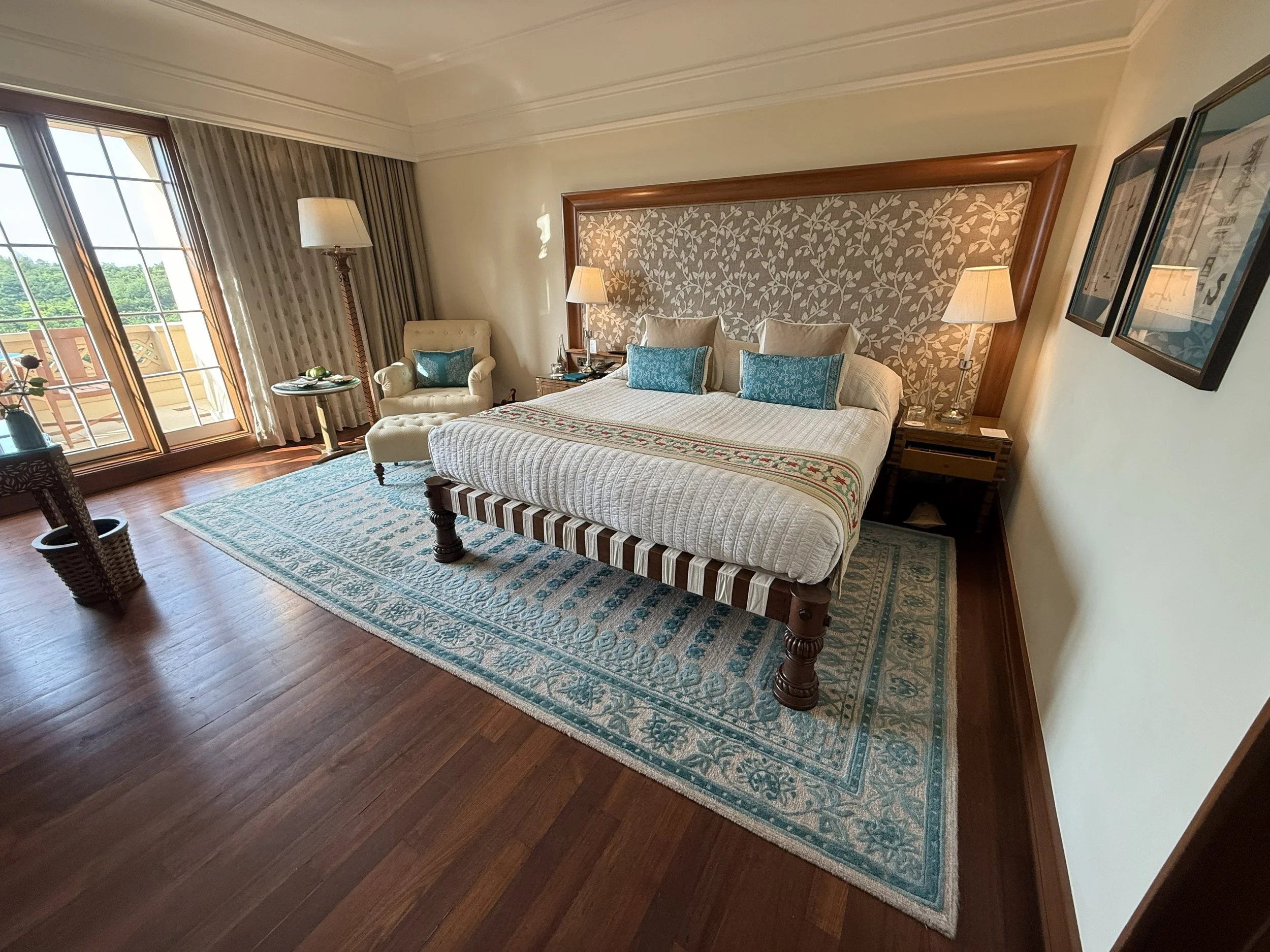
As beautiful as my room was, nothing could top the view from my balcony... the Taj Mahal. Seeing one of the Seven Wonders of the World from my own room was unreal!
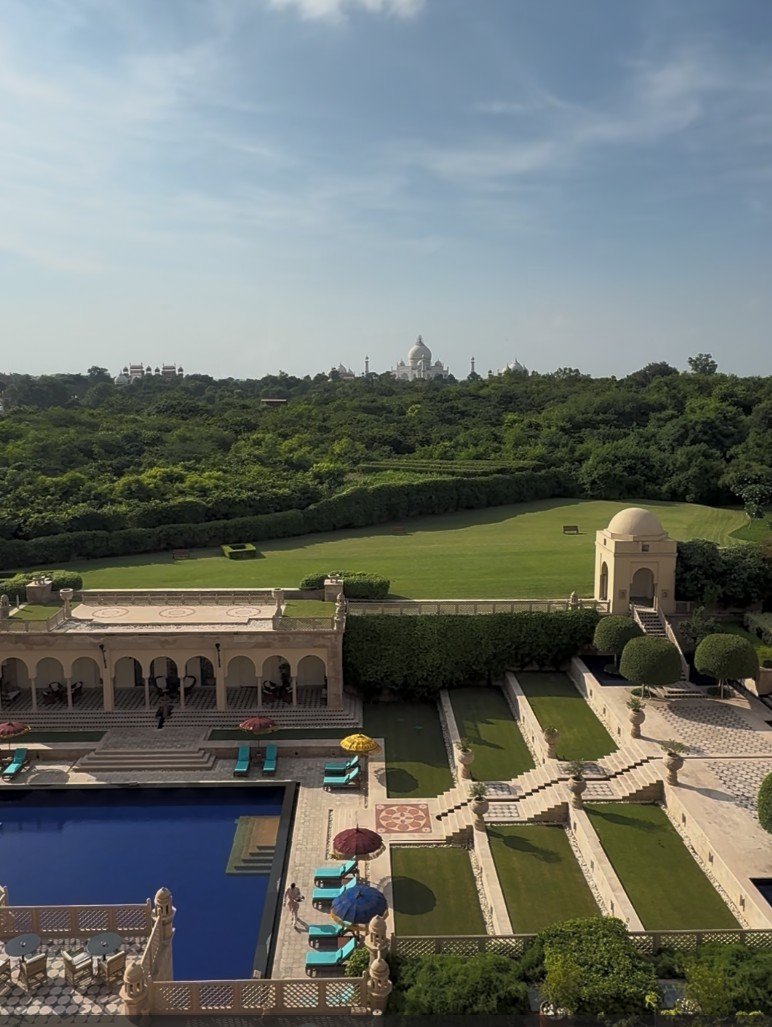
After checking in and a quick outfit change, it was finally time to see the Taj Mahal at sunset.
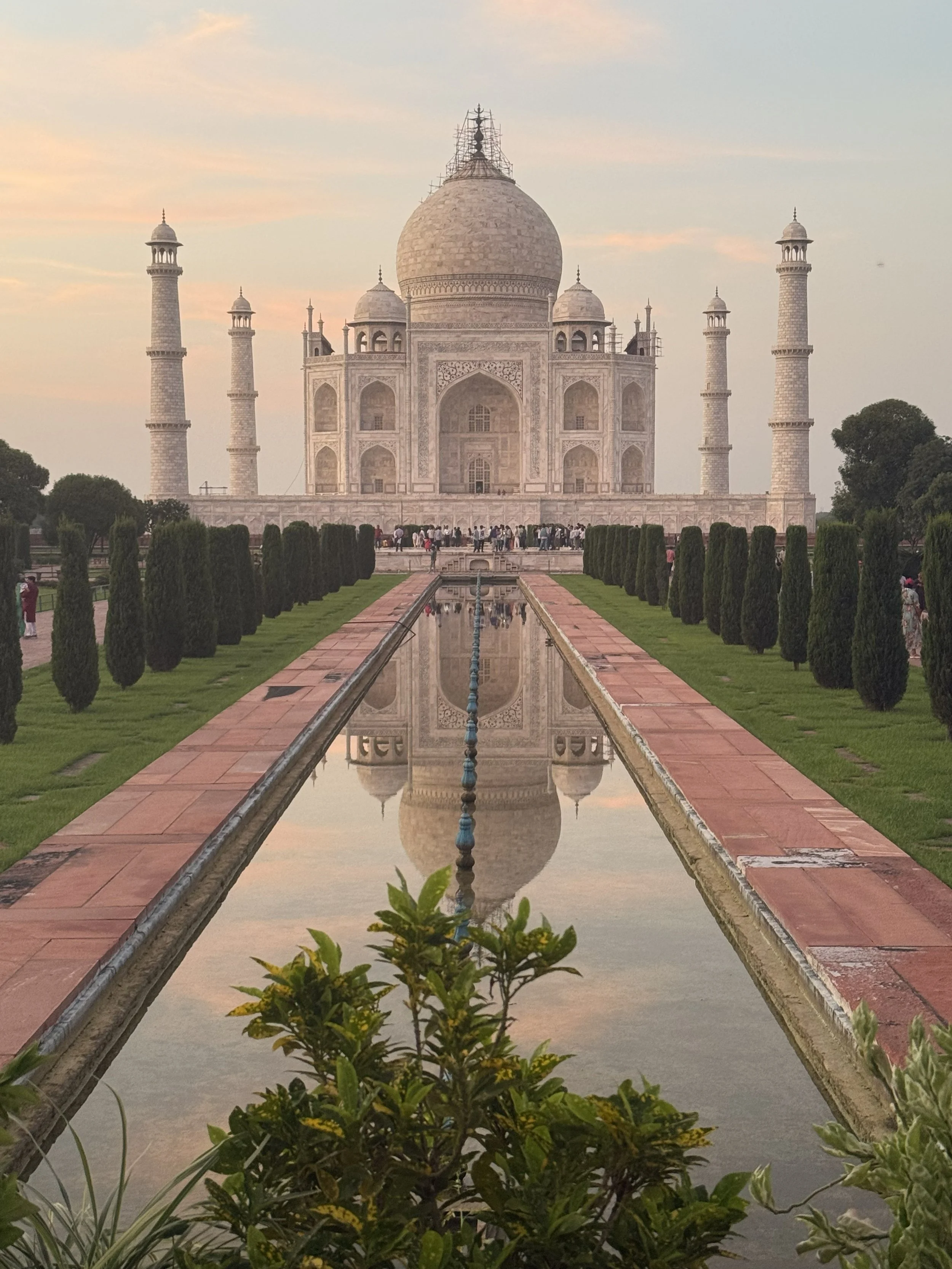
Built between 1632 and 1653, the Taj Mahal was commissioned by Emperor Shah Jahan in memory of his beloved wife, Mumtaz Mahal. The monument is made from white Makrana marble, which changes color throughout the day depending on the light.
Abercrombie & Kent had arranged a private photographer, however it was absolutely sweltering and I'm pretty sure I was one degree away from passing out.
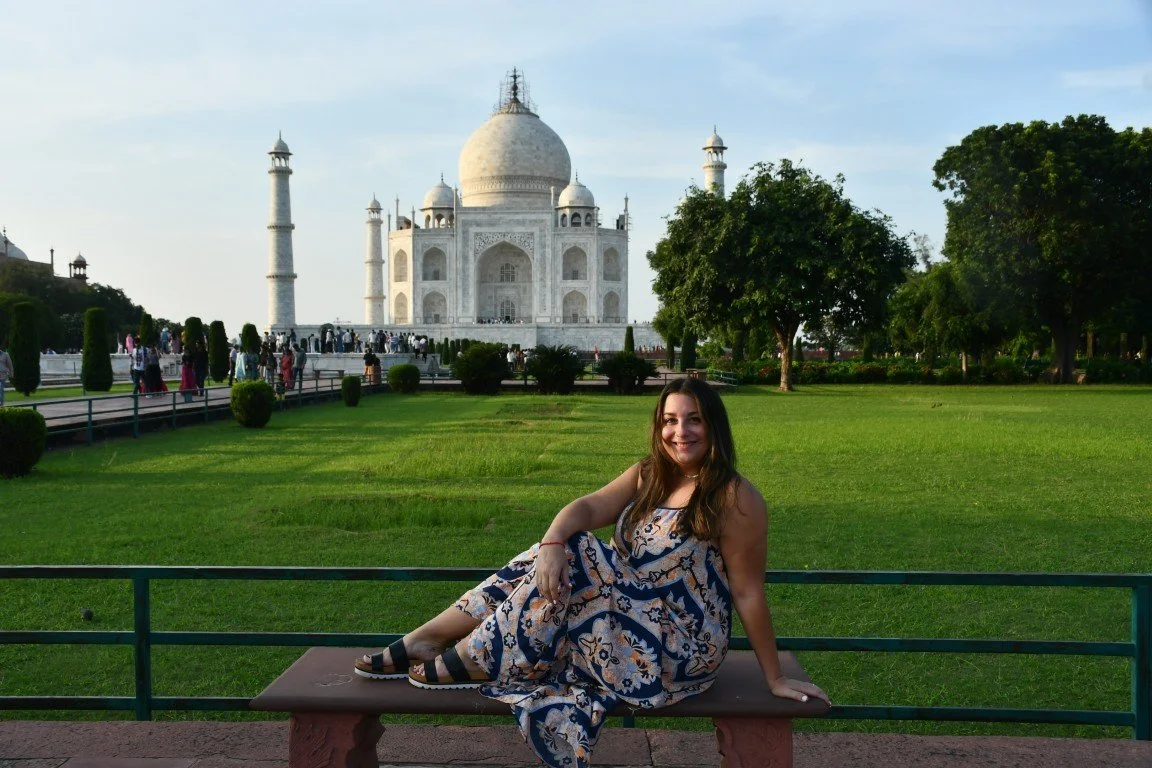
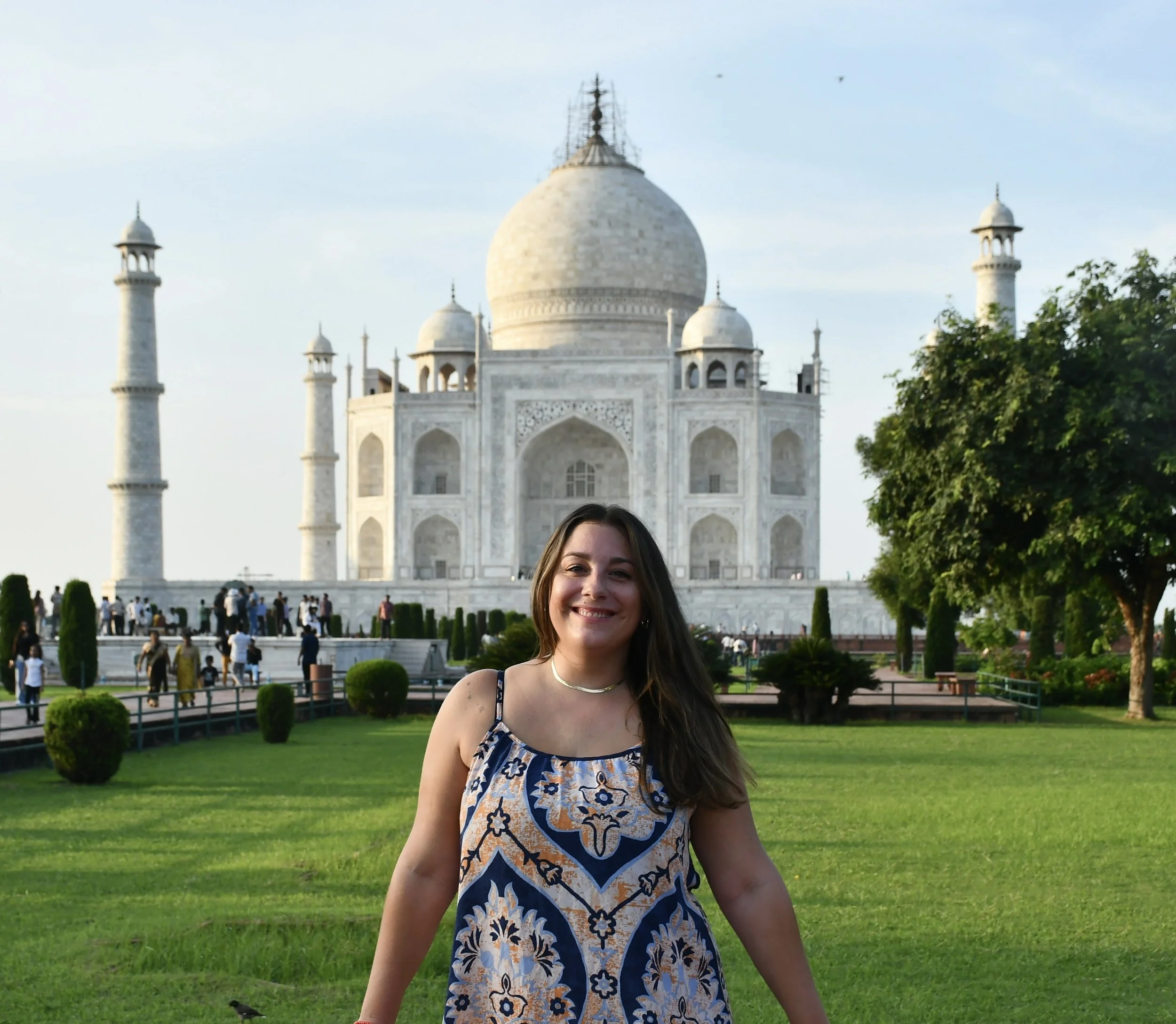
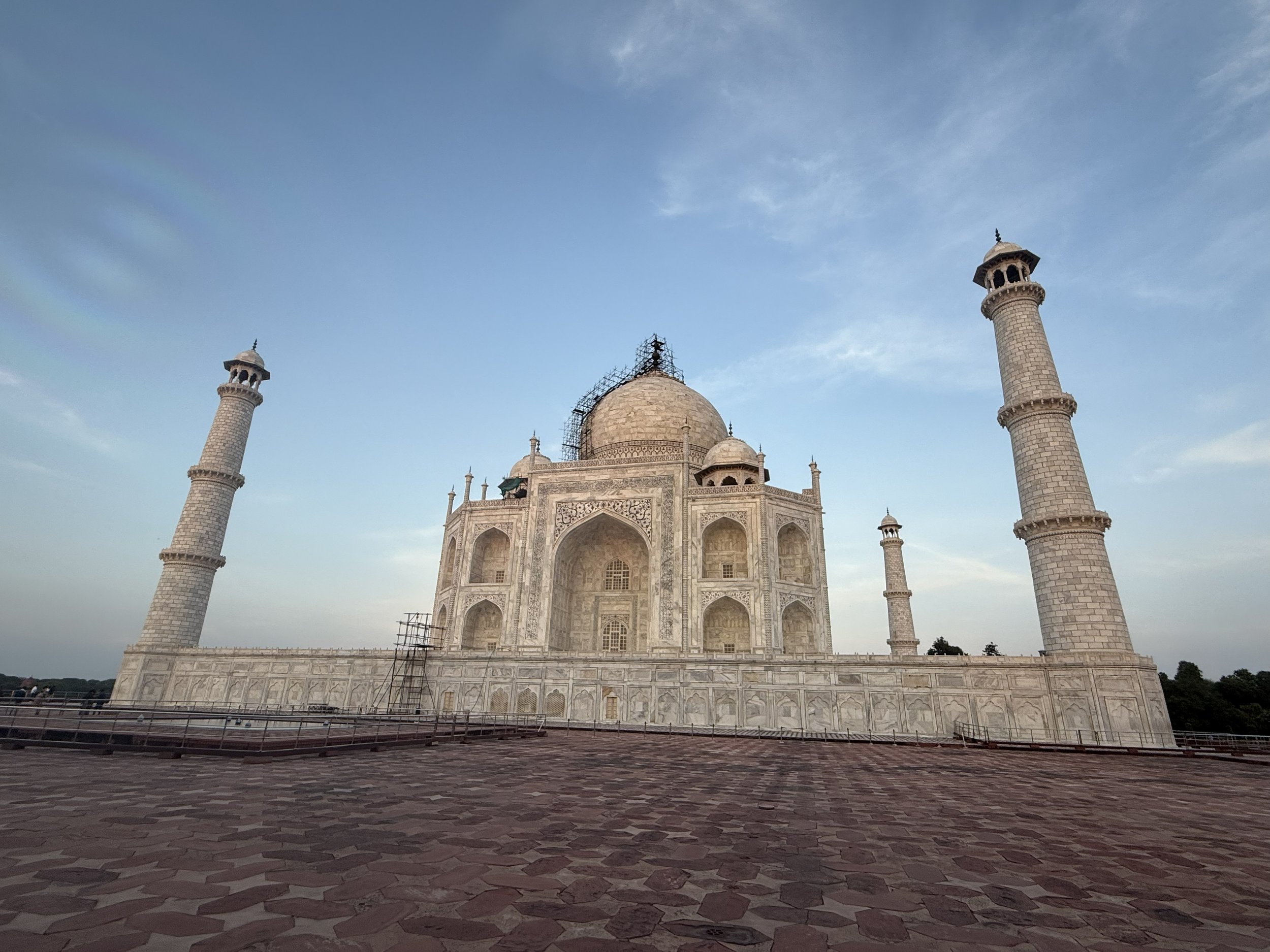
The four minarets surrounding the mausoleum were intentionally built with a slight outward lean to help protect the main tomb in the event of an earthquake.
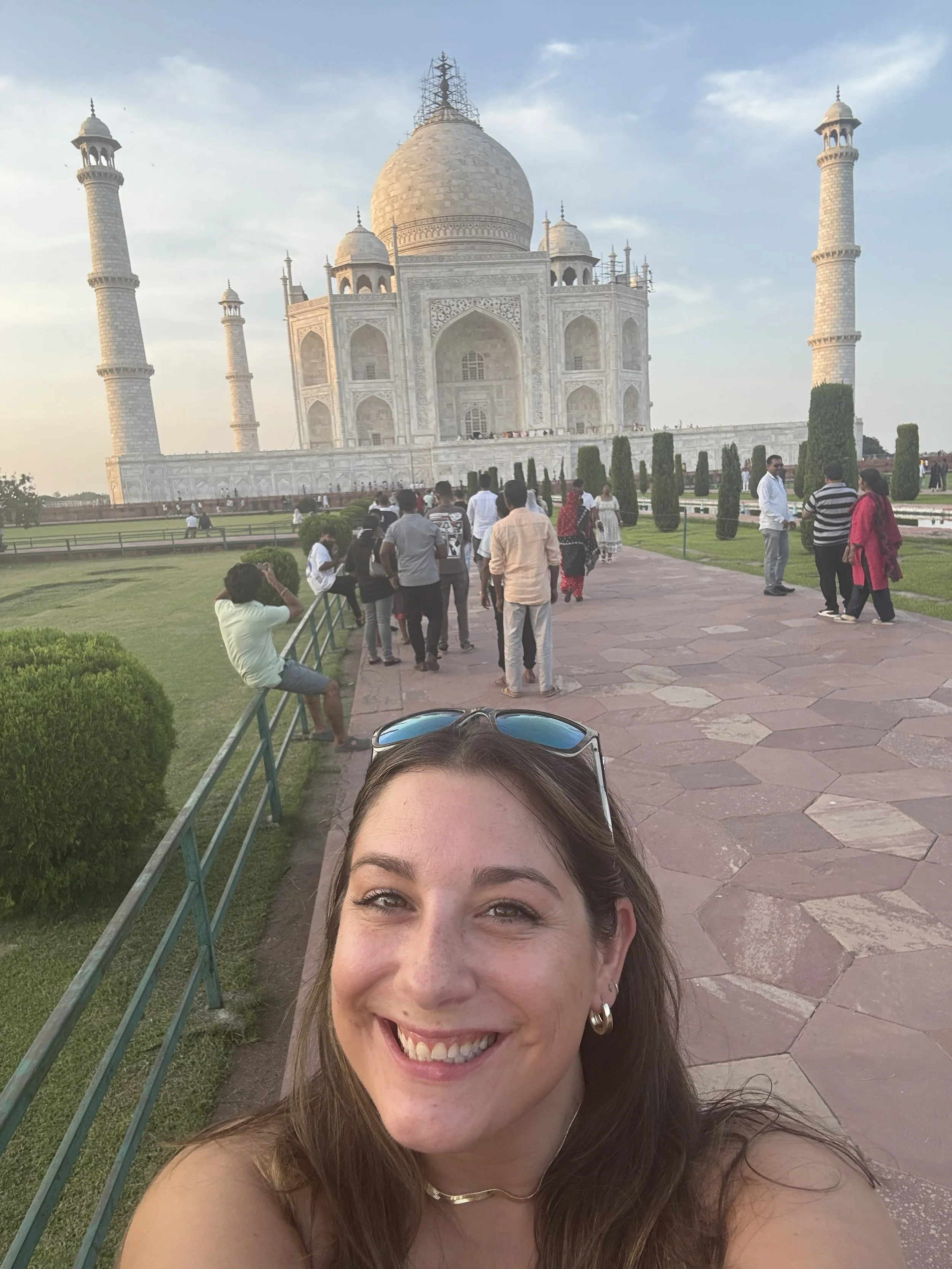
The Taj Mahal welcomes more than 6 million visitors each year, making it India's most visited monument.
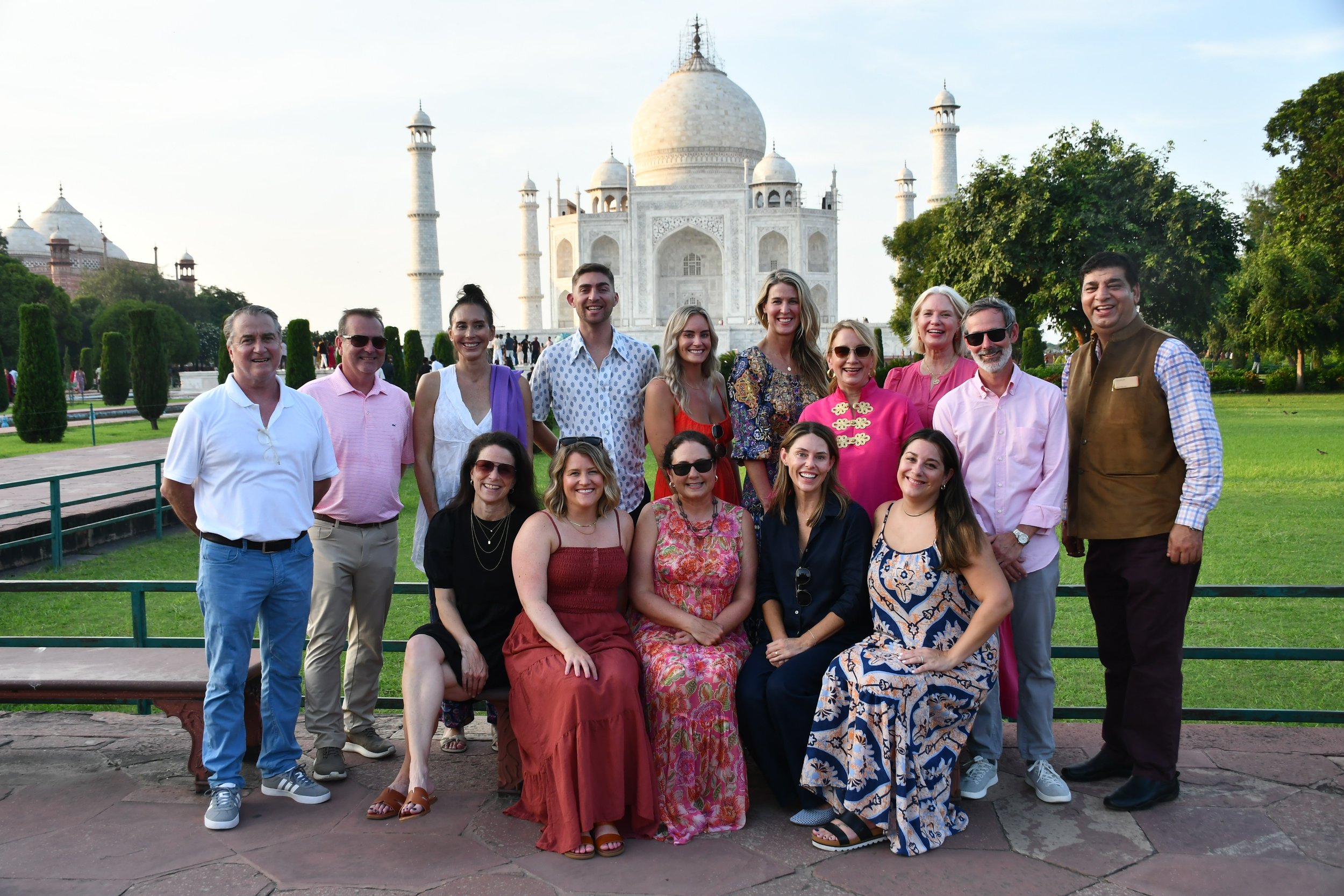
Our group!
Once back at the hotel, our group gathered for another wonderful dinner, followed by a few cocktails in the bar. Before calling it a night, I took the opportunity to explore the beautifully illuminated grounds.
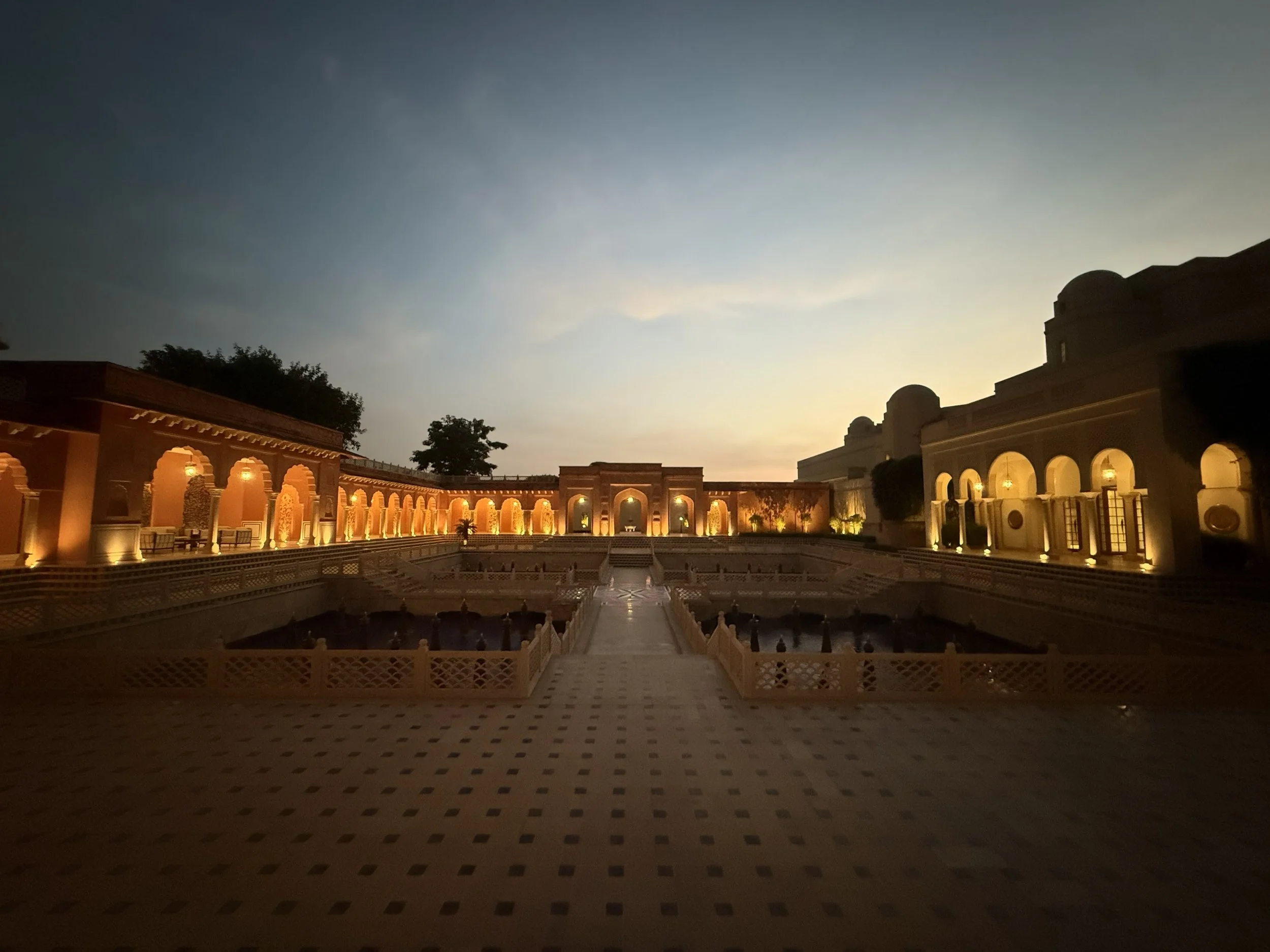
Day two in Agra began before dawn with a sunrise visit to the Taj Mahal. I actually preferred this experience over sunset—the temperatures were much more comfortable. Thankfully, our photographer returned for round two, giving us another chance to capture this incredible wonder before the crowds (and heat) arrived.
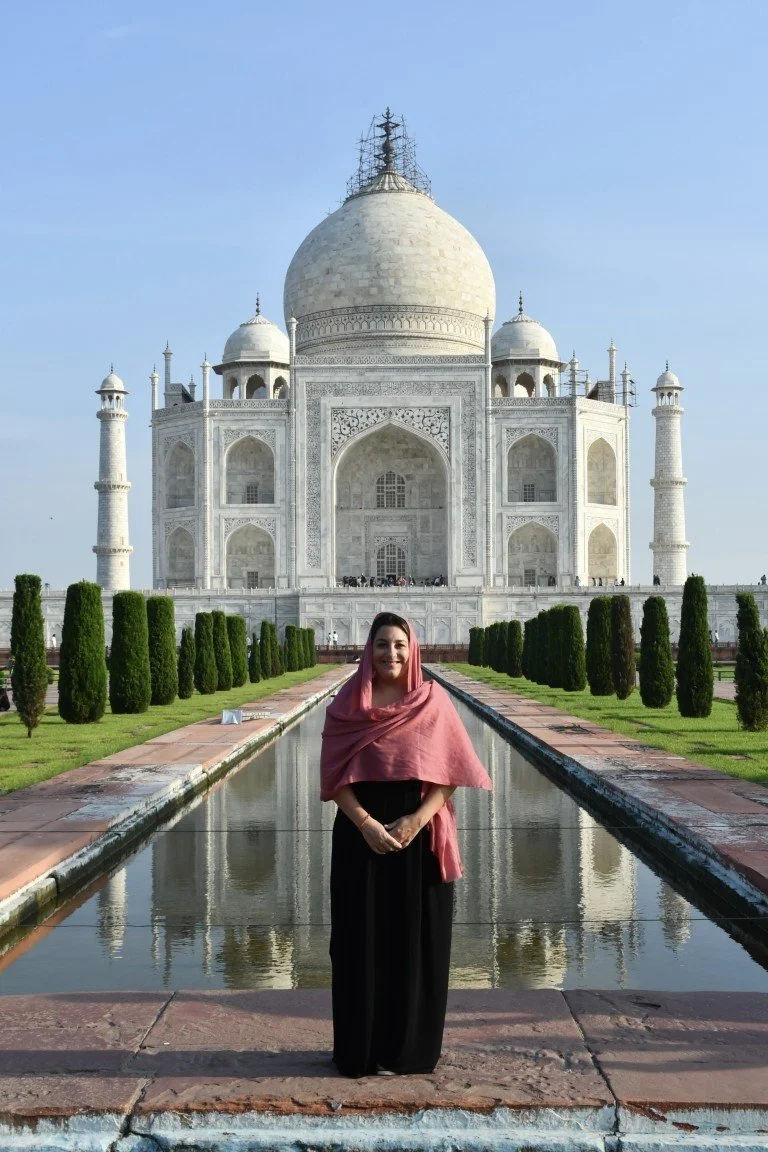
Built as a monument to love, the Taj Mahal took more than 20 years to complete.
After our sunrise visit to the Taj Mahal, we returned to the hotel for breakfast and checked out. Before leaving Agra, we visited Agra Fort, another UNESCO World Heritage Site.
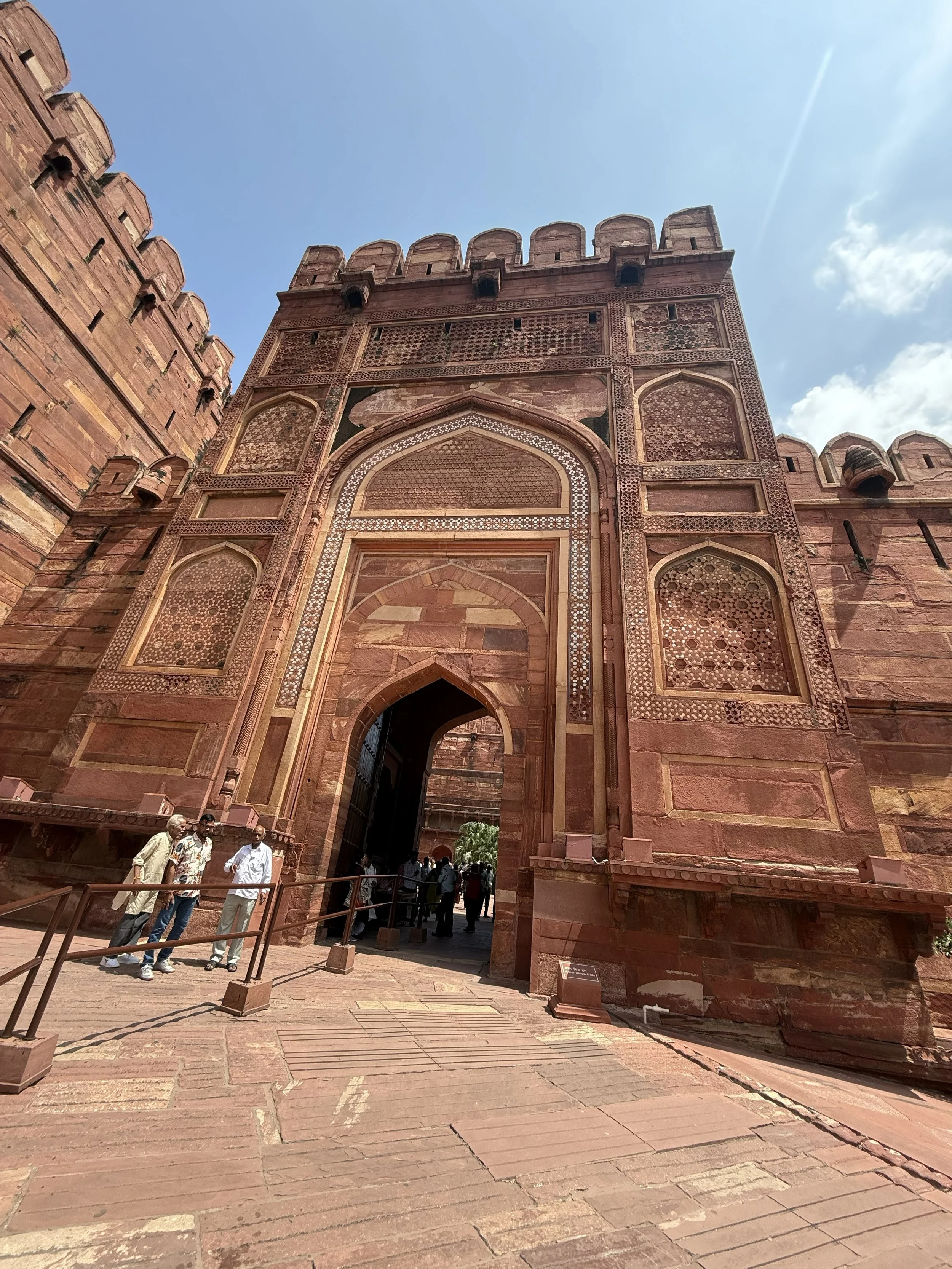
Agra Fort was built in 1565 by Emperor Akbar and served as the main residence of the Mughal emperors for nearly a century.
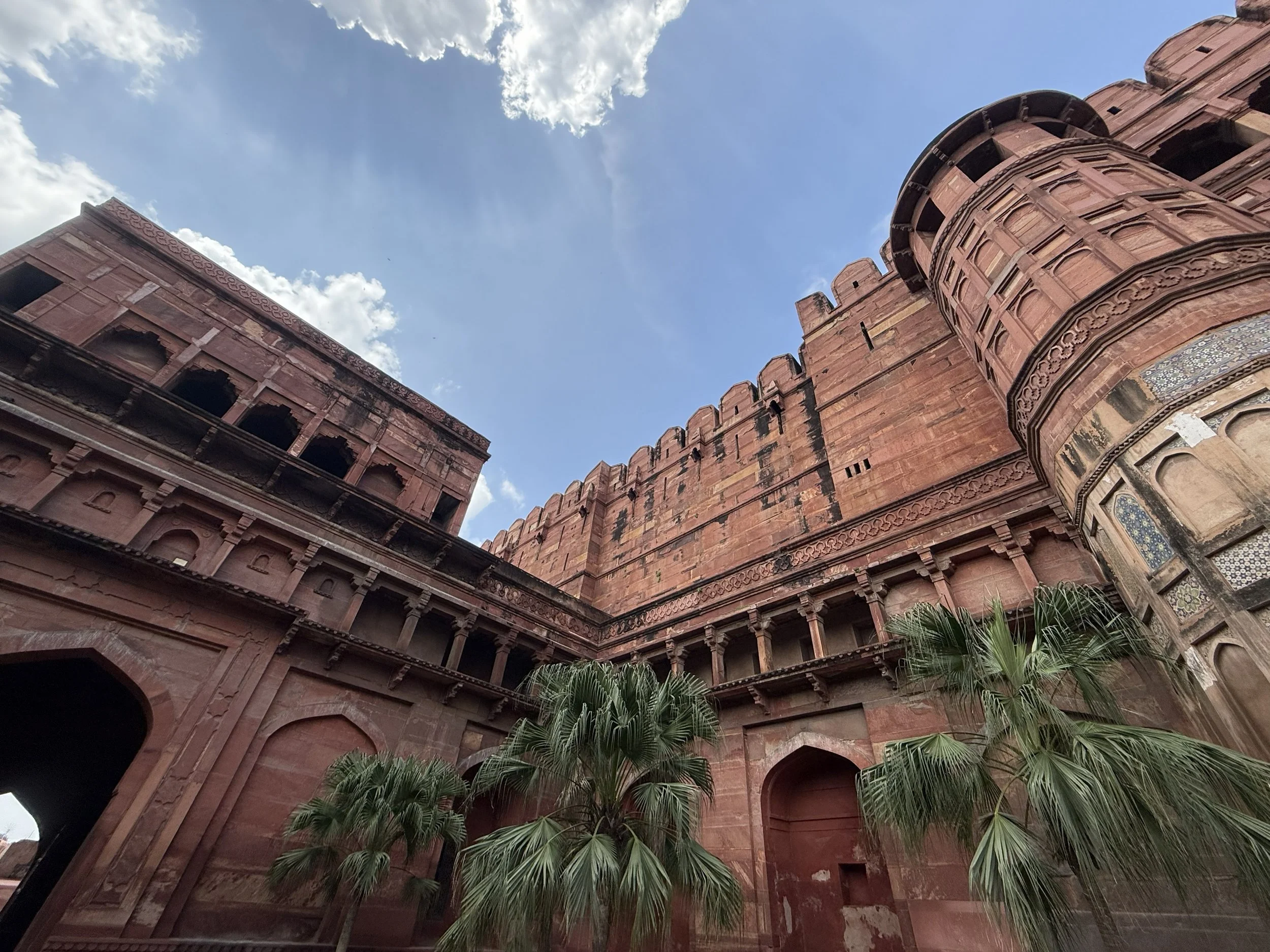
The fort is constructed primarily of red sandstone and stretches over 2.5 miles in circumference.
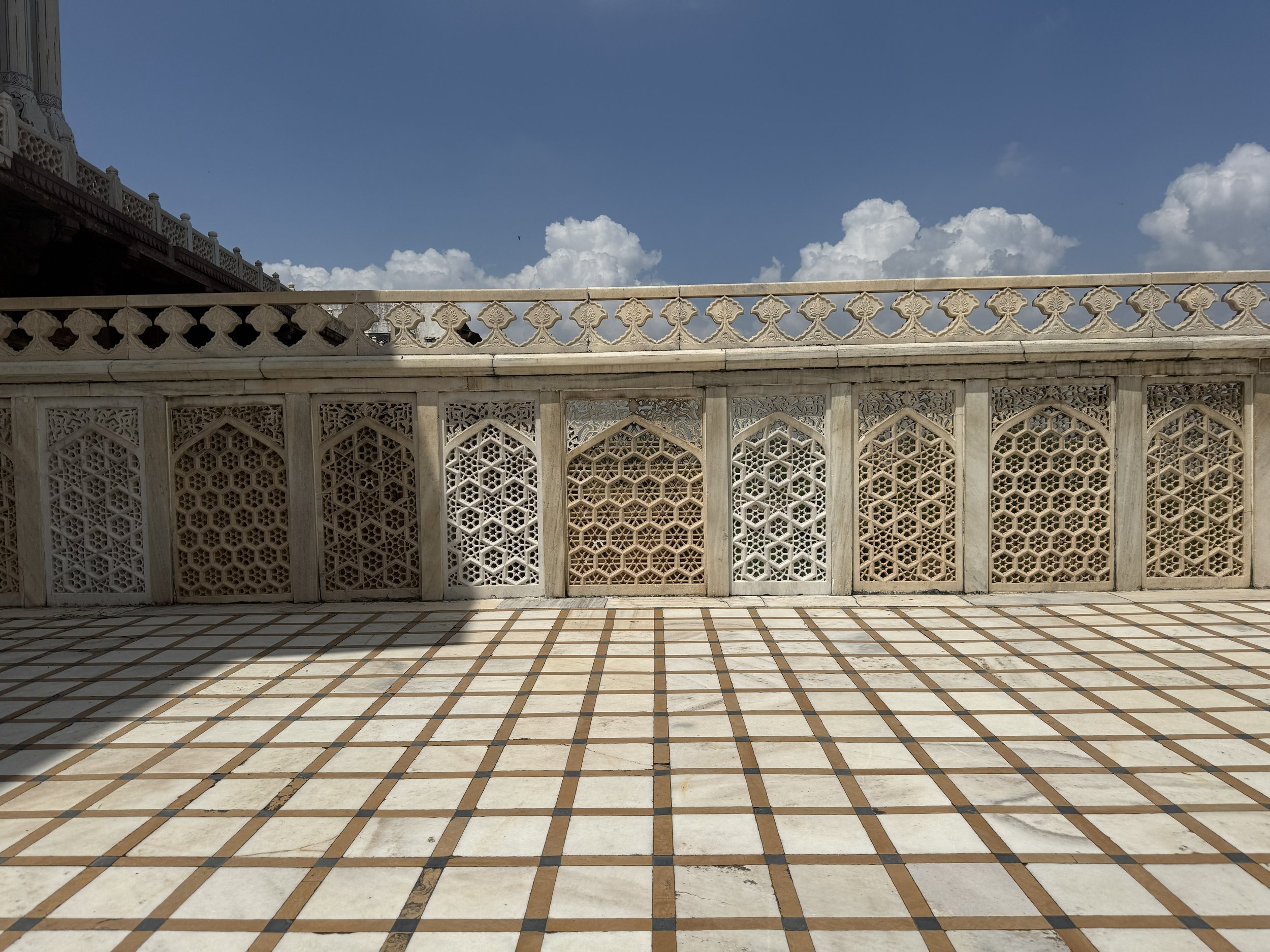
Emperor Shah Jahan, who built the Taj Mahal, spent the final years of his life imprisoned here by his son.
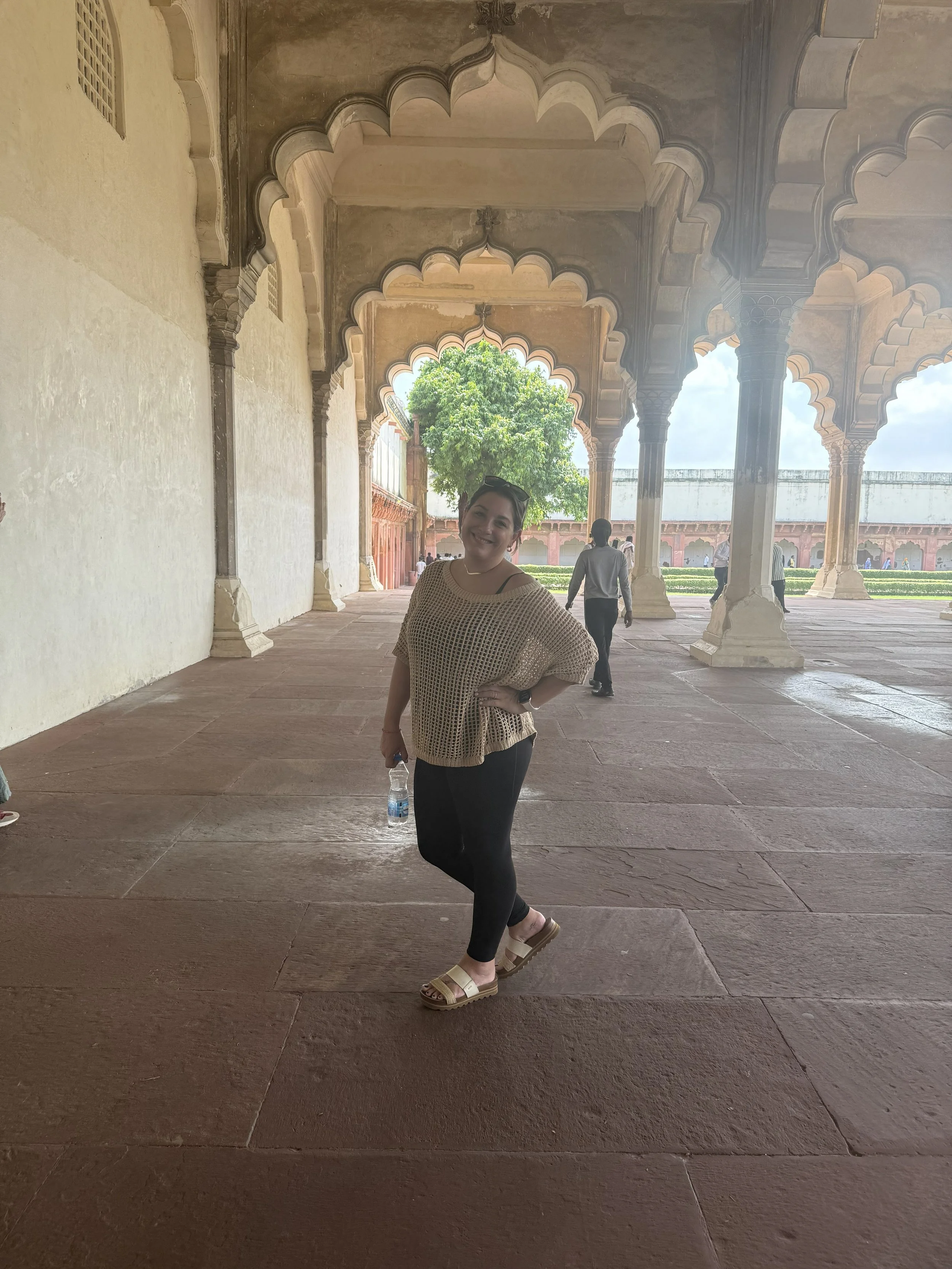
Although called a fort, it contains stunning palaces, audience halls, mosques, and beautiful gardens.
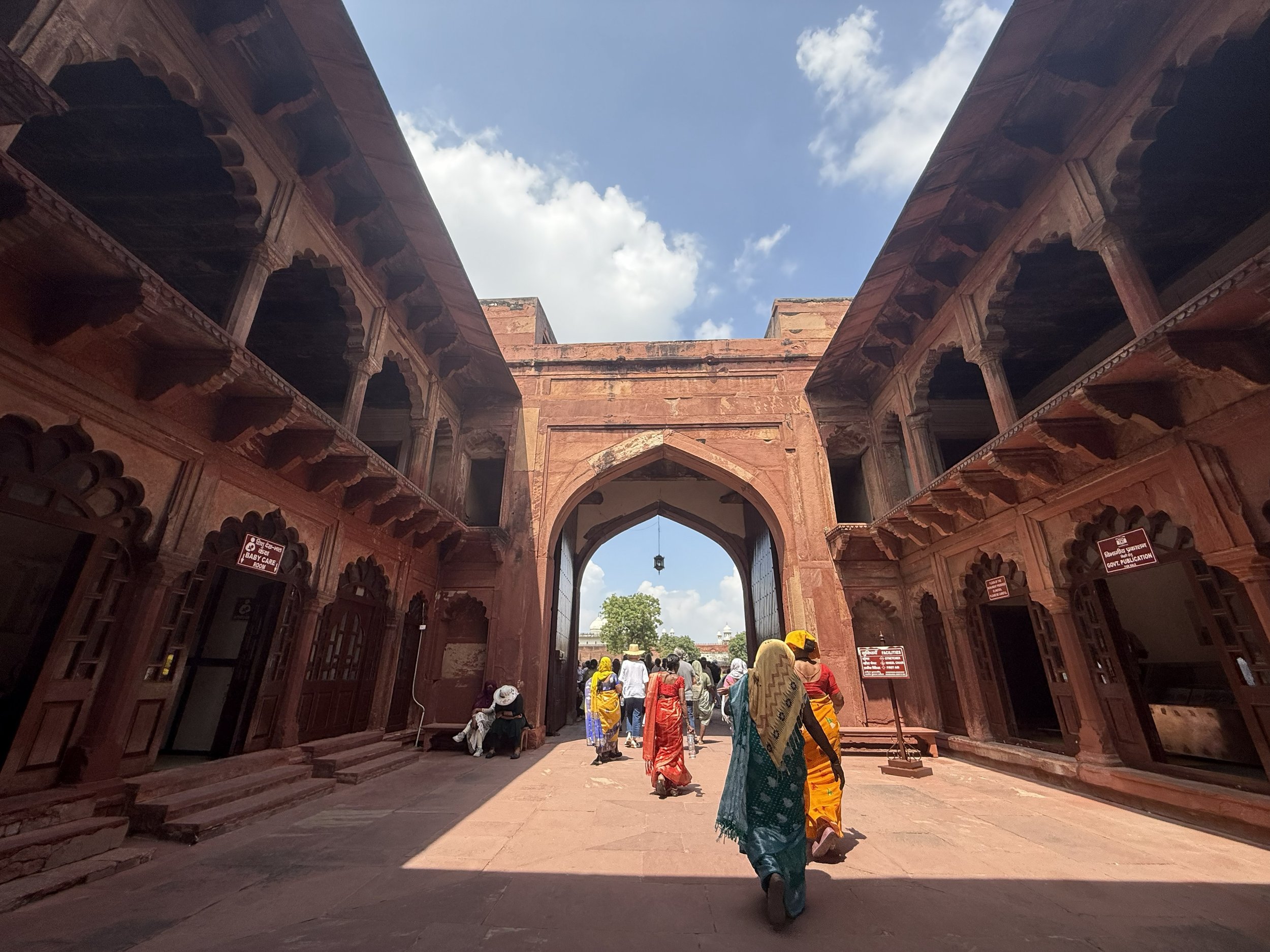
The fort combines both military architecture and exquisite Mughal craftsmanship, making it one of India's most important historic sites.
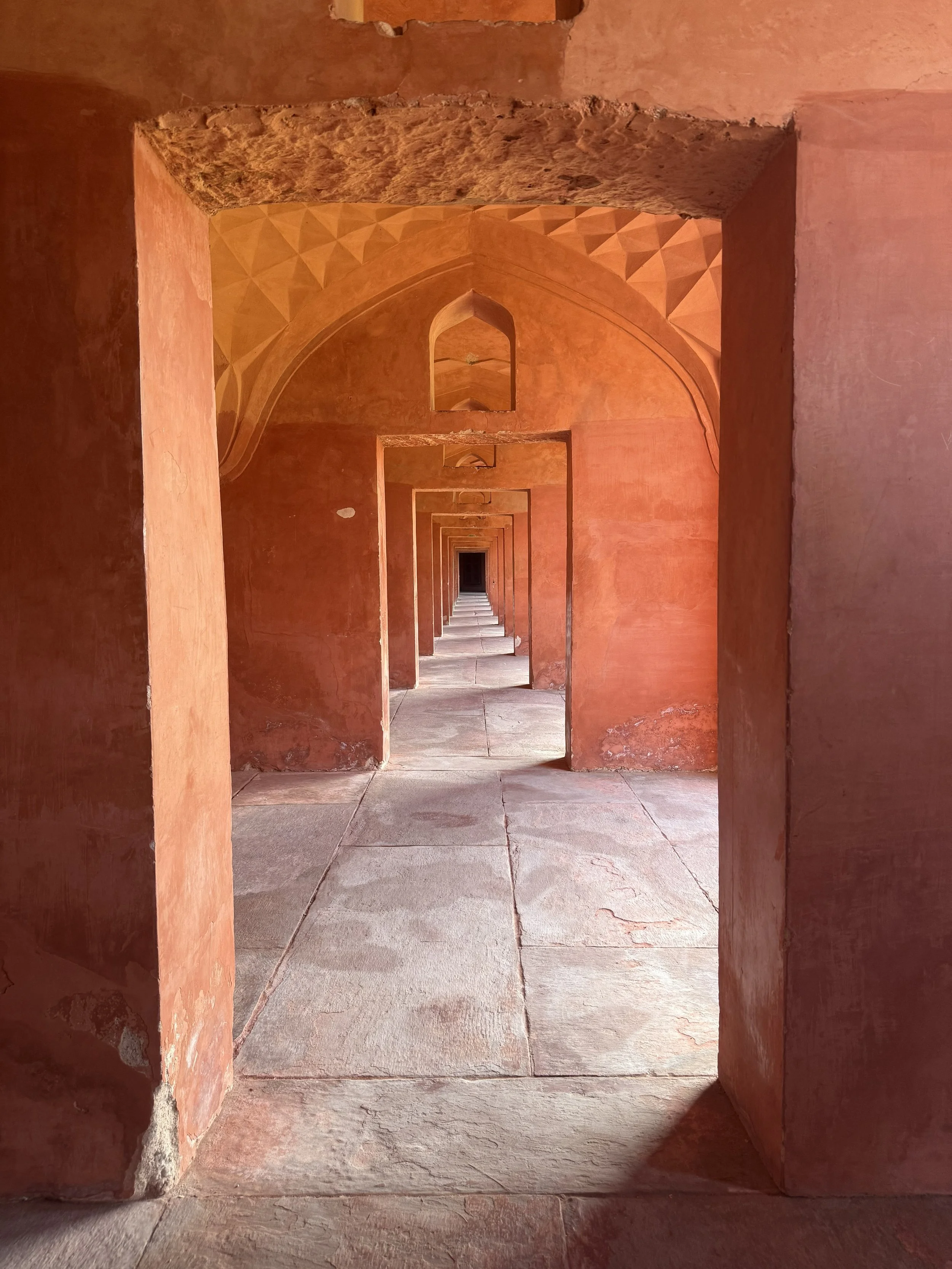
Next, we continued on to Fort Barwara, where we checked into the stunning Six Senses Fort Barwara.
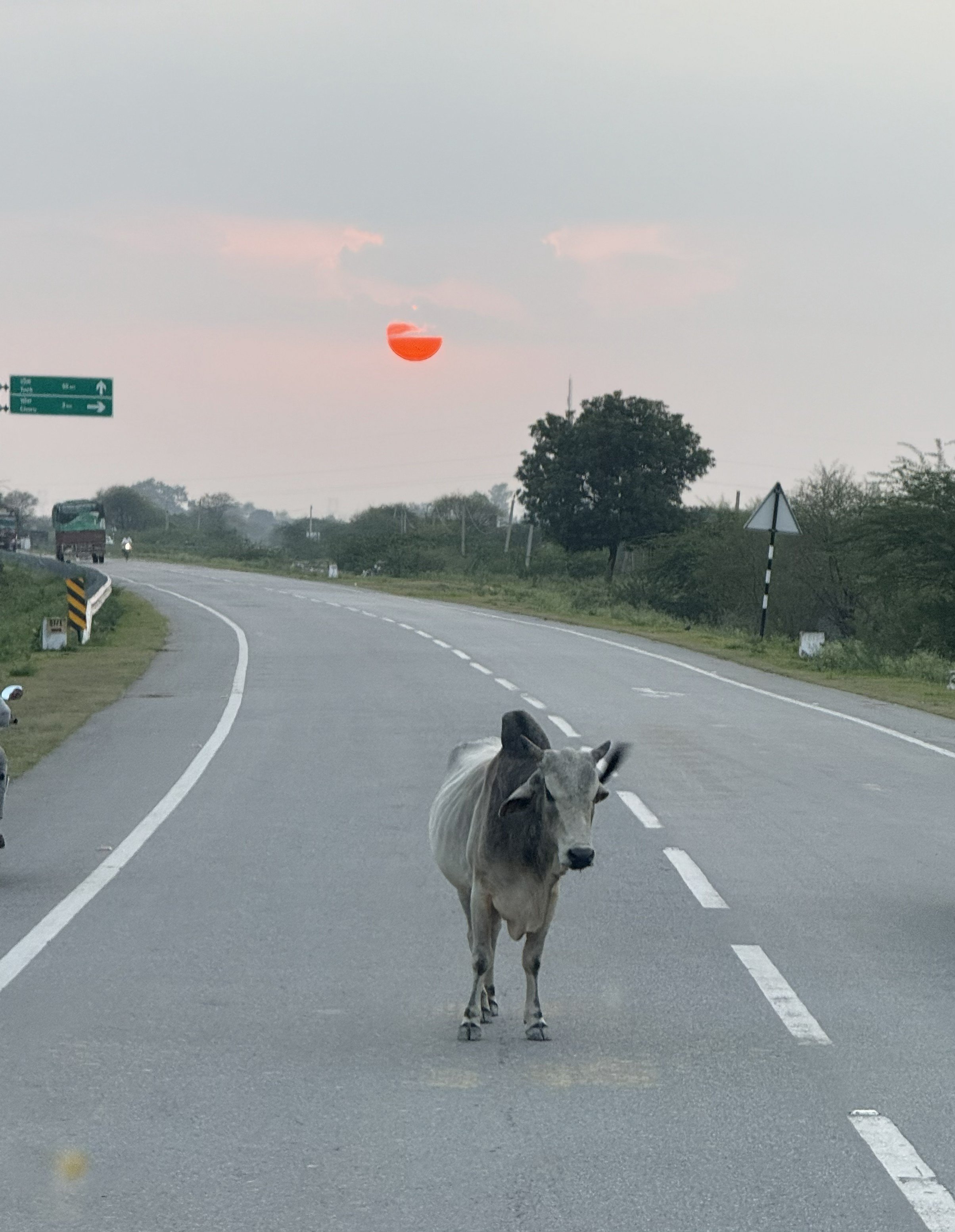
It was very interesting to see cows on the side, and in the middle, of the road!
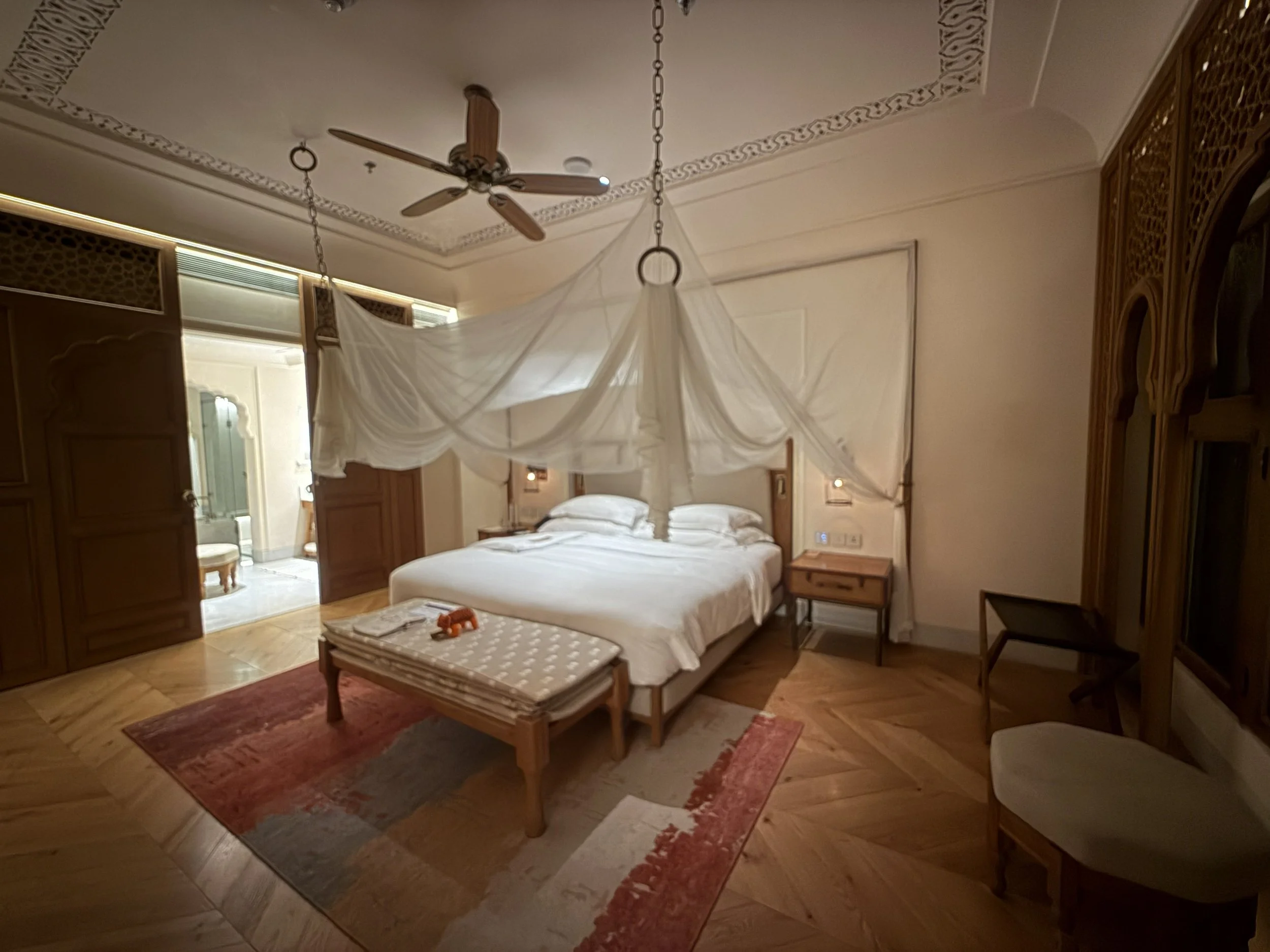
We finally arrived at Six Senses Fort Barwara, which was easily my favorite hotel of the trip—and that's saying a lot. My room was absolutely incredible!
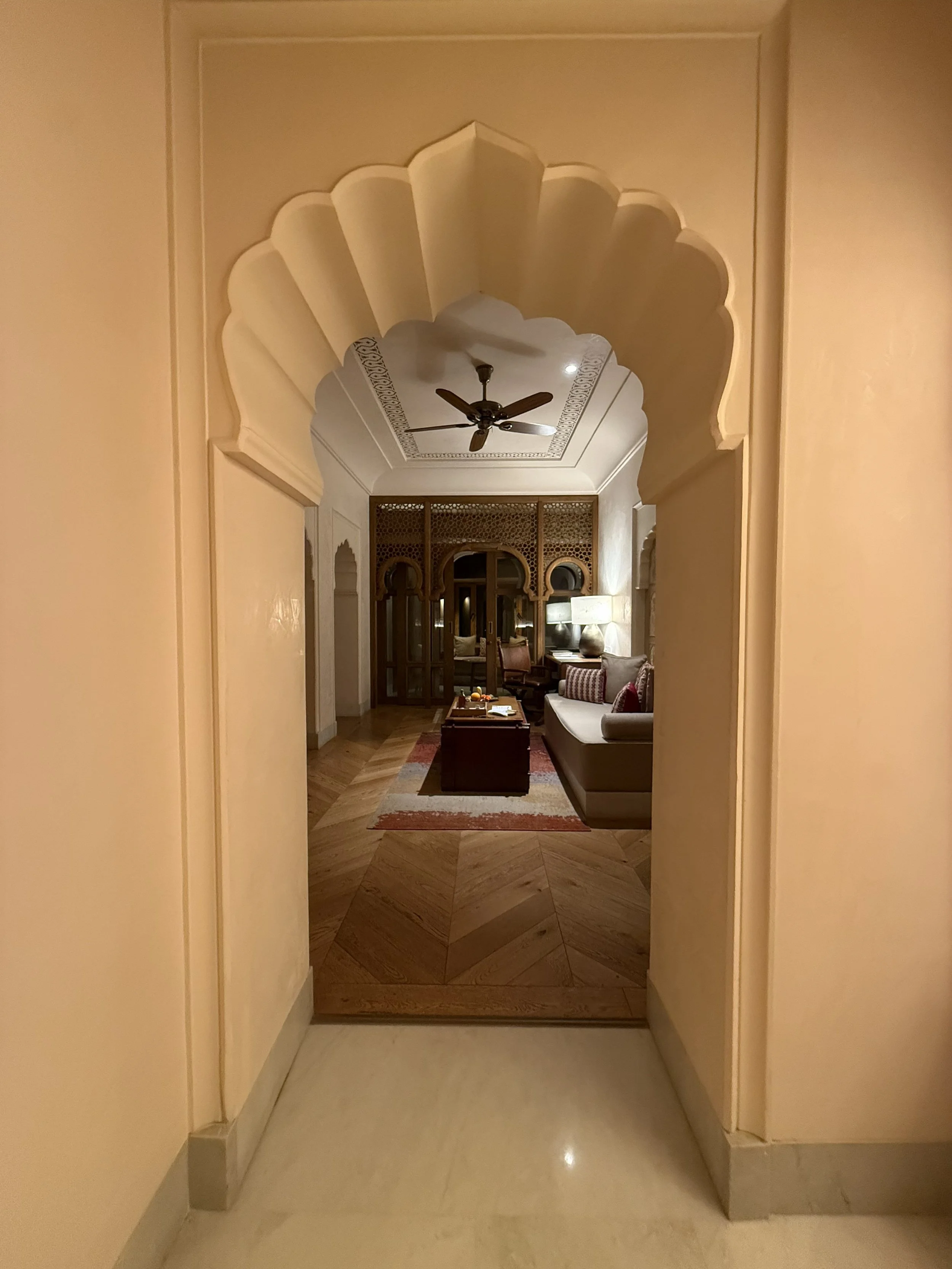
Room entrance foyer
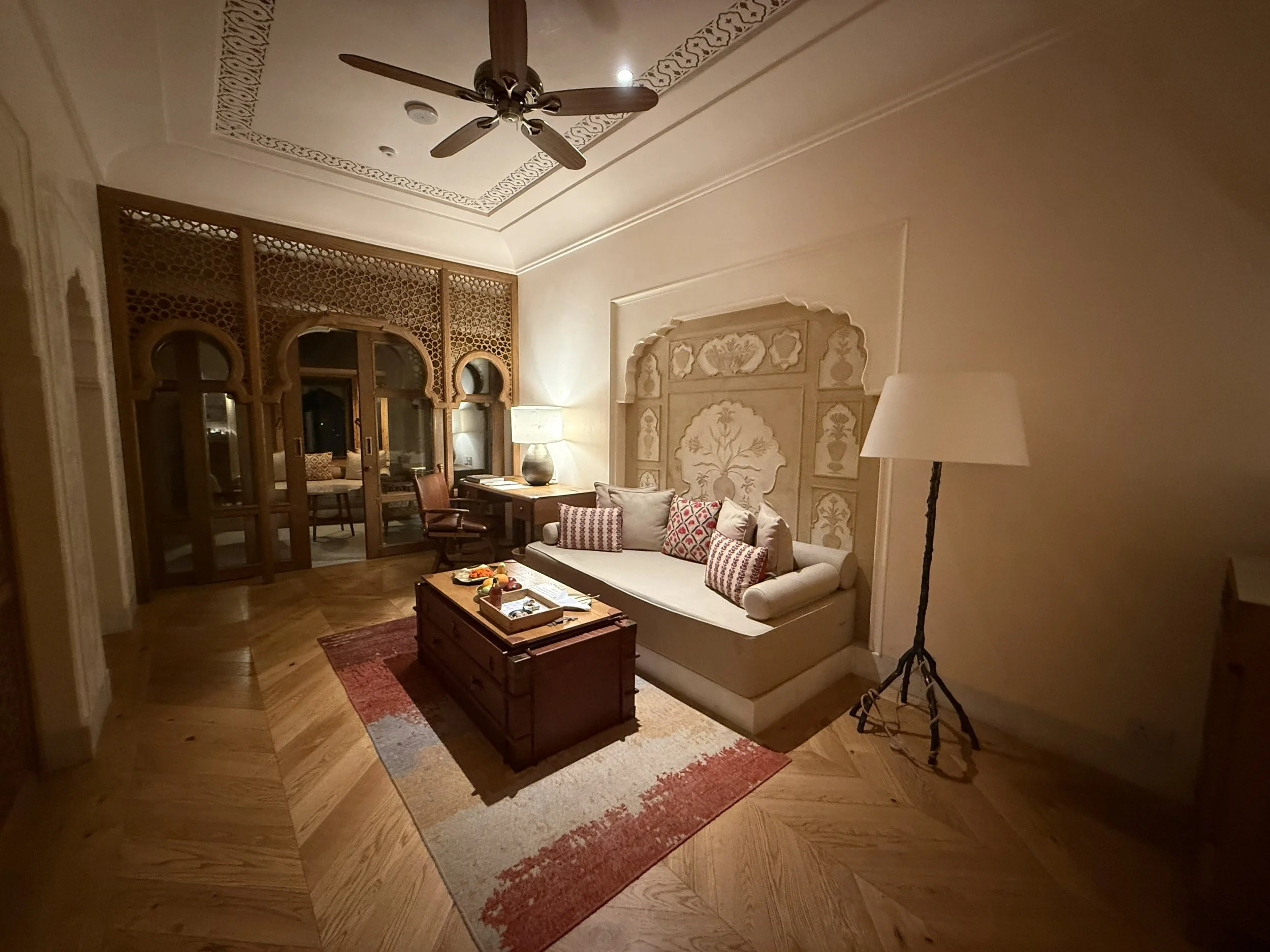
Sitting area, desk and private terrace
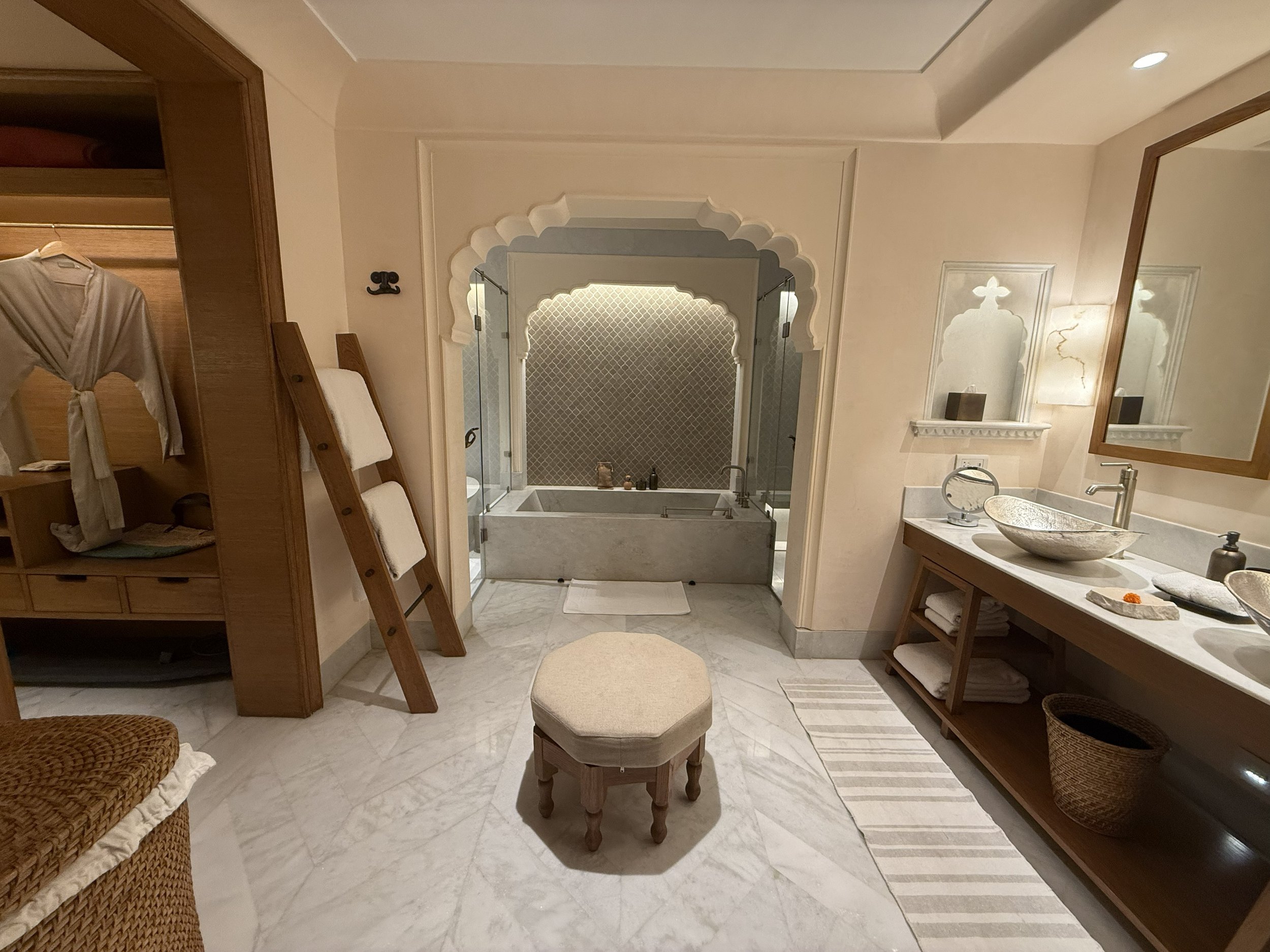
This bathroom was a dream… separate shower, toilet, bathtub, walk in closet, dressing area and double sinks.
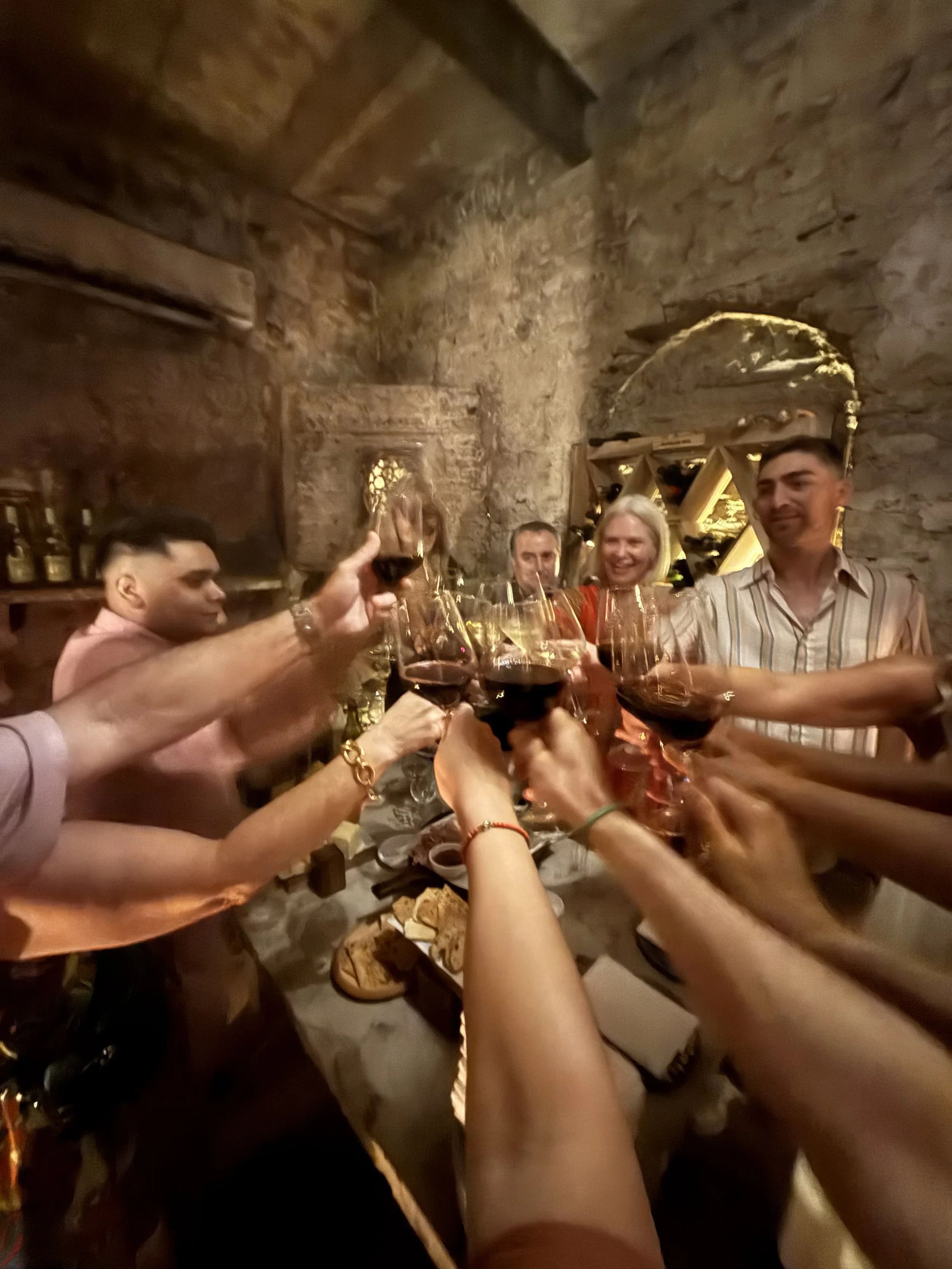
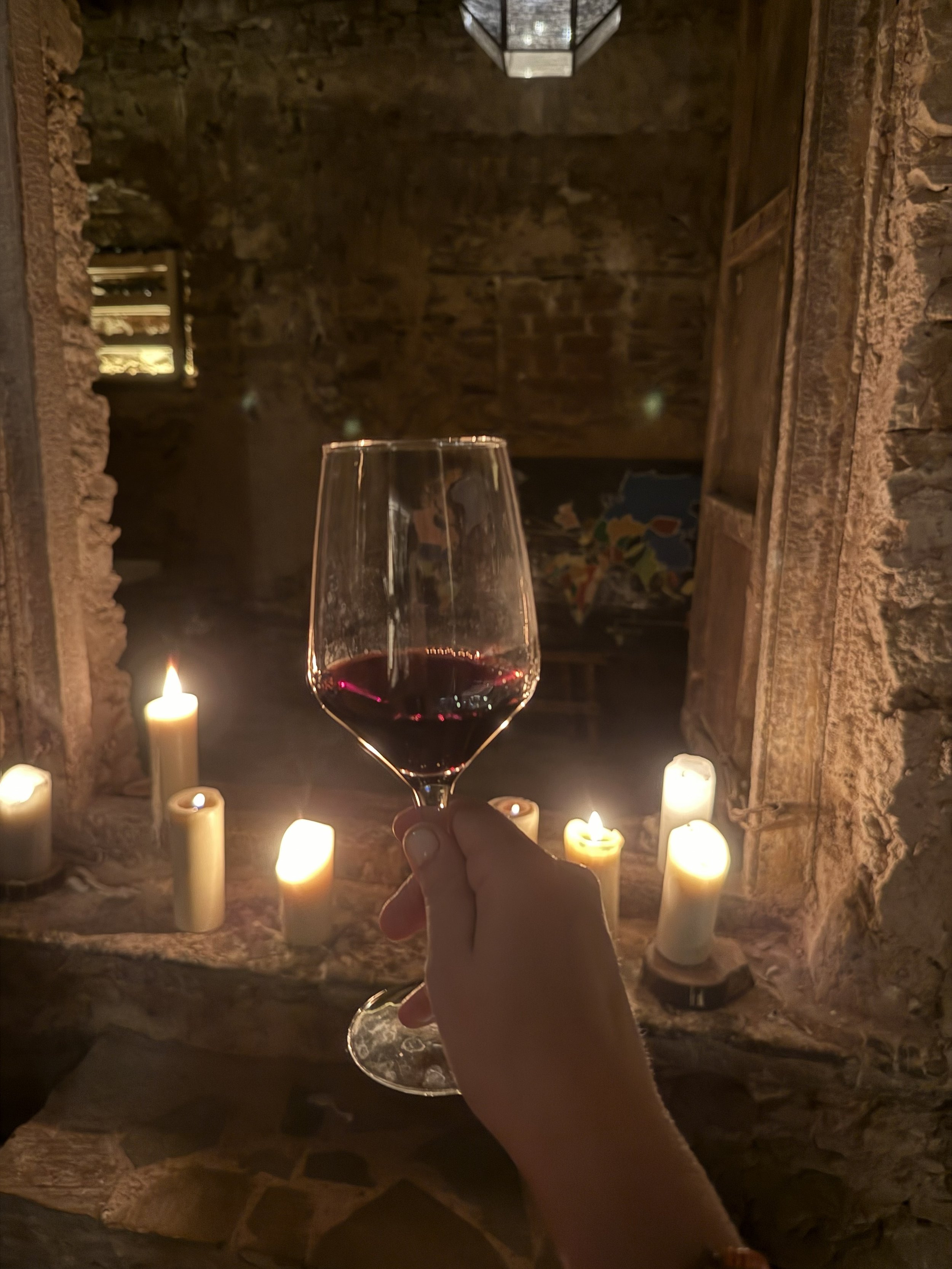
After freshening up, our first evening began with a wine and charcuterie tasting in the fort's ancient cellar, followed by an incredible multi-course dinner.
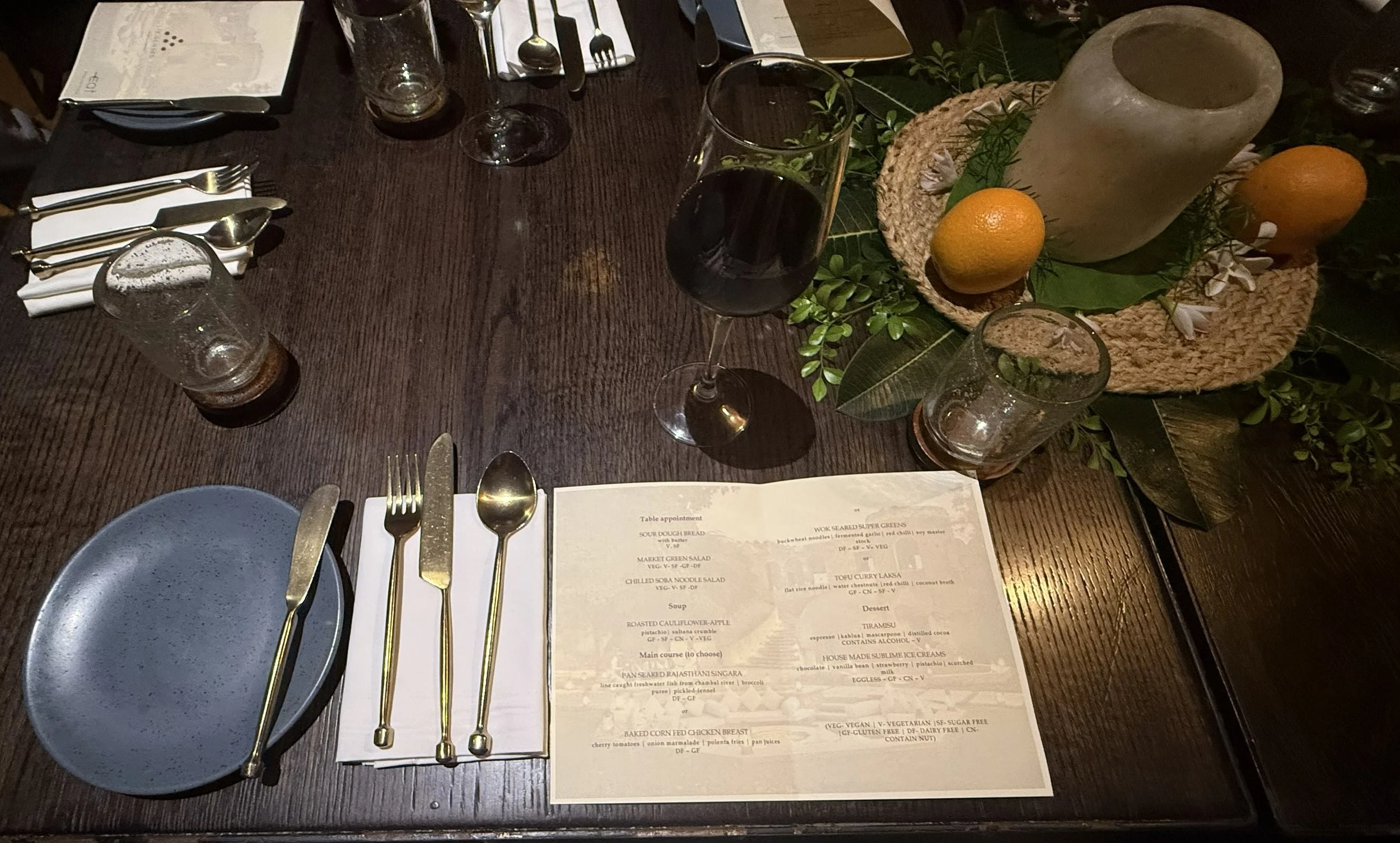
The next day, we were supposed to go tiger tracking in Ranthambore National Park in search of Bengal tigers. Unfortunately, heavy rains made the roads into the park inaccessible, so the excursion had to be canceled. We were definitely disappointed, but that's part of travel—you have to roll with the punches sometimes.
Instead, we followed our guide into the small town of Barwara for an unscripted and authentic glimpse into everyday life. It ended up being one of the most memorable experiences of the trip.
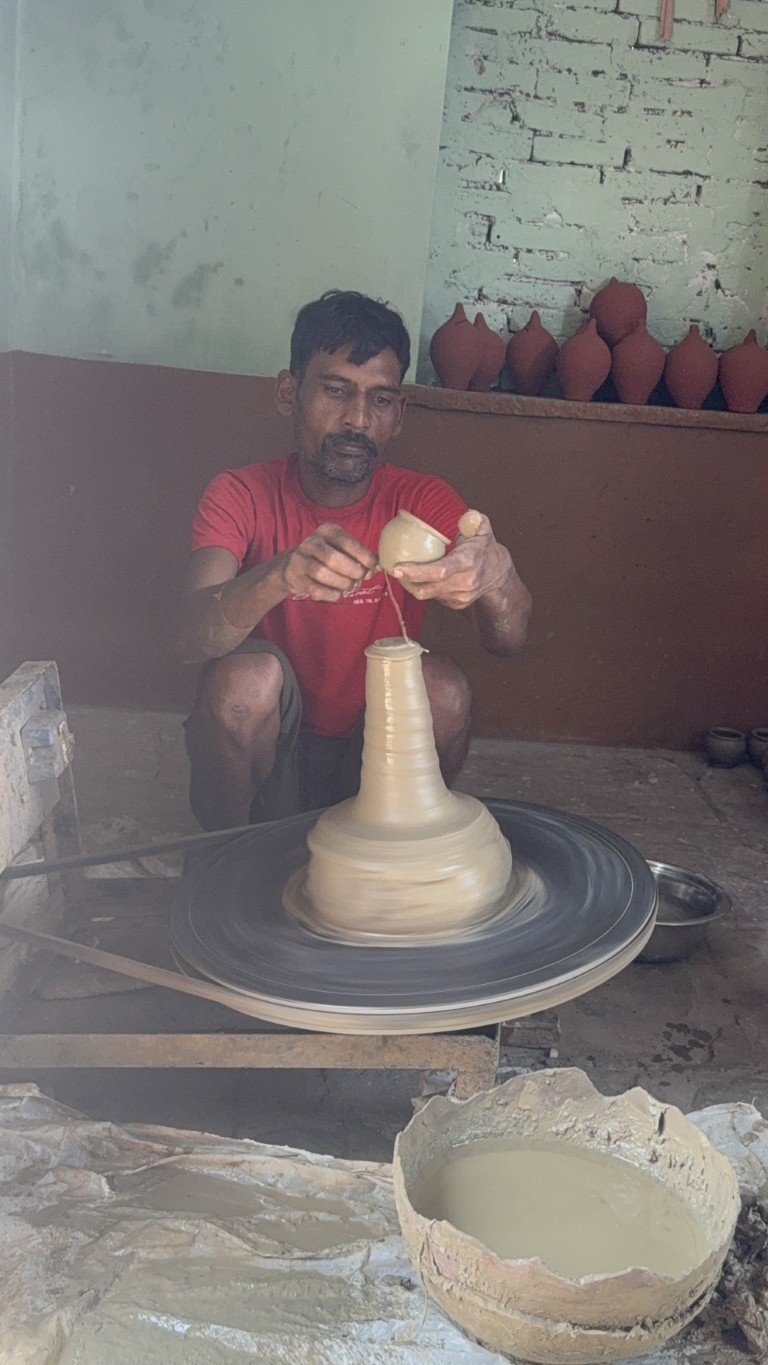
We started with a pottery demonstration by a local craftsman who creates the tiny, fragile clay cups…
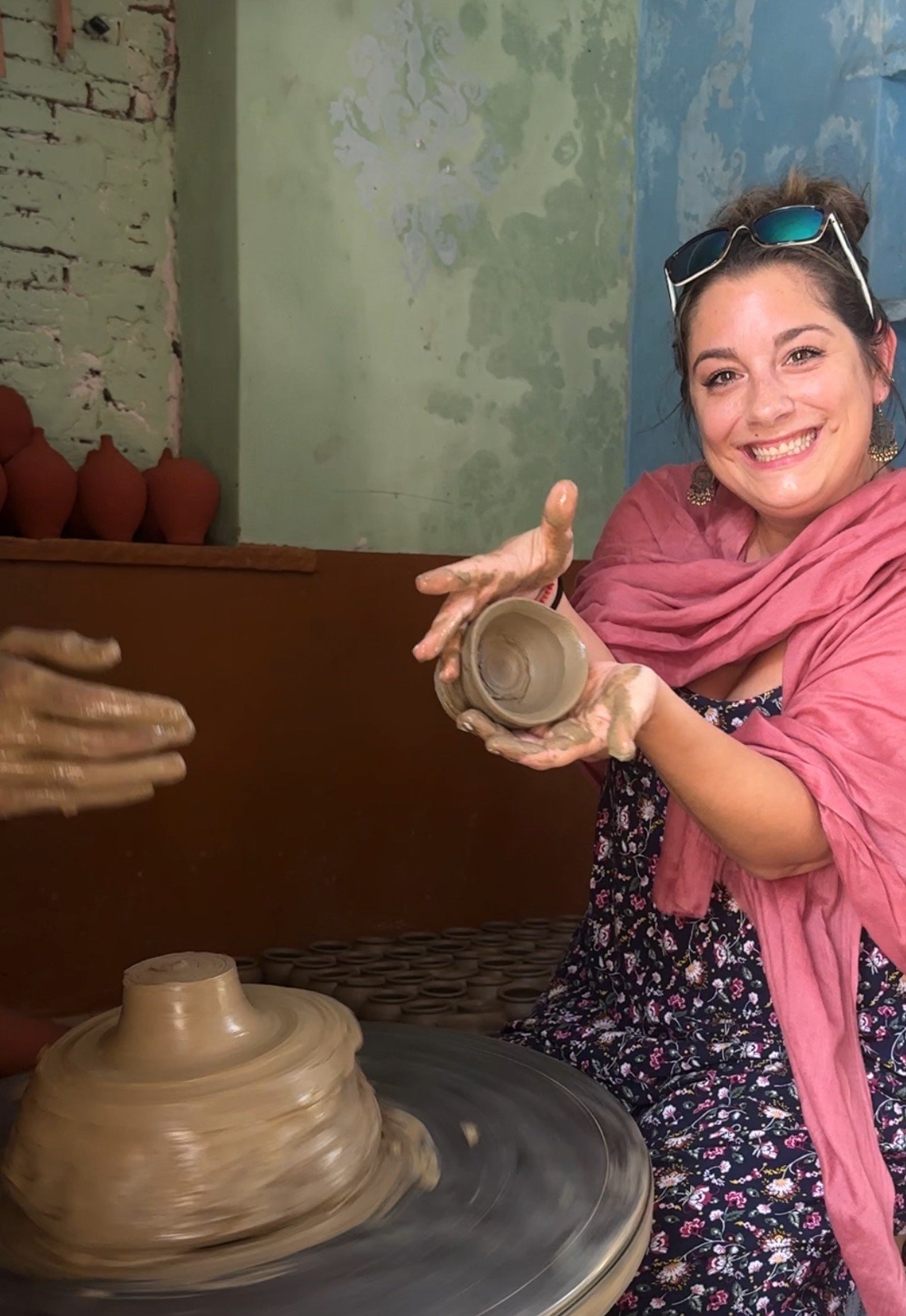
… and I tried my hand at it!
Did you know? Traditional clay chai cups, called kulhads, are typically used only once. The unglazed clay adds an earthy flavor to the tea, and the cups naturally return to the soil after use.
We then continued through town, meeting so many friendly locals along the way. Everyone was incredibly welcoming, eager to stop and chat, making it a truly memorable experience.
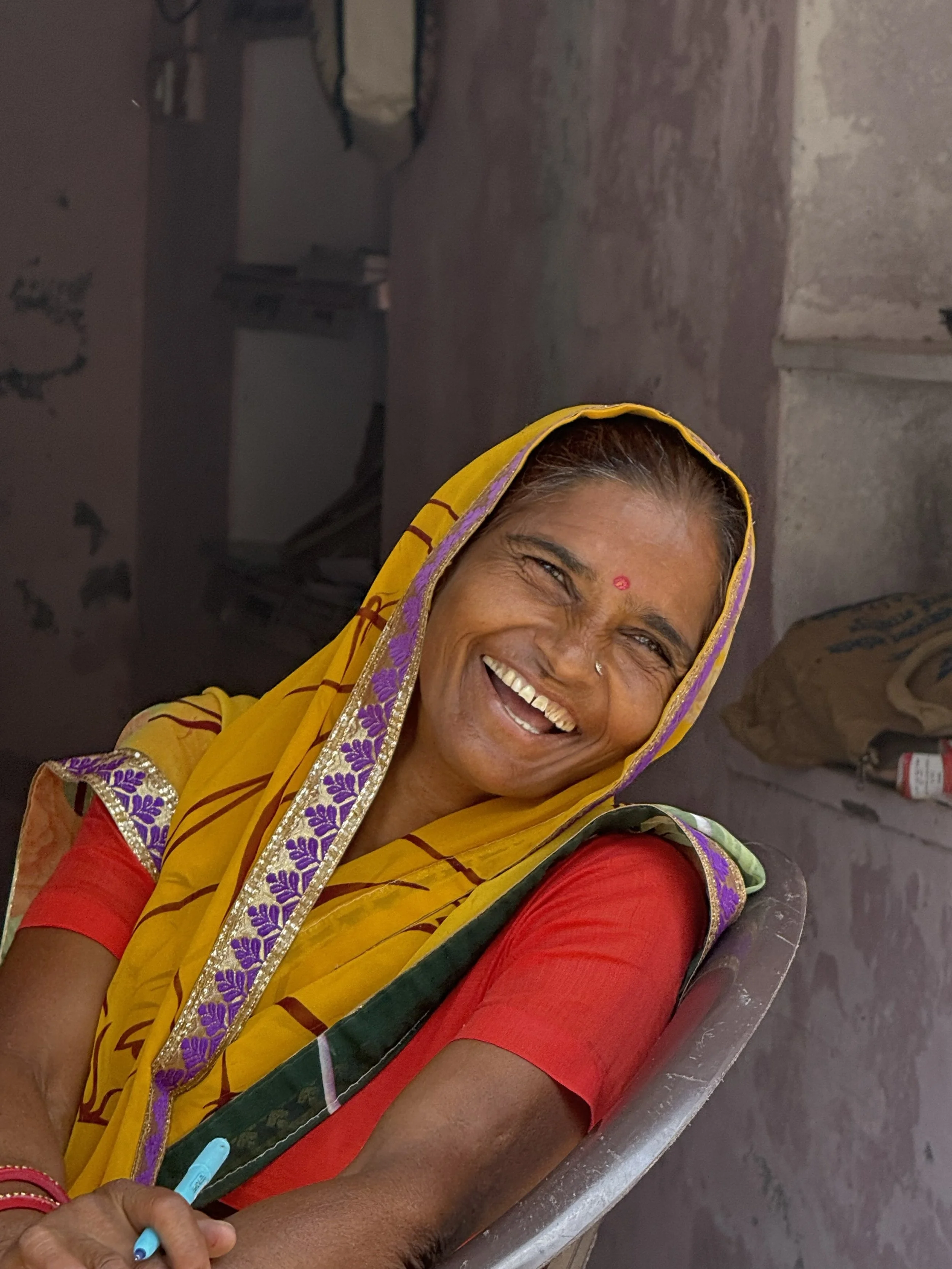
This remarkable woman teaches children and adults who never had the opportunity to attend school how to read and write.
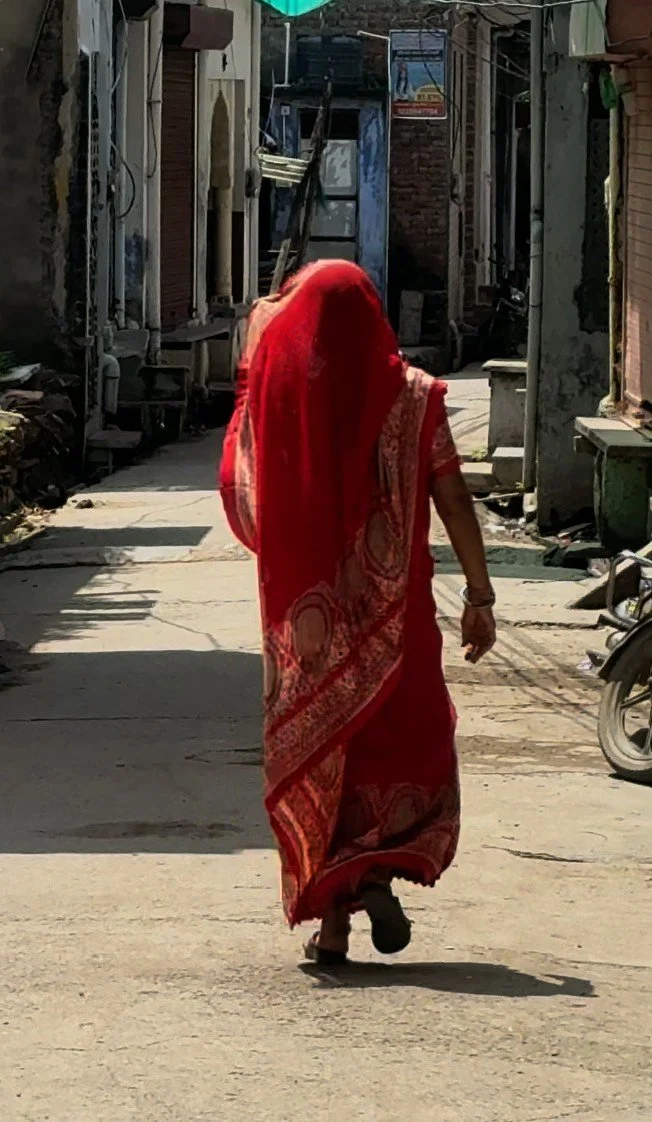
Traditional saris are known for their beautiful fabrics, intricate details, and bold colors.
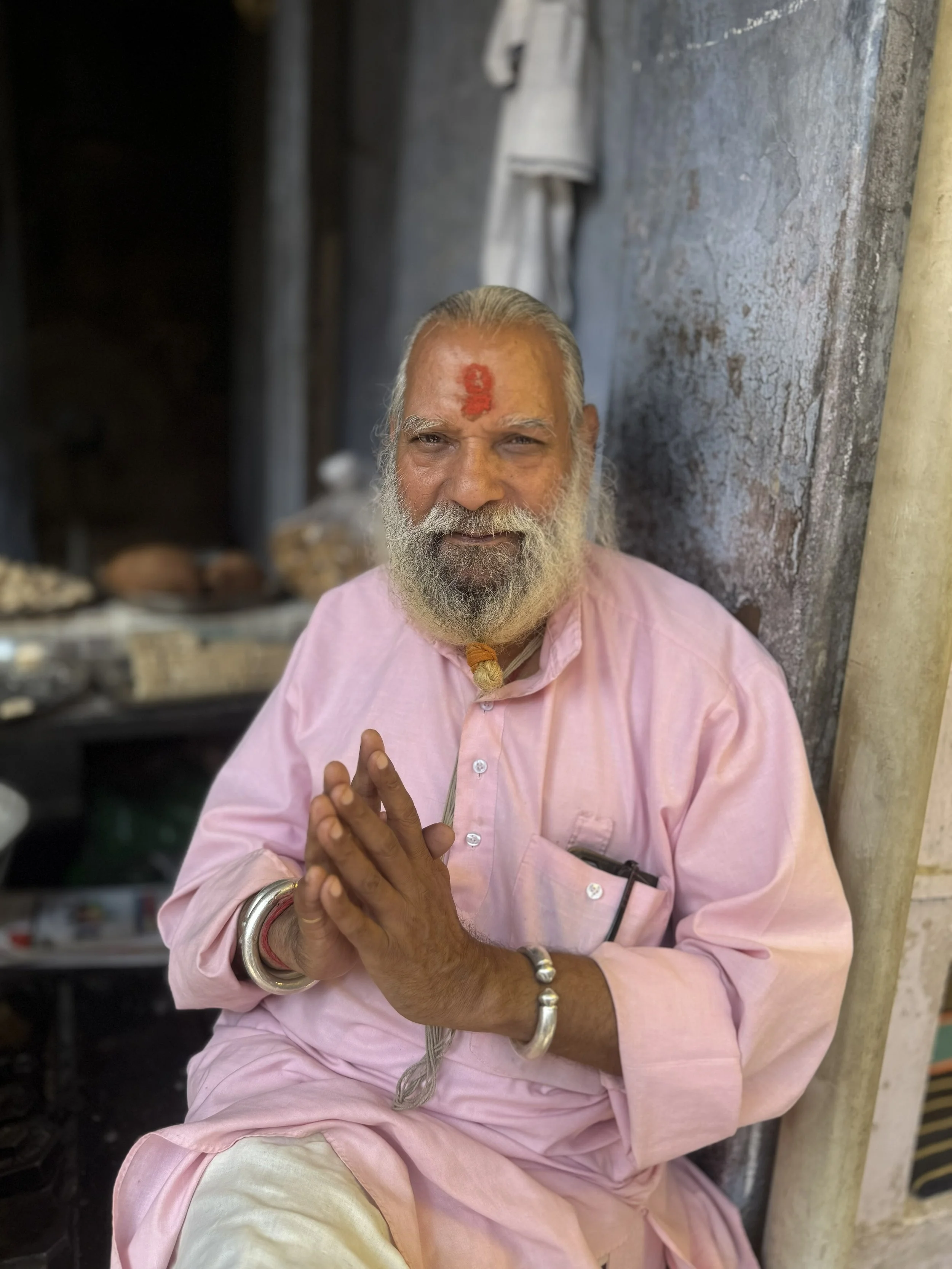
A tilak is a sacred mark worn on the forehead and other parts of the body in Hinduism. Our guide explained that this gentleman's prominent tilak reflected his respected, high-ranking position within the local community.
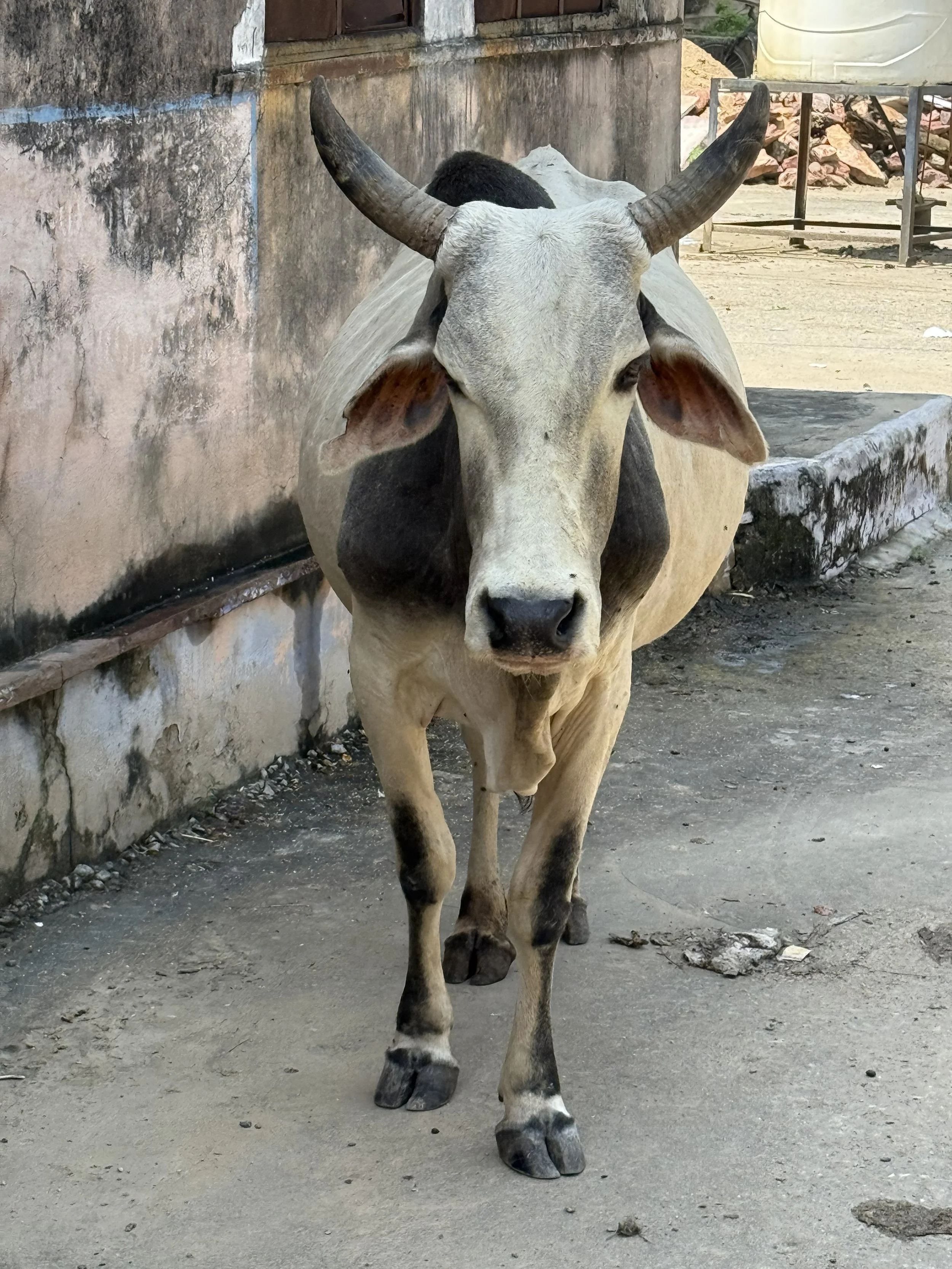
Cows are considered sacred in Hinduism and are widely respected throughout India.
Seeing cows wandering freely through towns and villages is a common sight across India.
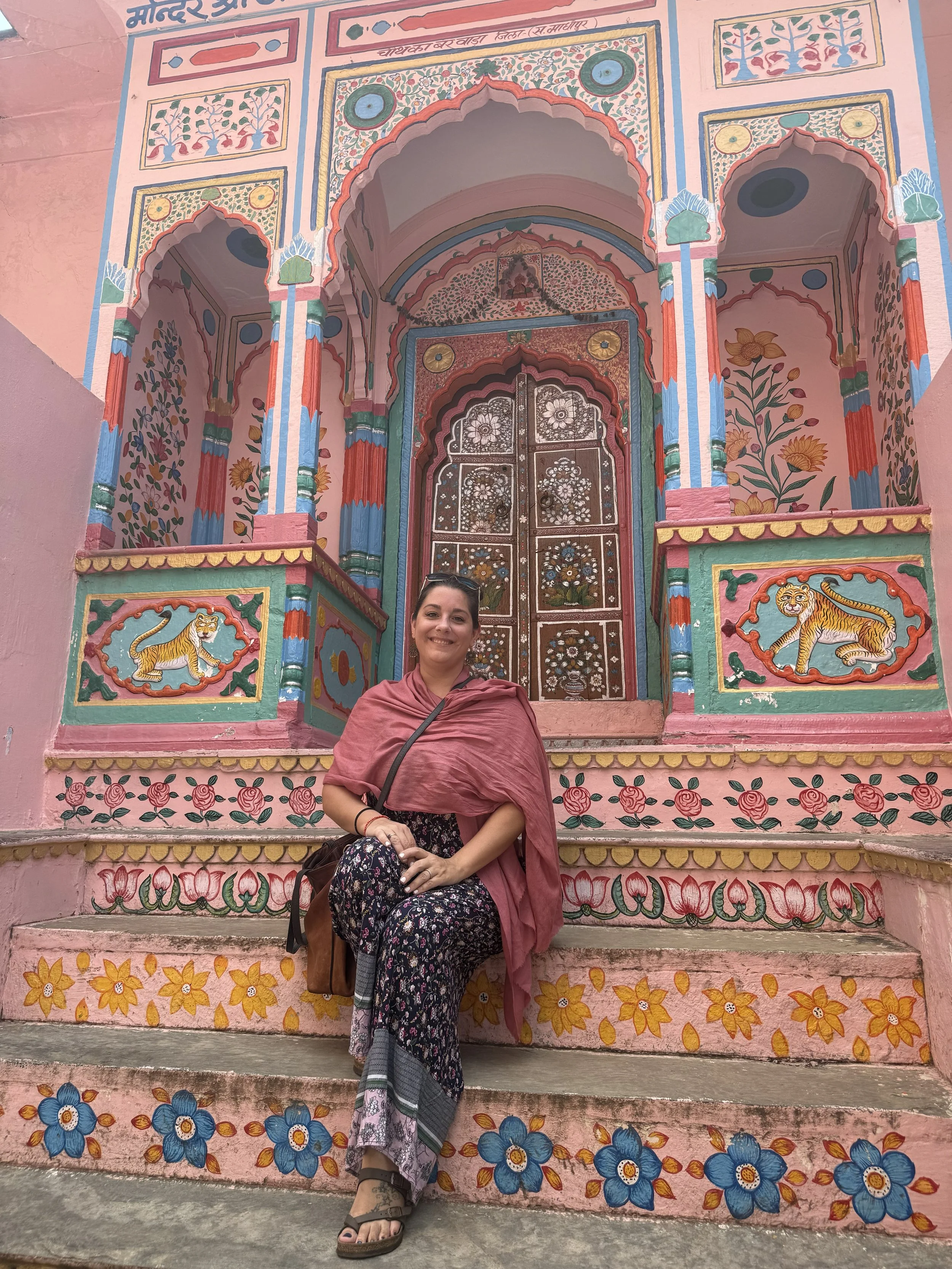
It's the little details like these that made wandering through town so special.
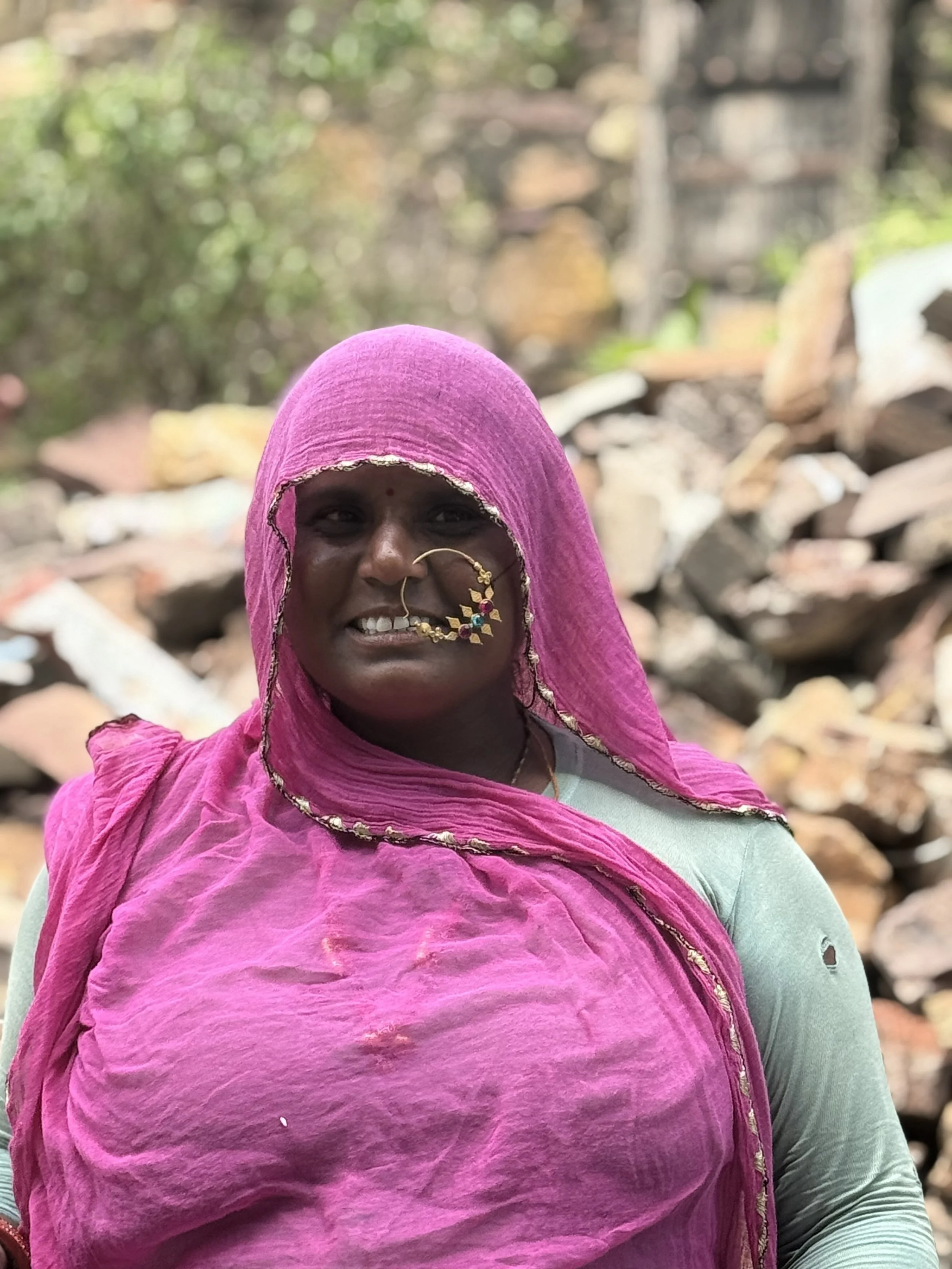
Traditional nose rings, known as naths, are a beautiful part of Rajasthani culture. Their size and design often reflect regional customs and generations of skilled craftsmanship.
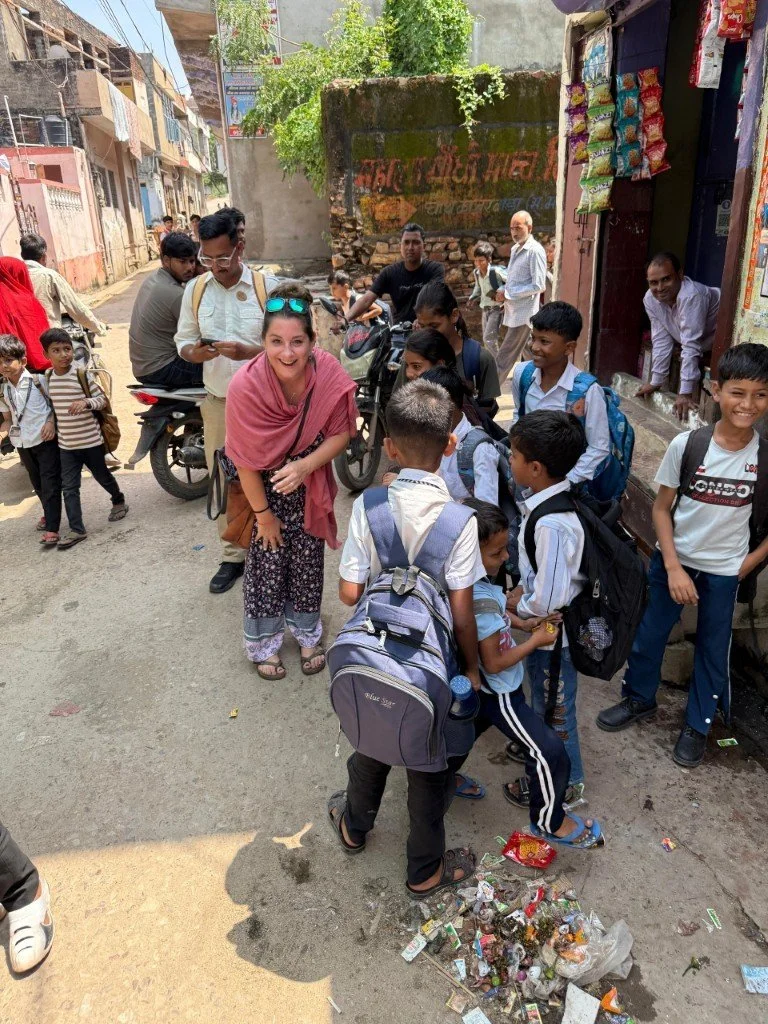
Watching the school kids light up over a few pieces of candy was one of the sweetest moments of the day.
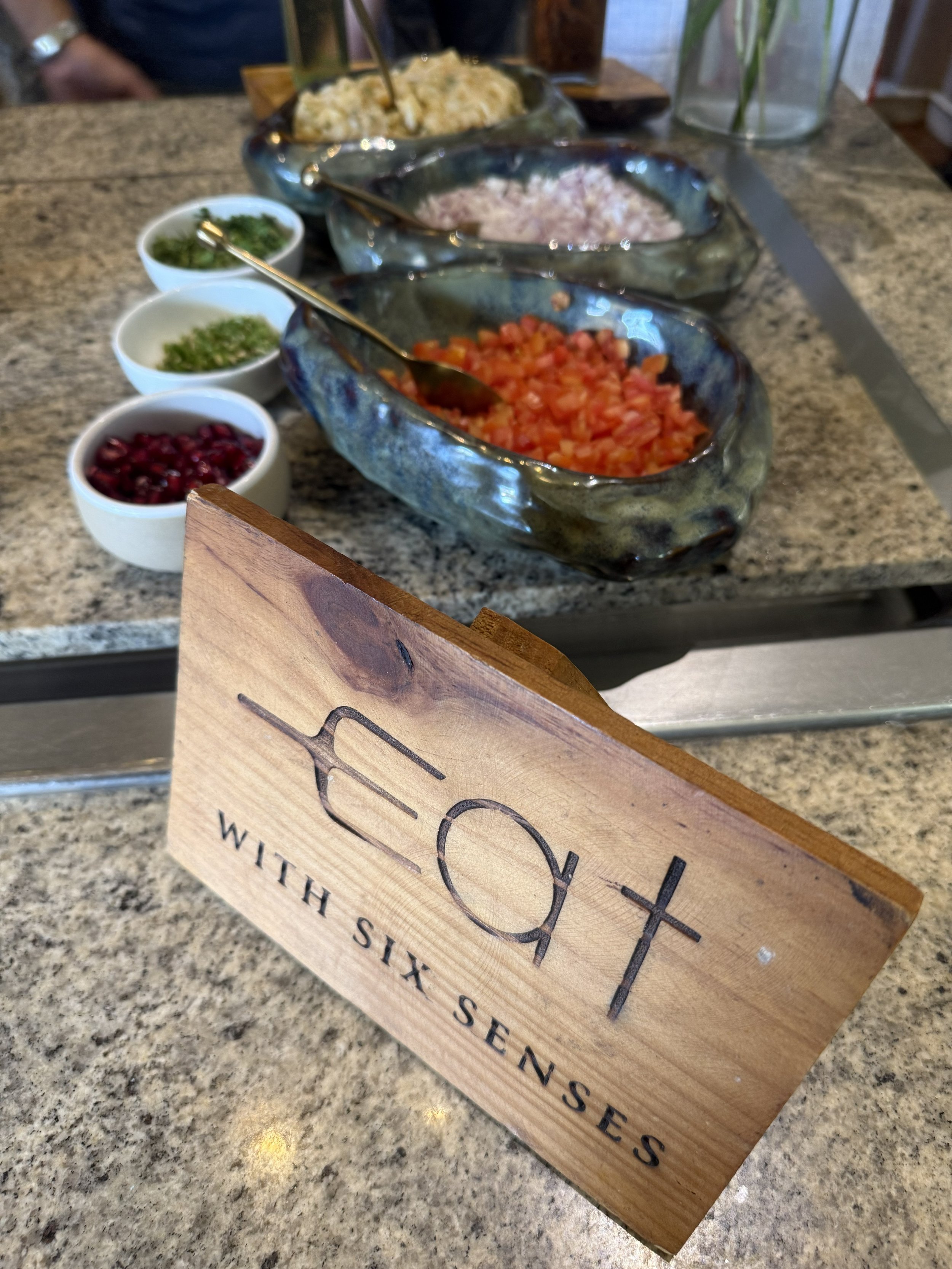
We then headed back to Six Senses Fort Barwara to get ready for an authentic Indian cooking class.
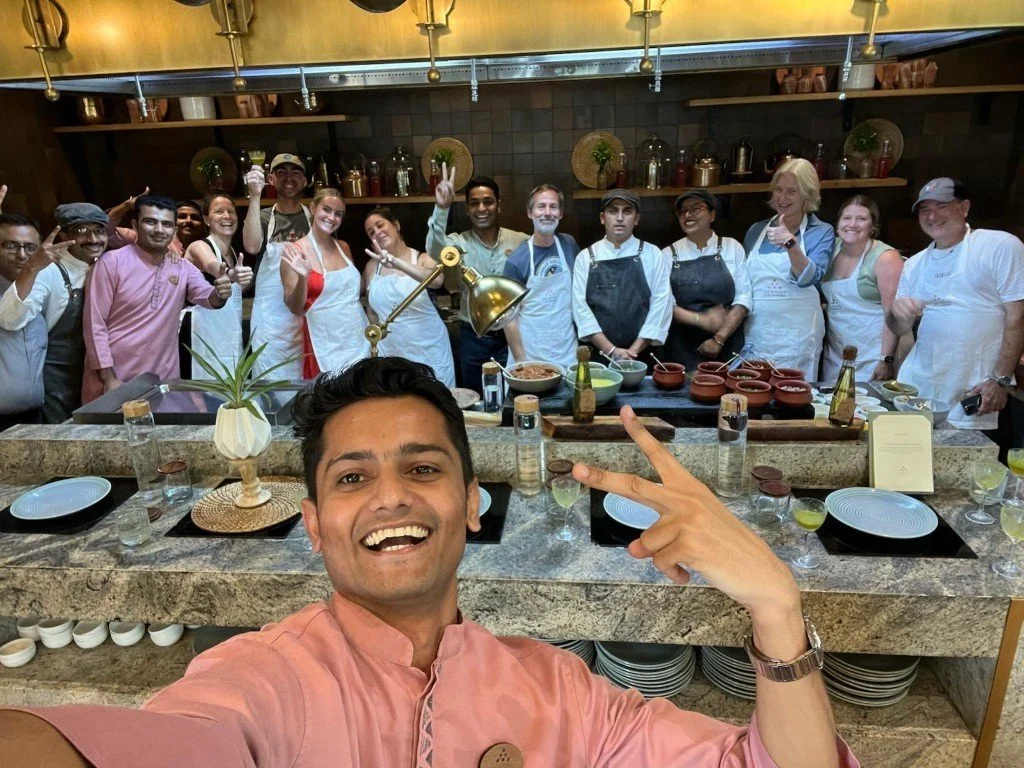
I spent the remainder of the afternoon unwinding with a luxurious spa treatment before wandering the beautiful grounds. The resort is known for its award-winning spa, built around two original temples within the fort.
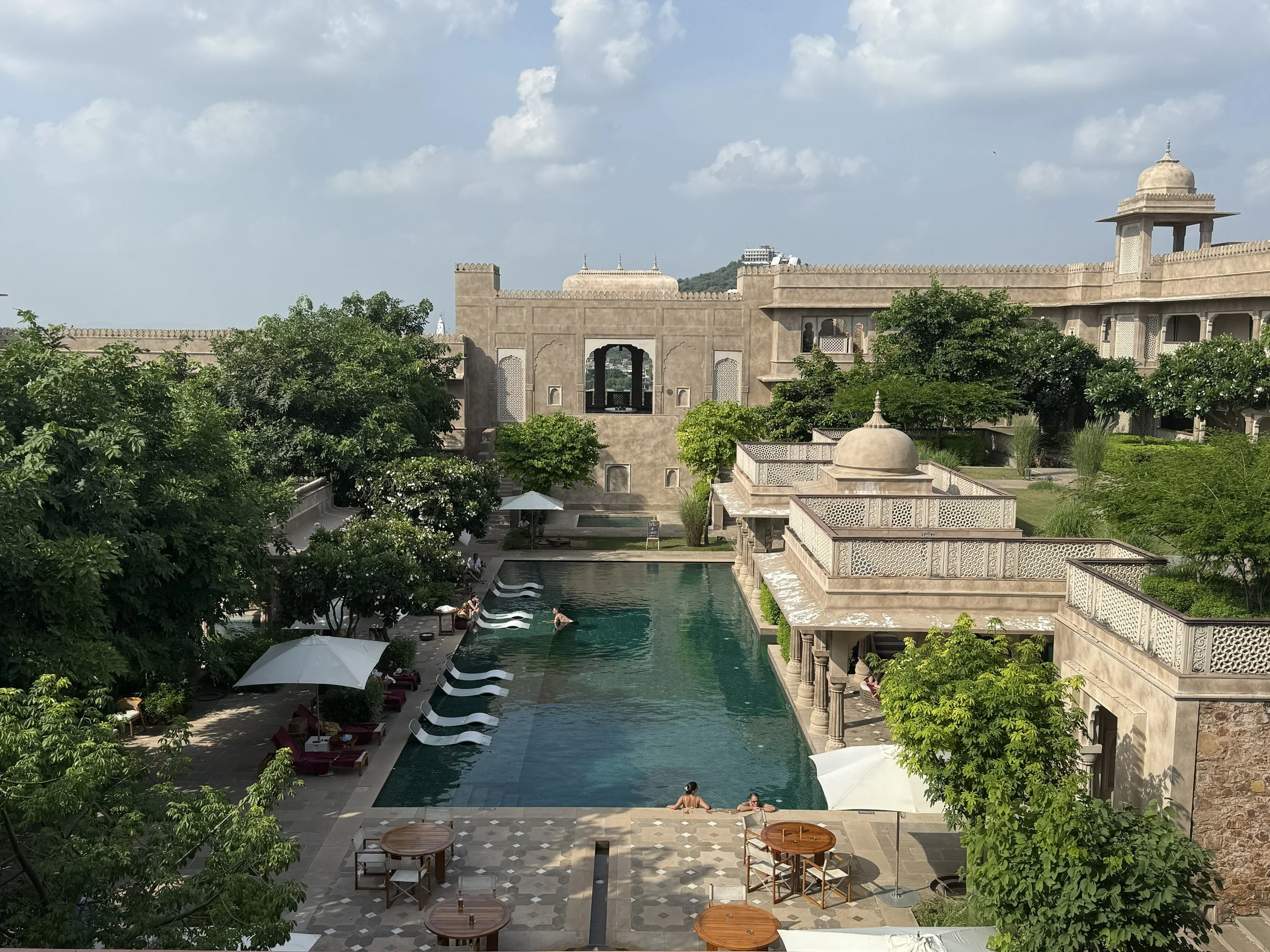
Originally built in the 14th century, Fort Barwara was once home to Rajasthan's royal families.
The fort underwent a meticulous restoration before reopening as Six Senses Fort Barwara in 2021.
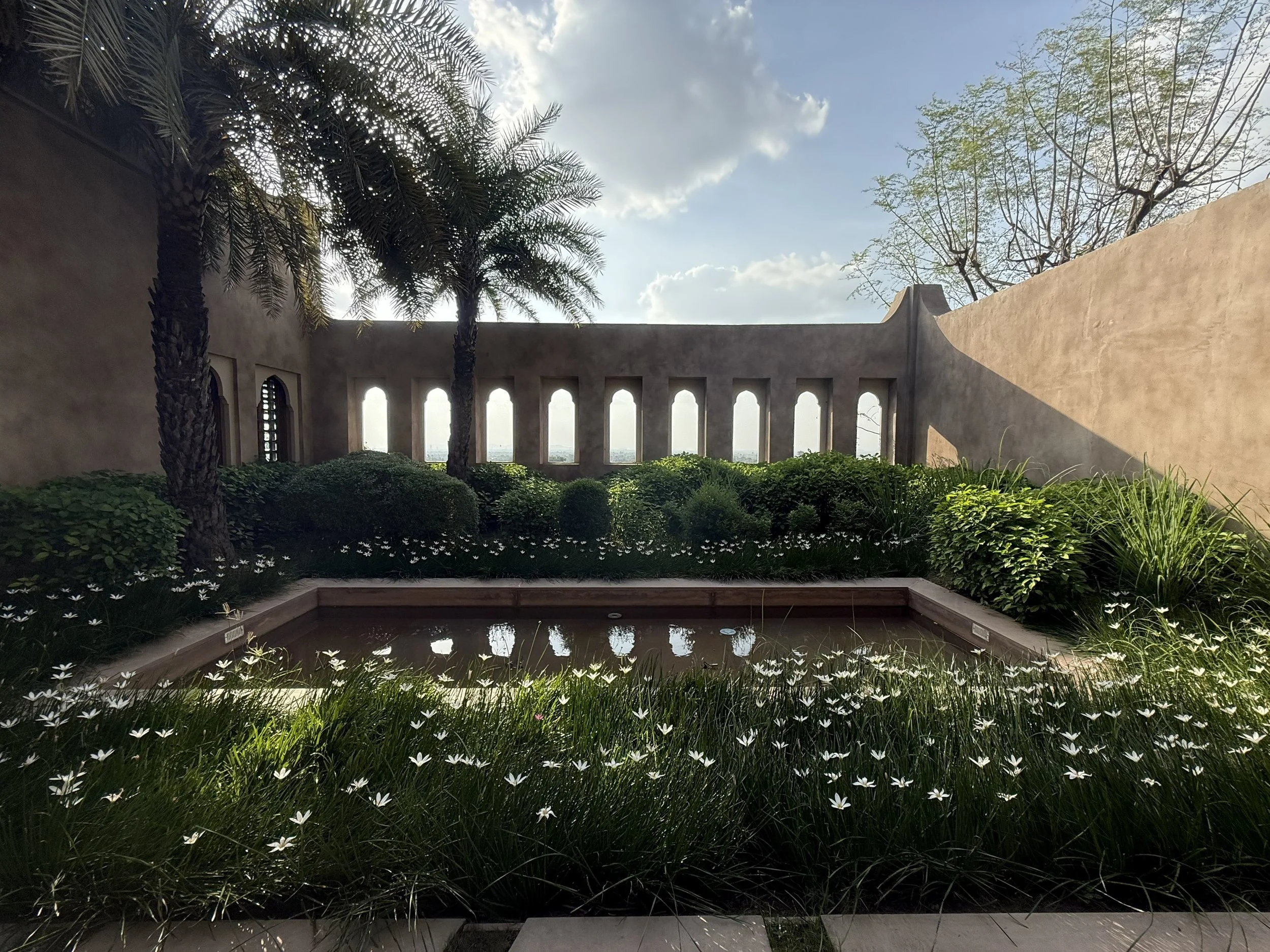
Located in rural Rajasthan, the fort offers a peaceful escape away from the crowds of India's major cities.
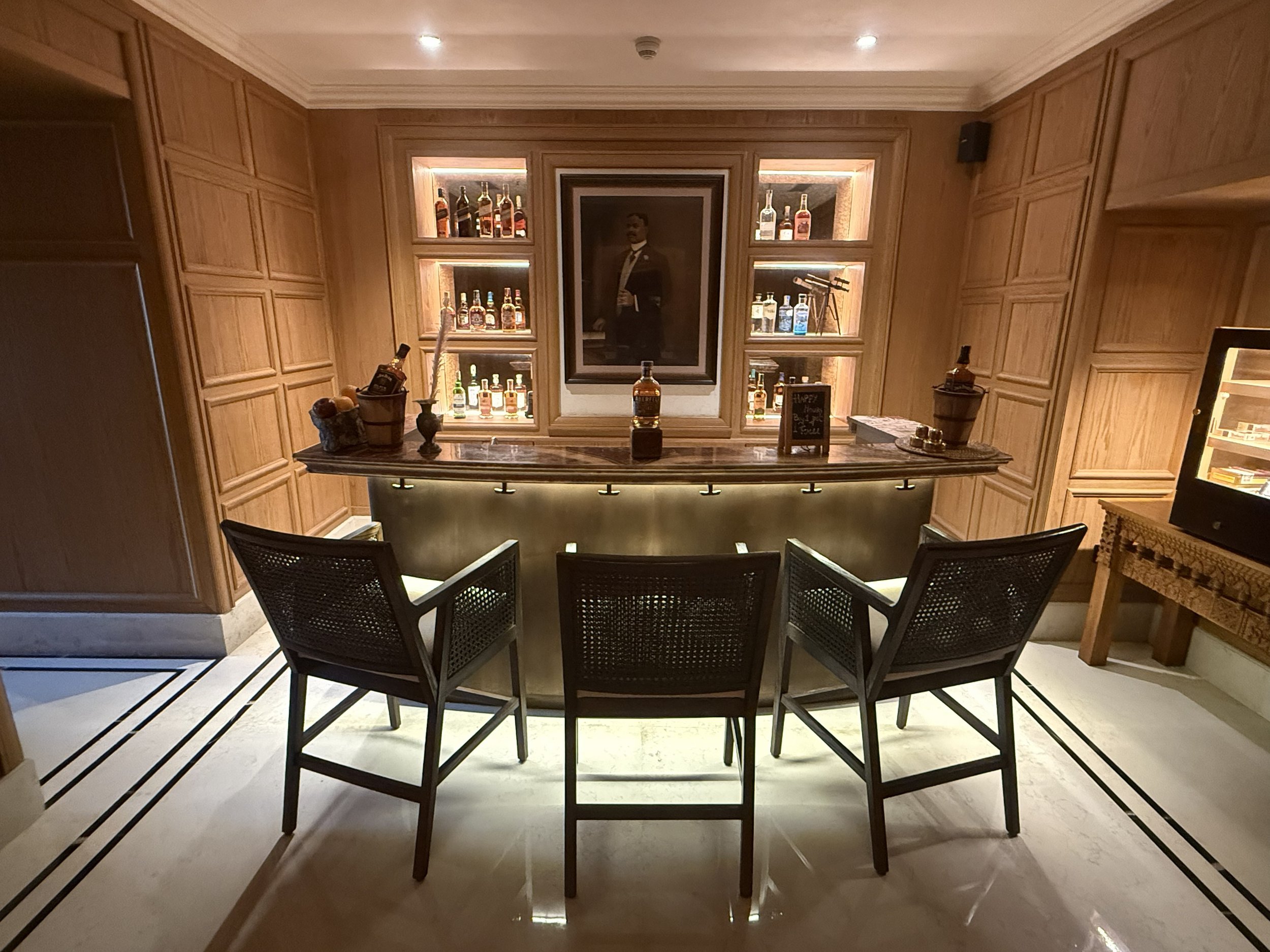
The property features just 48 suites, creating an intimate luxury experience.
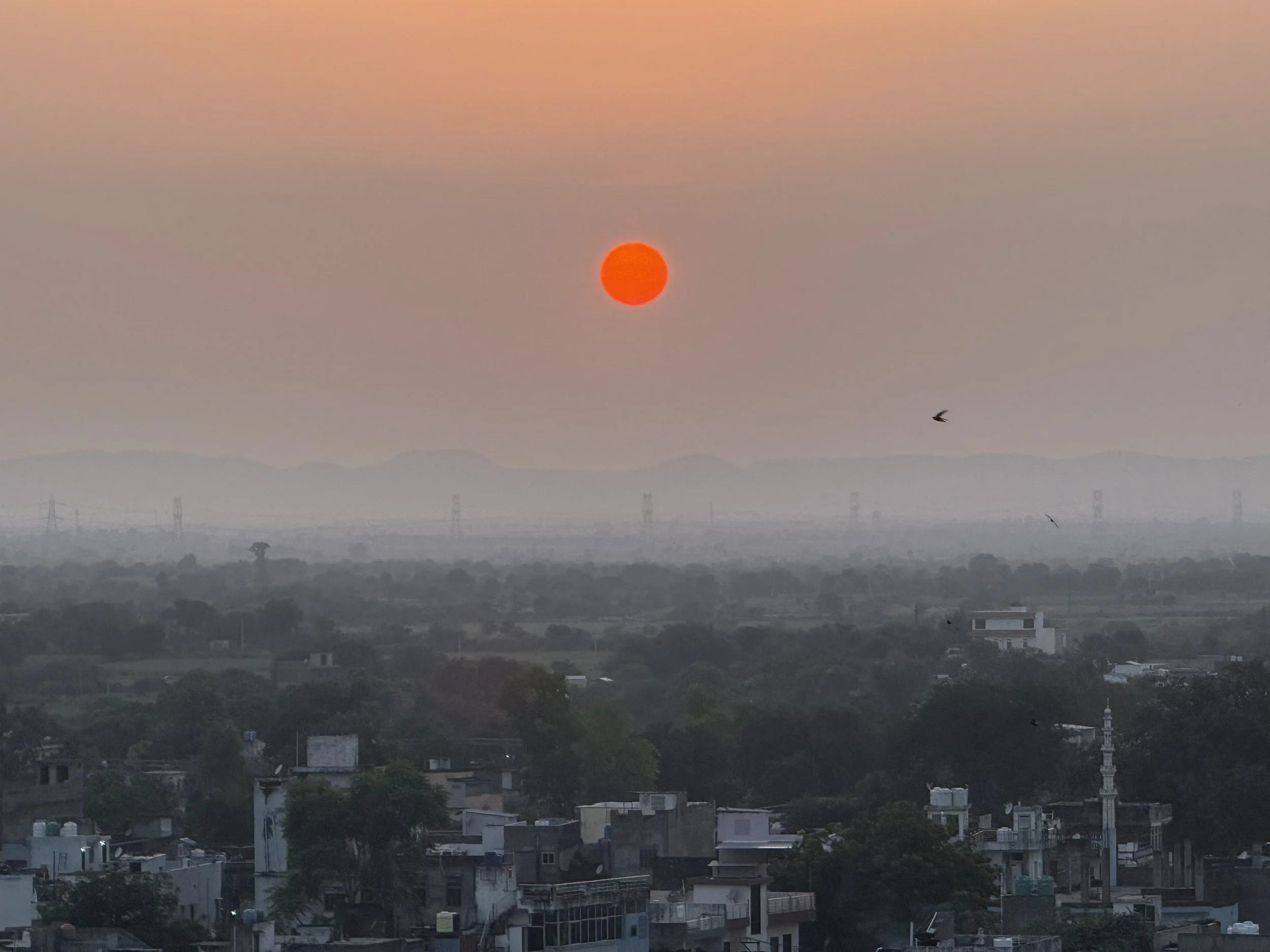
The fort overlooks the Aravalli Hills, one of the world's oldest mountain ranges. The sunset from up here was surreal!
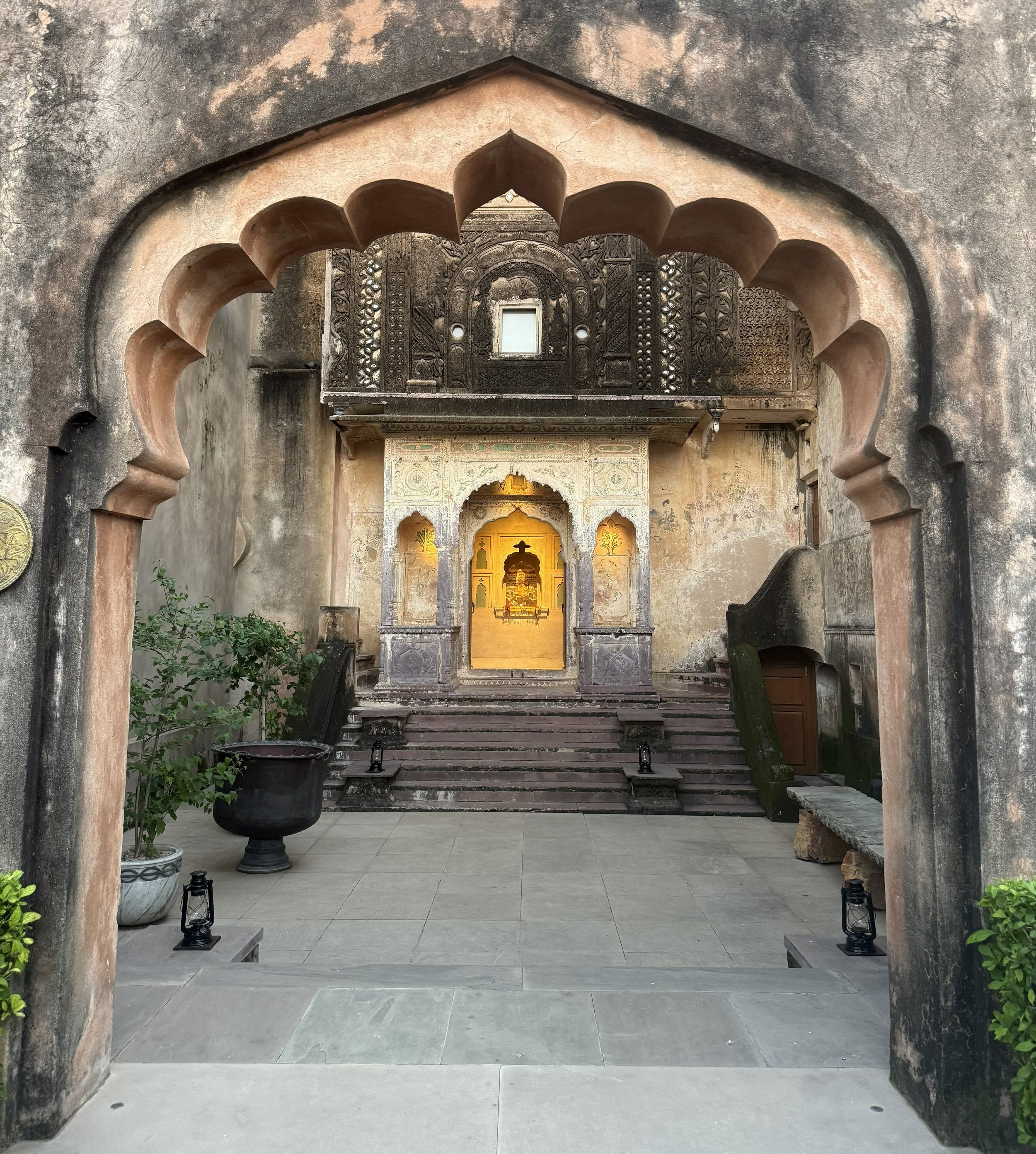
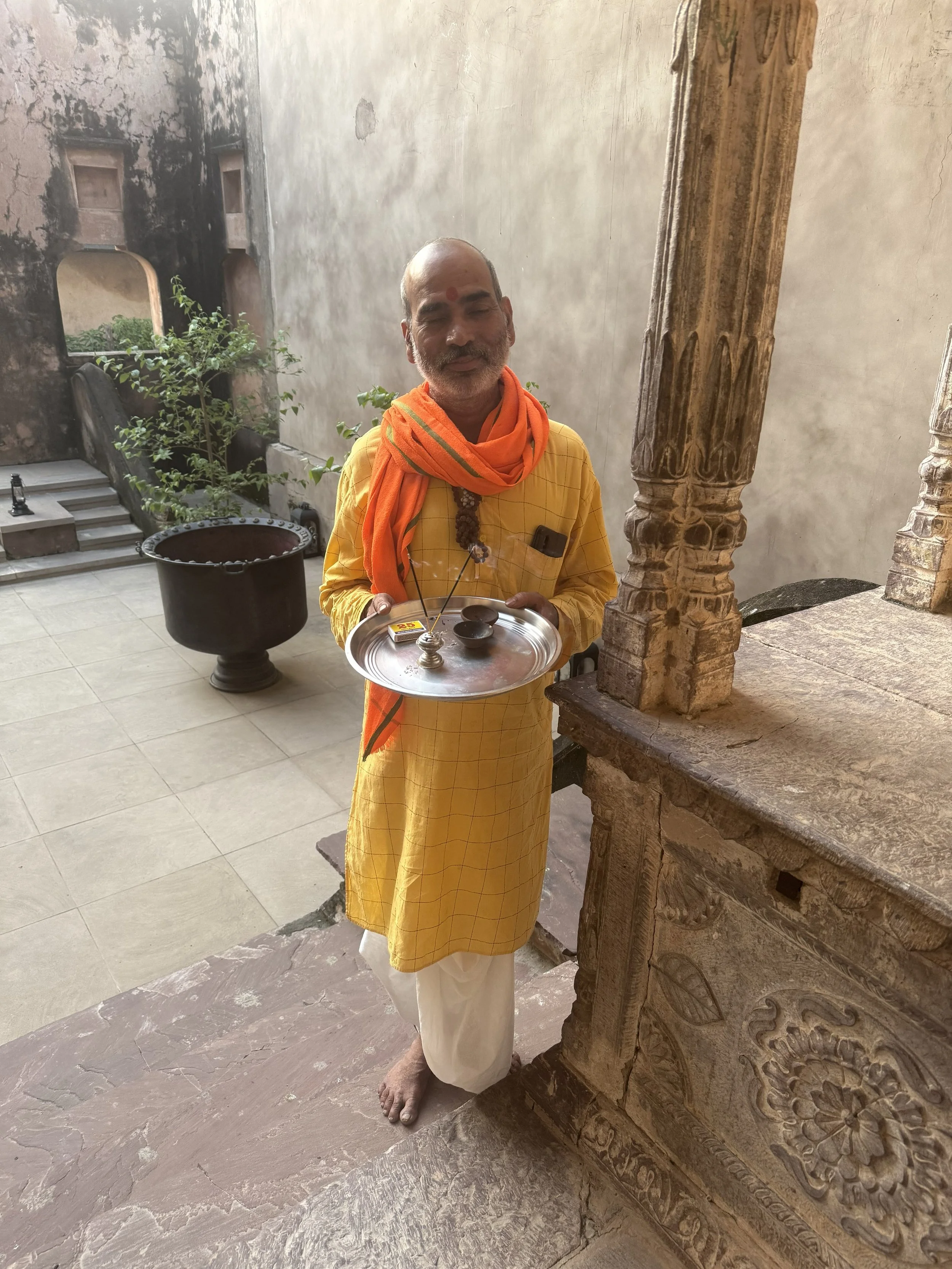
One of the highlights was visiting the historic temple on property, where I received a traditional Hindu blessing before getting ready for dinner.
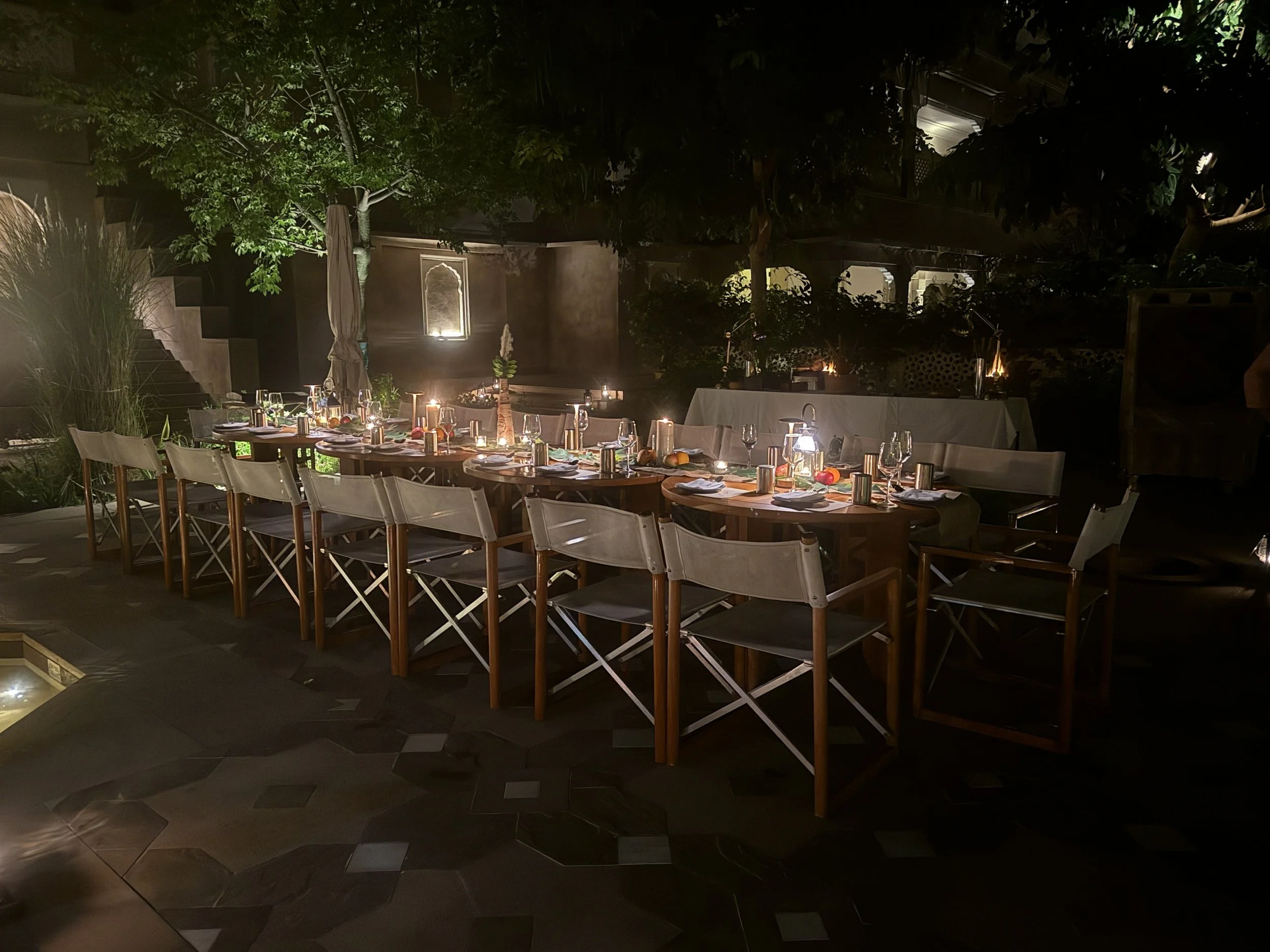
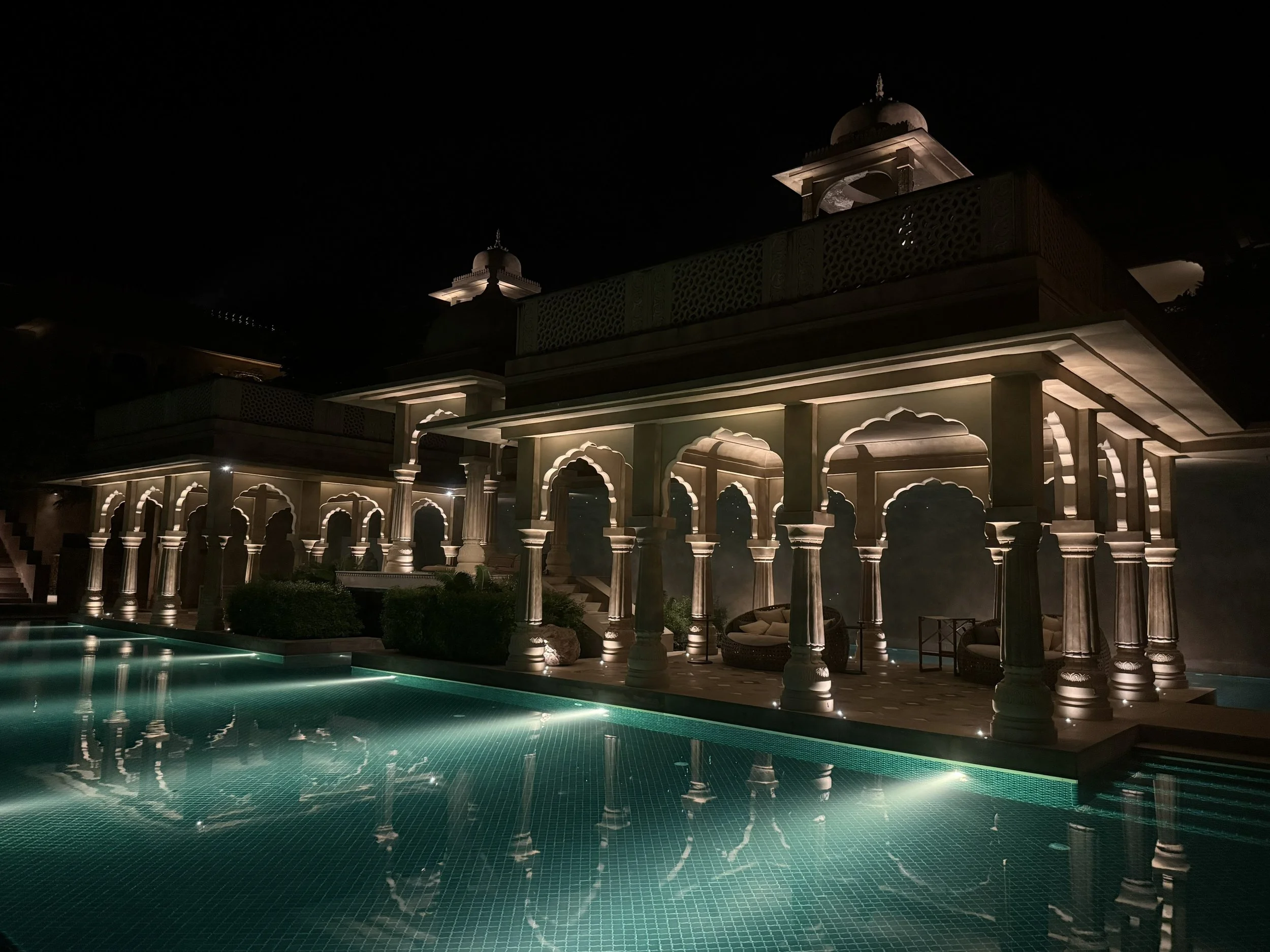
Our farewell dinner at Six Senses Fort Barwara was absolutely fabulous. The team created a beautiful poolside dining experience under the stars, complete with grilled specialties and exceptional service. It was the perfect way to end an unforgettable stay.
After breakfast, we left Six Senses Fort Barwara and made the drive to Jaipur, Rajasthan's vibrant "Pink City”, stopping at the Jantar Mantar Observatory, a UNESCO World Heritage Site.
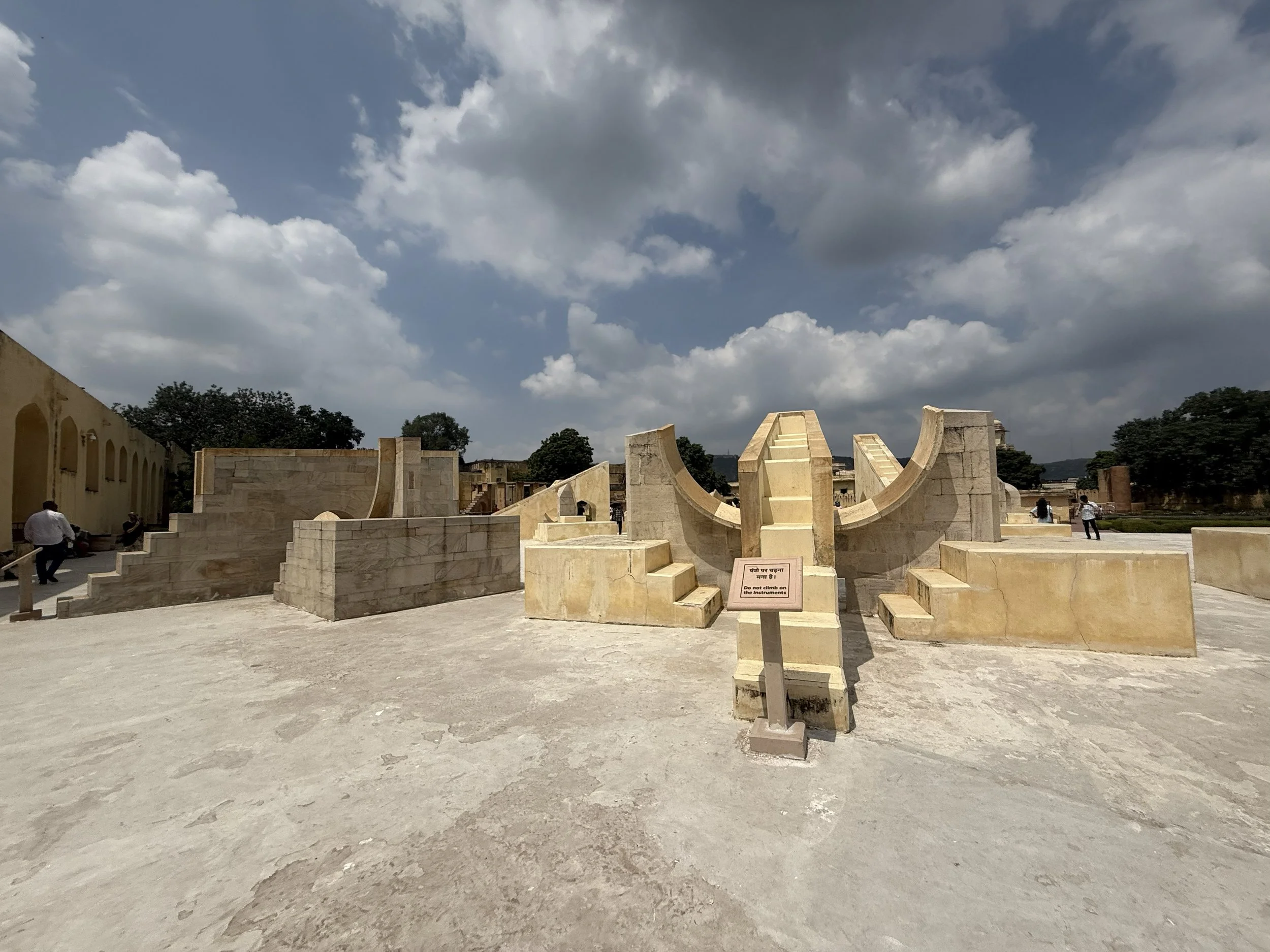
Built in the early 1700s, Jantar Mantar contains the world's largest stone sundial and is still accurate to within seconds.
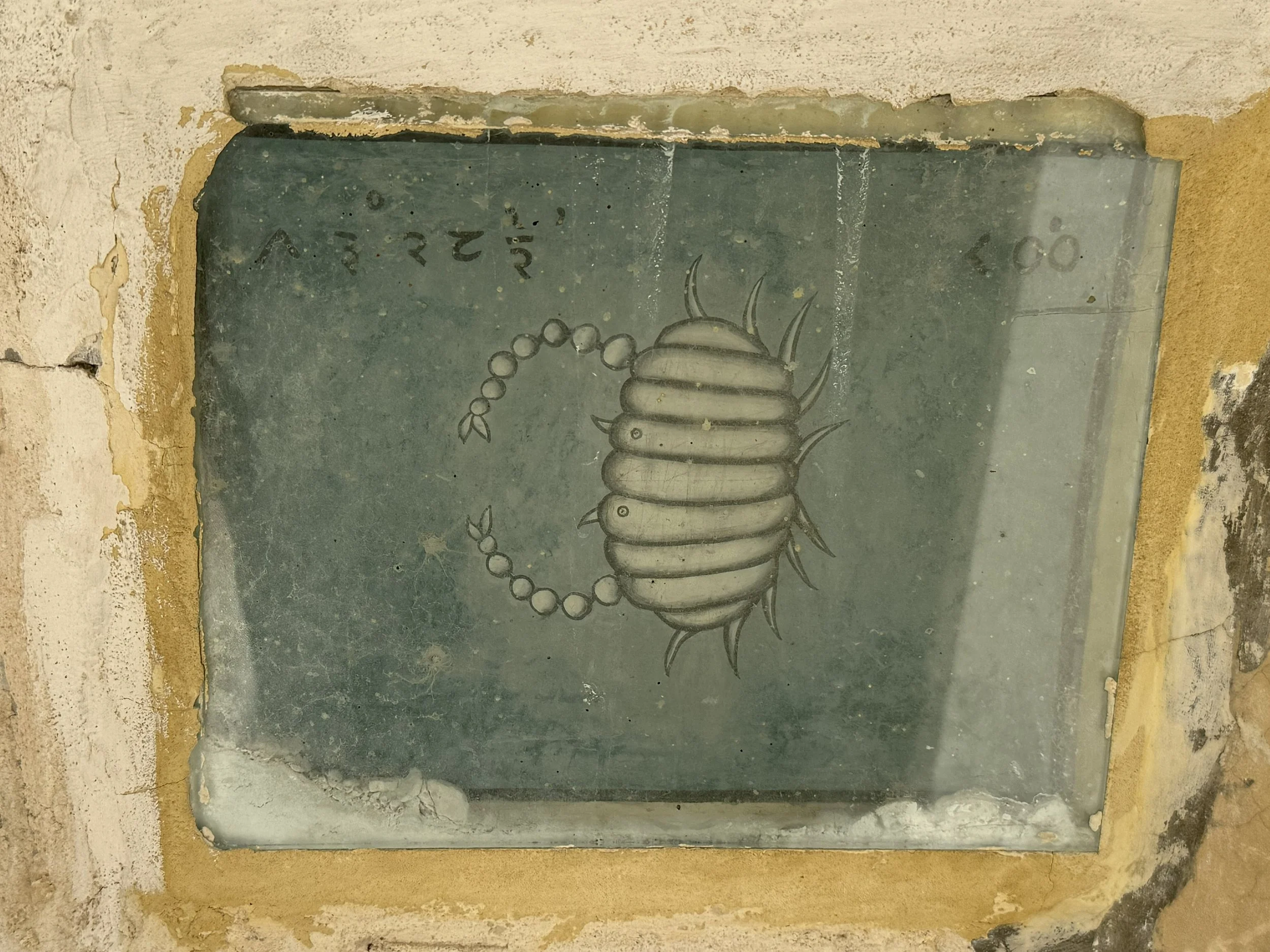
Depiction of my astrological sign, Cancer.
Our next stop in Jaipur was the City Palace. It was incredible to walk through the beautiful courtyards and rooms while learning about the history of Jaipur and its royal family.
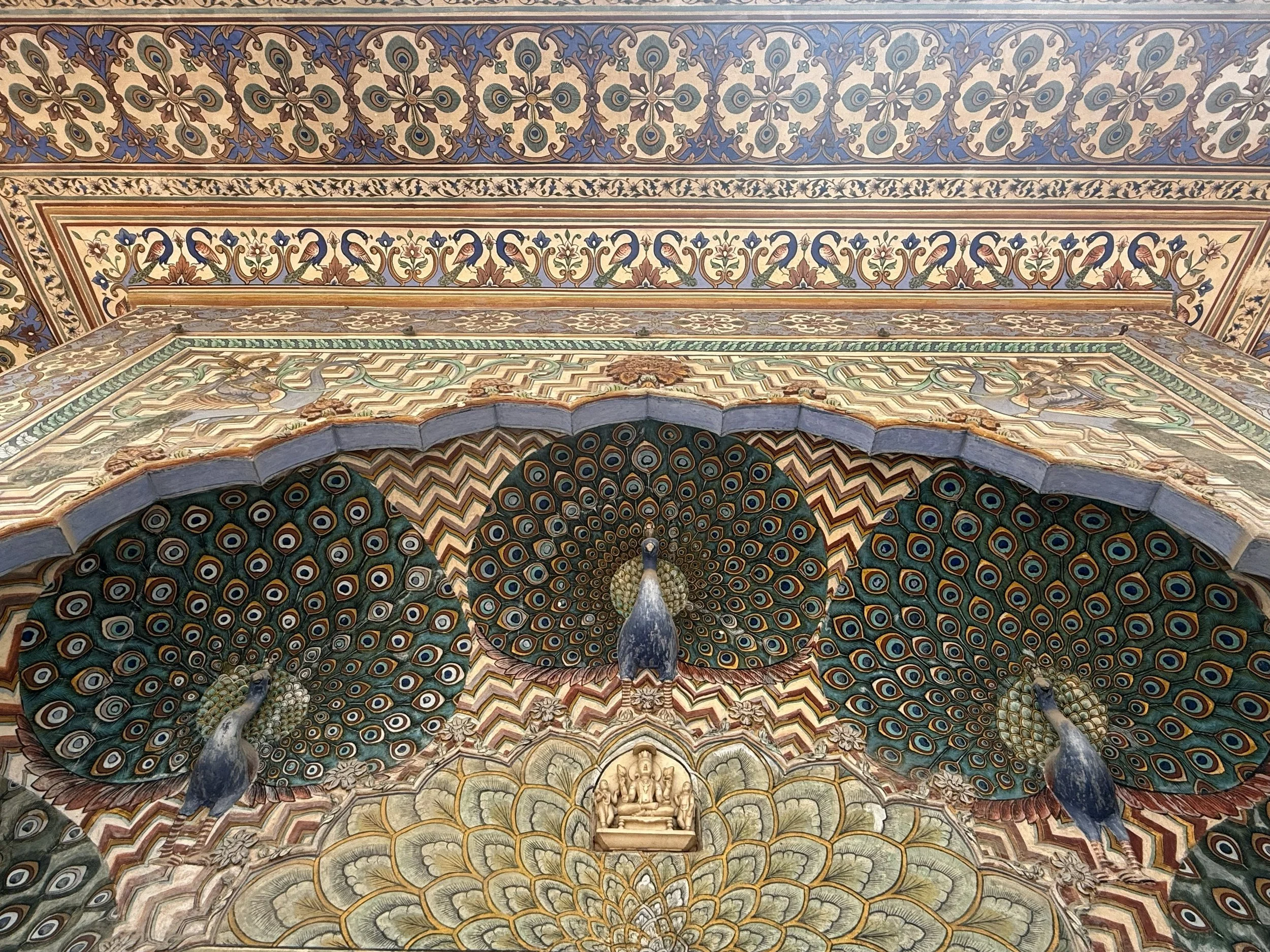
This intricately decorated archway is known as the Peacock Gate.
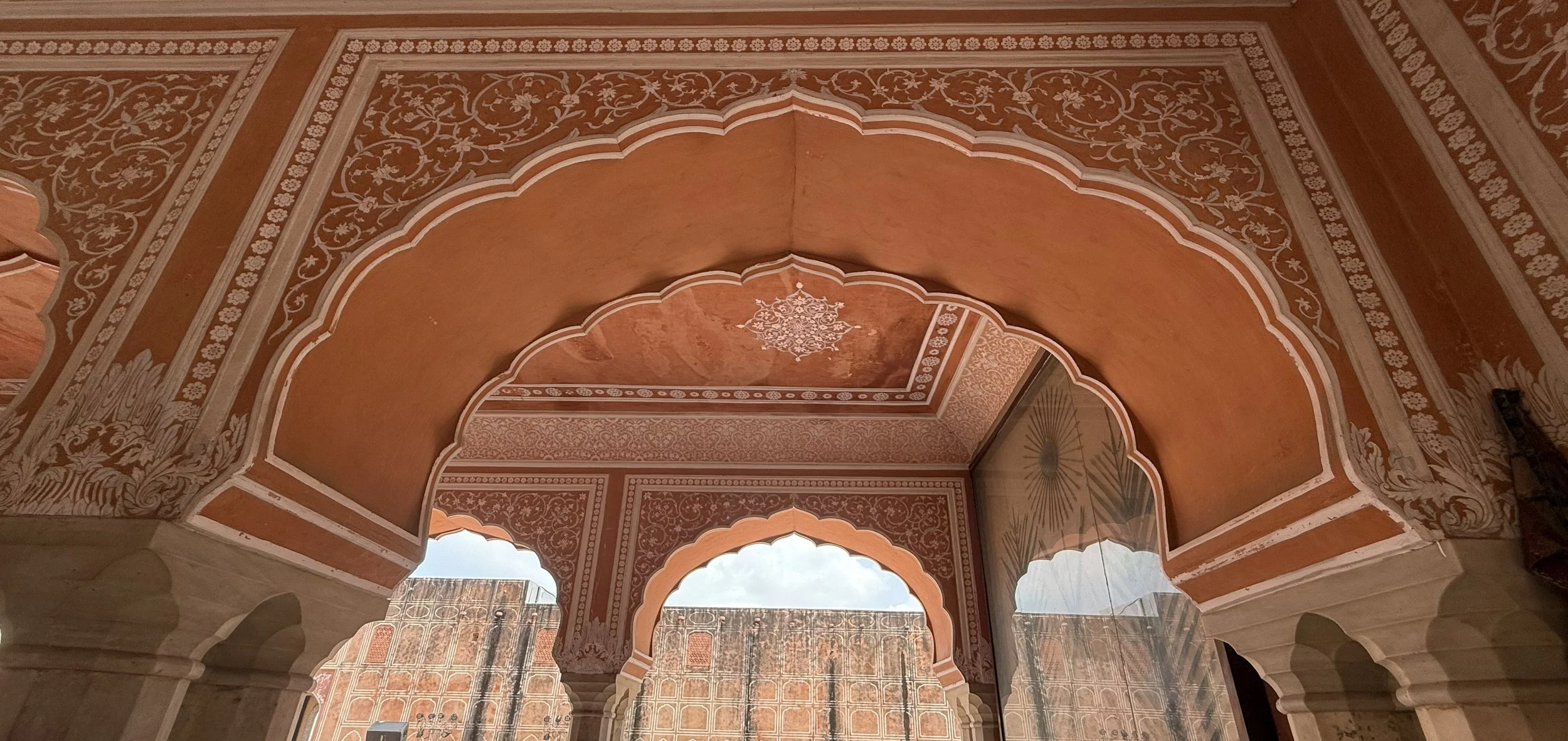
The beautiful archways and intricate artwork are what make Jaipur's City Palace so unforgettable.
Our next stop was the beautiful Rambagh Palace, our home for the next two nights. I was immediately blown away by how stunning the property was.
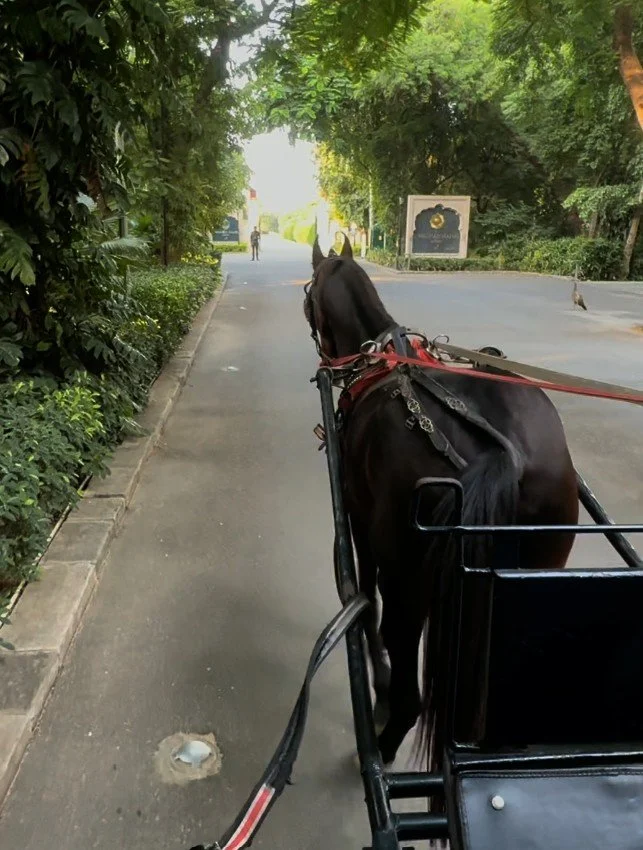
Talk about a grand entrance! We arrived at Rambagh Palace by horse and carriage.
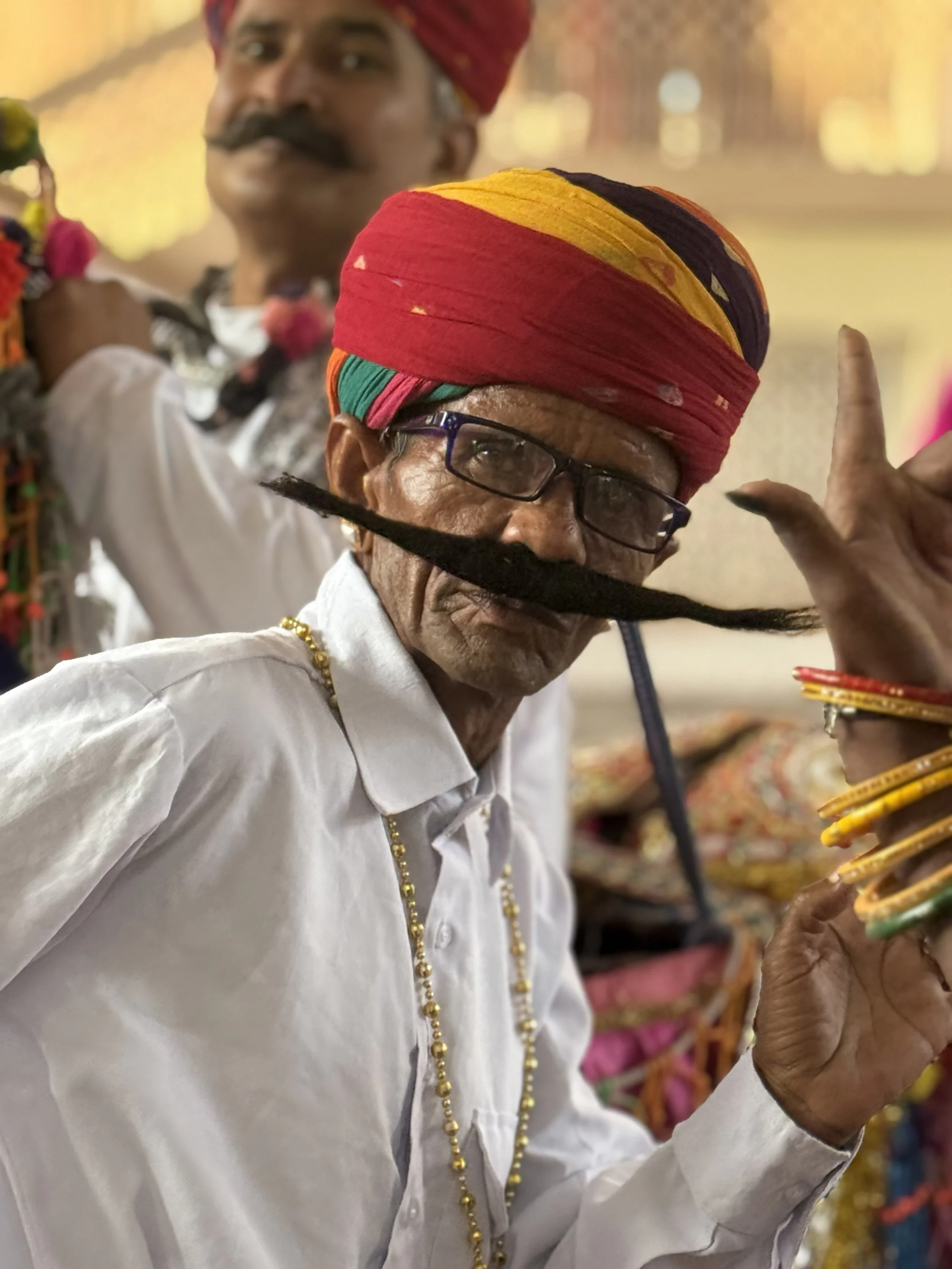
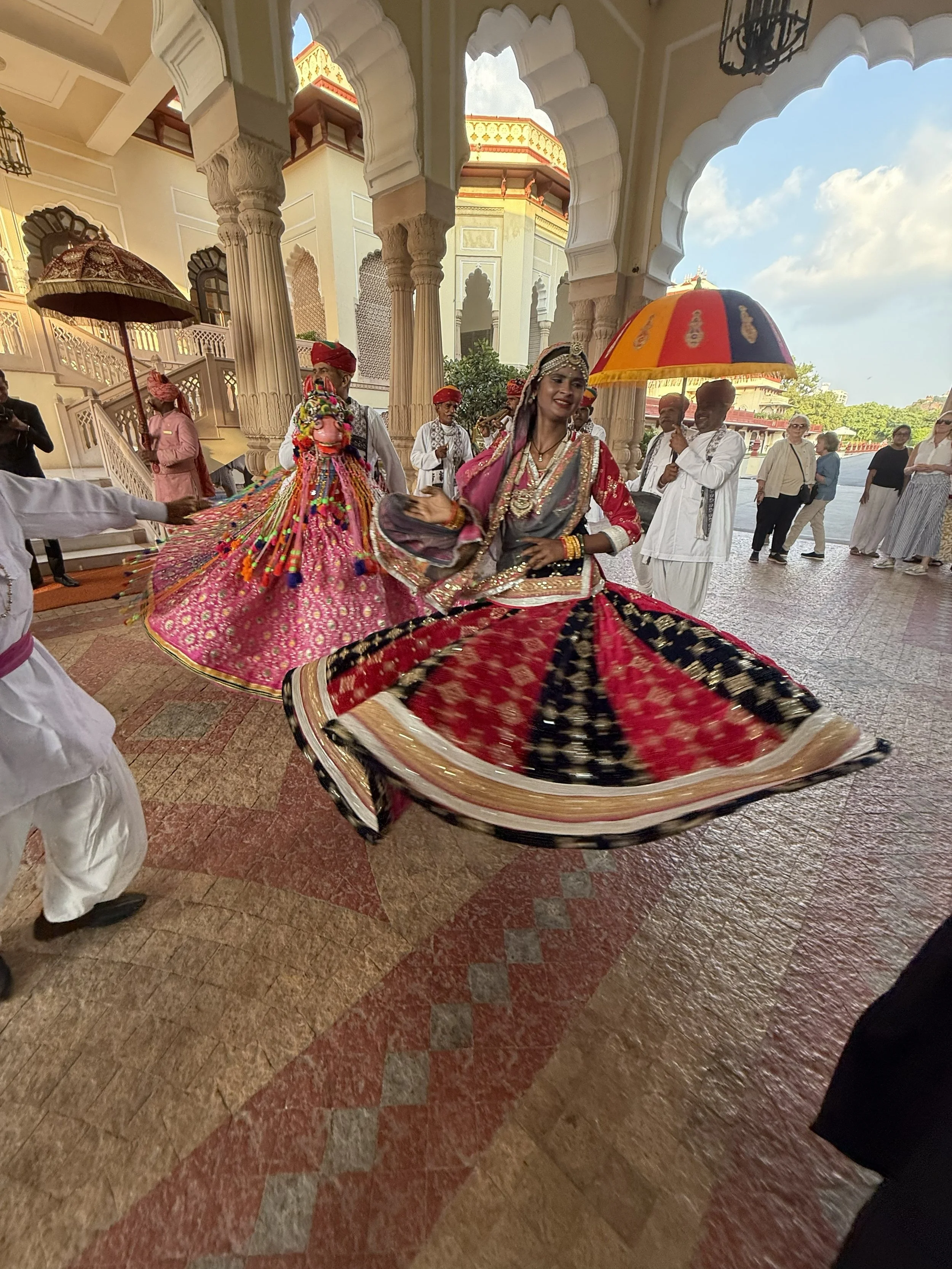
Once we arrived at the front entrance of the palace, we were welcomed with a colorful celebration featuring traditional dancers, musicians, and vibrant local costumes.
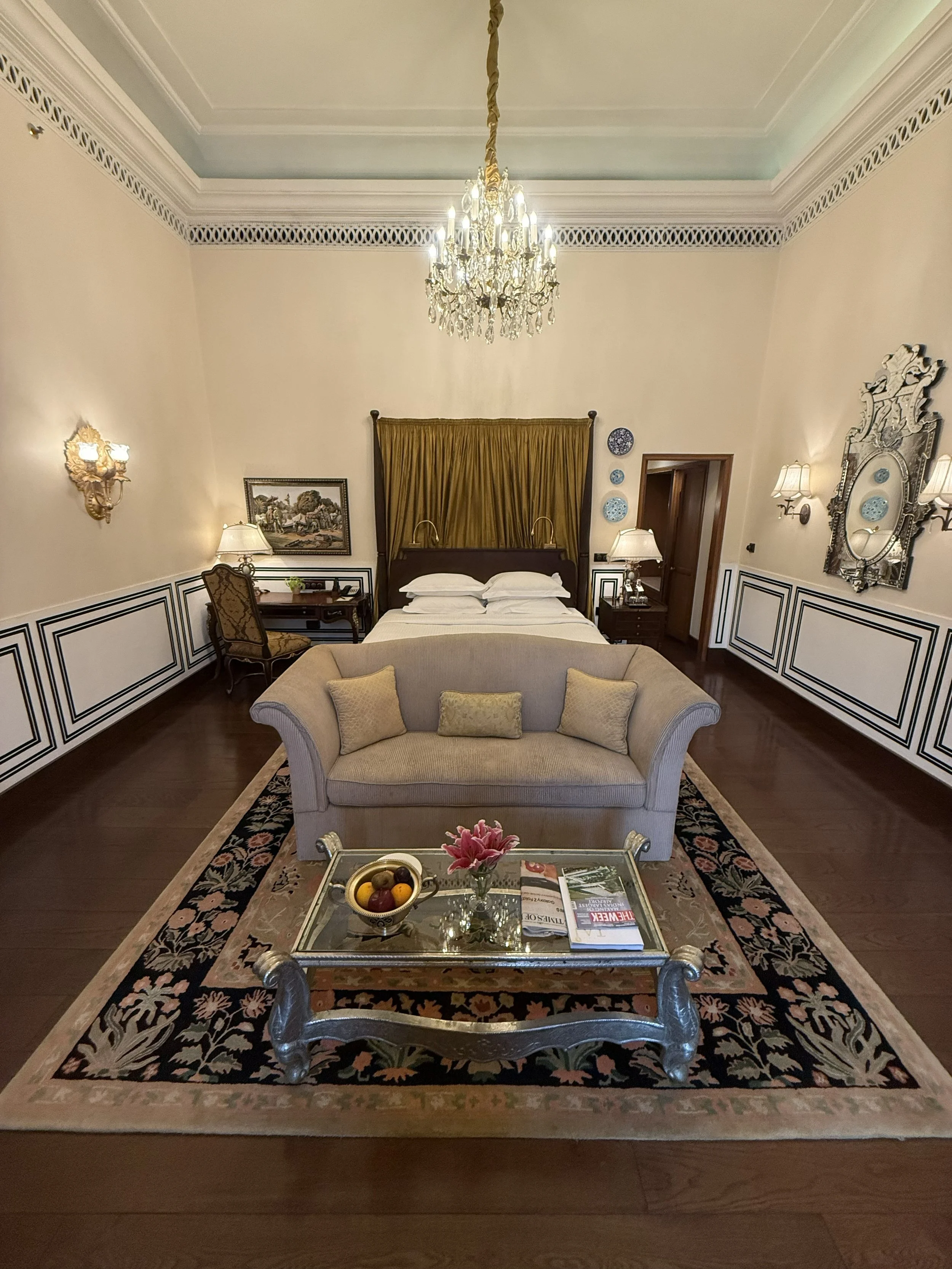
My room was absolutely beautiful, and from the moment I stepped inside, I really felt like I was staying in a former royal palace.
The rest of the afternoon was spent exploring the beautiful grounds of Rambagh Palace before gathering for another wonderful dinner. It was the perfect way to settle in and soak up the incredible atmosphere of this former royal residence.
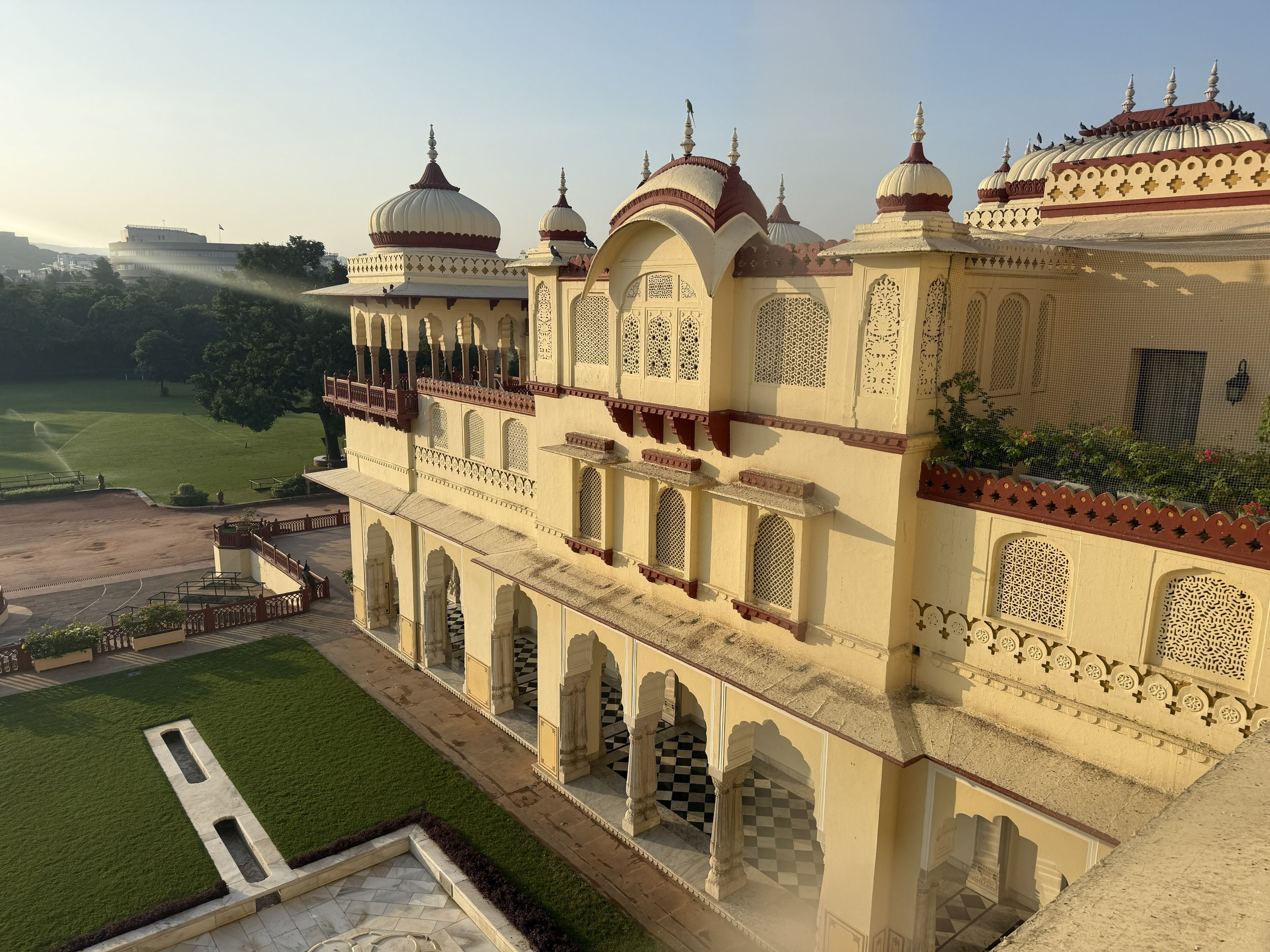
The palace dates back to 1835 and has served as a royal residence for nearly a century. Today, Rambagh Palace is managed by Taj Hotels and is often called the "Jewel of Jaipur."
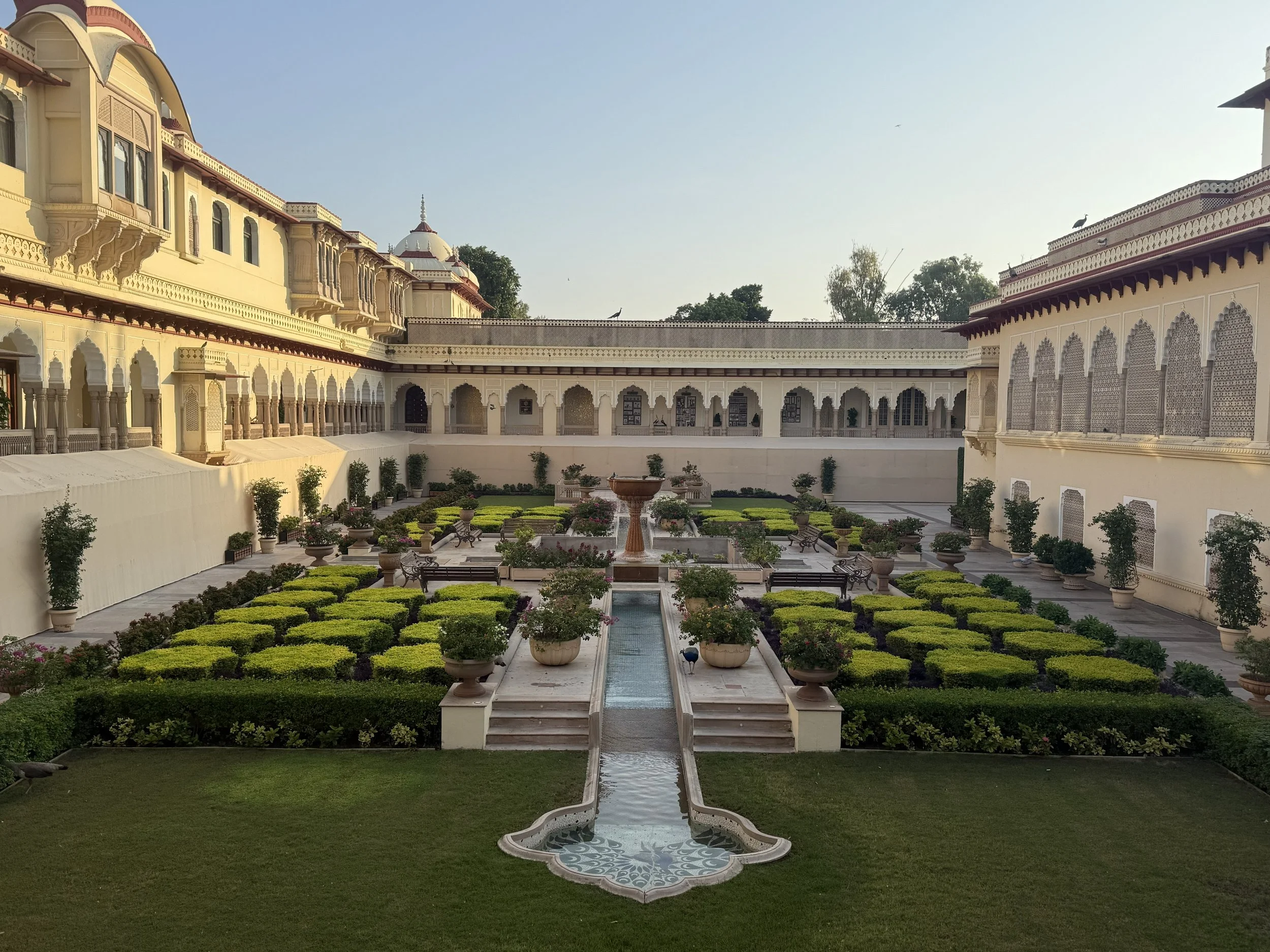
The beautifully manicured gardens are just as impressive as the palace itself.
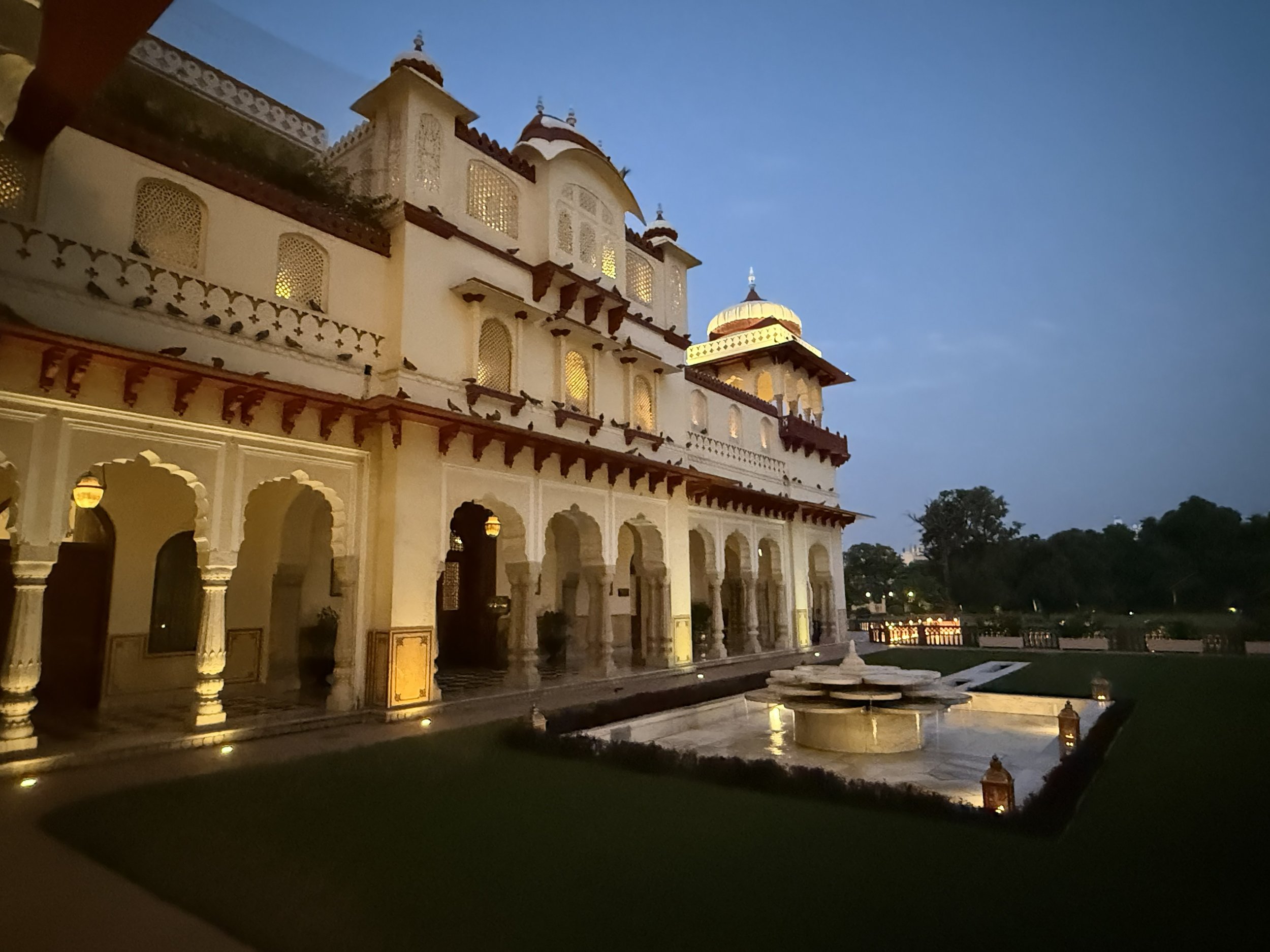
As the sun set over Rambagh Palace, the entire property took on a magical glow.
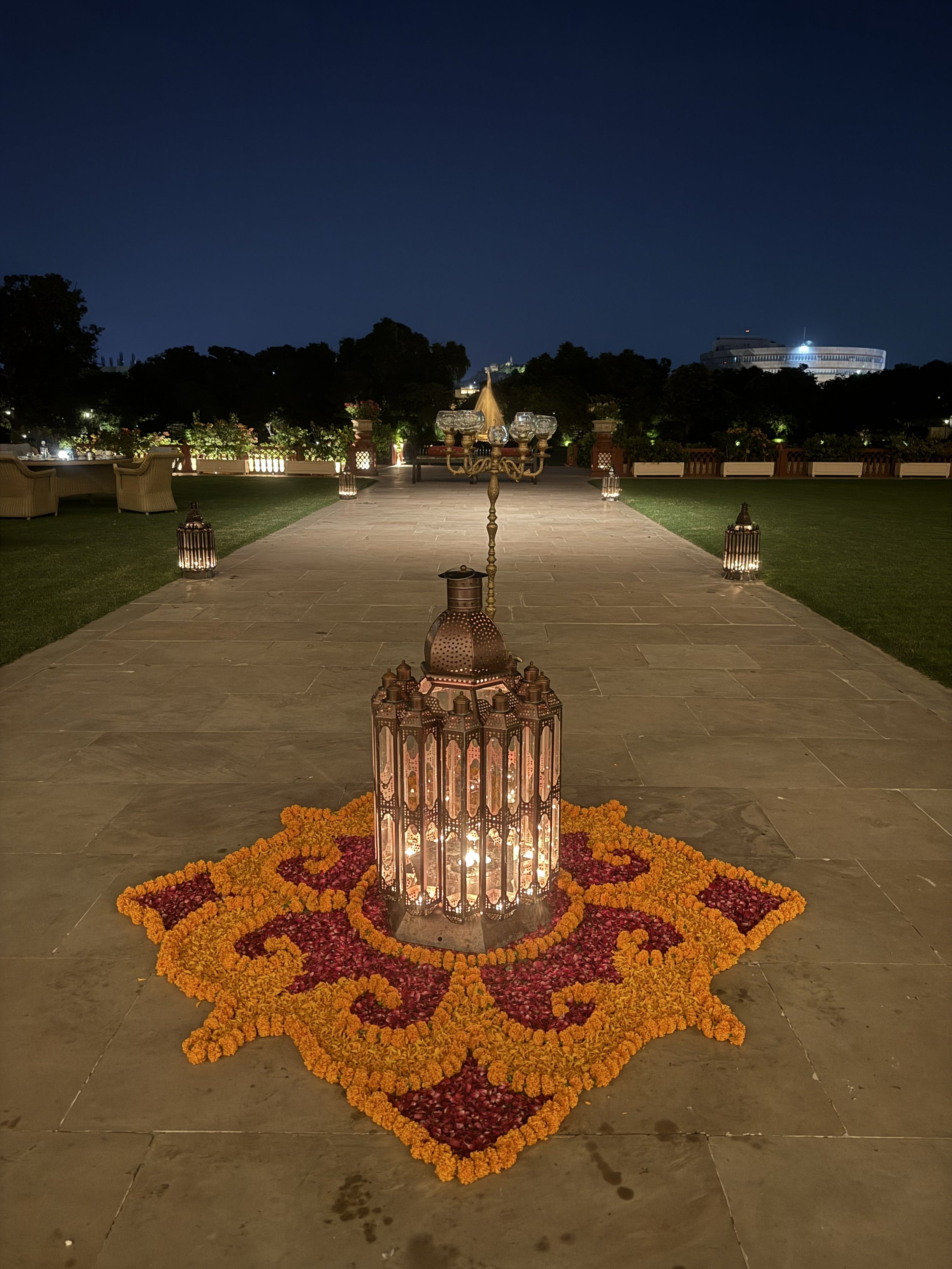
The intricate floral displays were handcrafted each day and made the palace feel even more special.
My favorite thing about Rambagh Palace, though, had to be the peacocks. 🦚
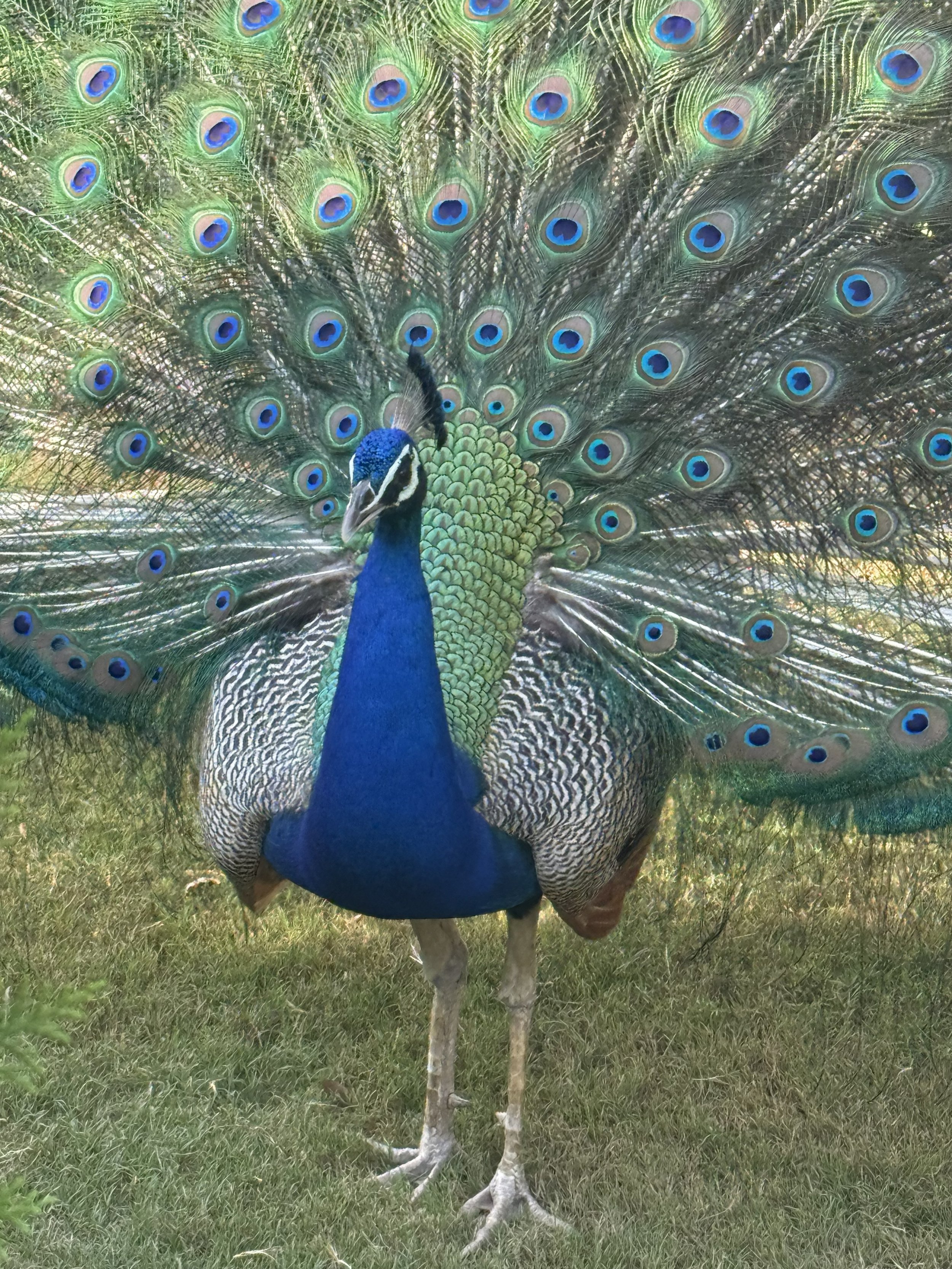
Once protected by Jaipur's royal family, they're still cared for today and seem to have the run of the property, making appearances on the lawns, rooftops, and even outside guest rooms.
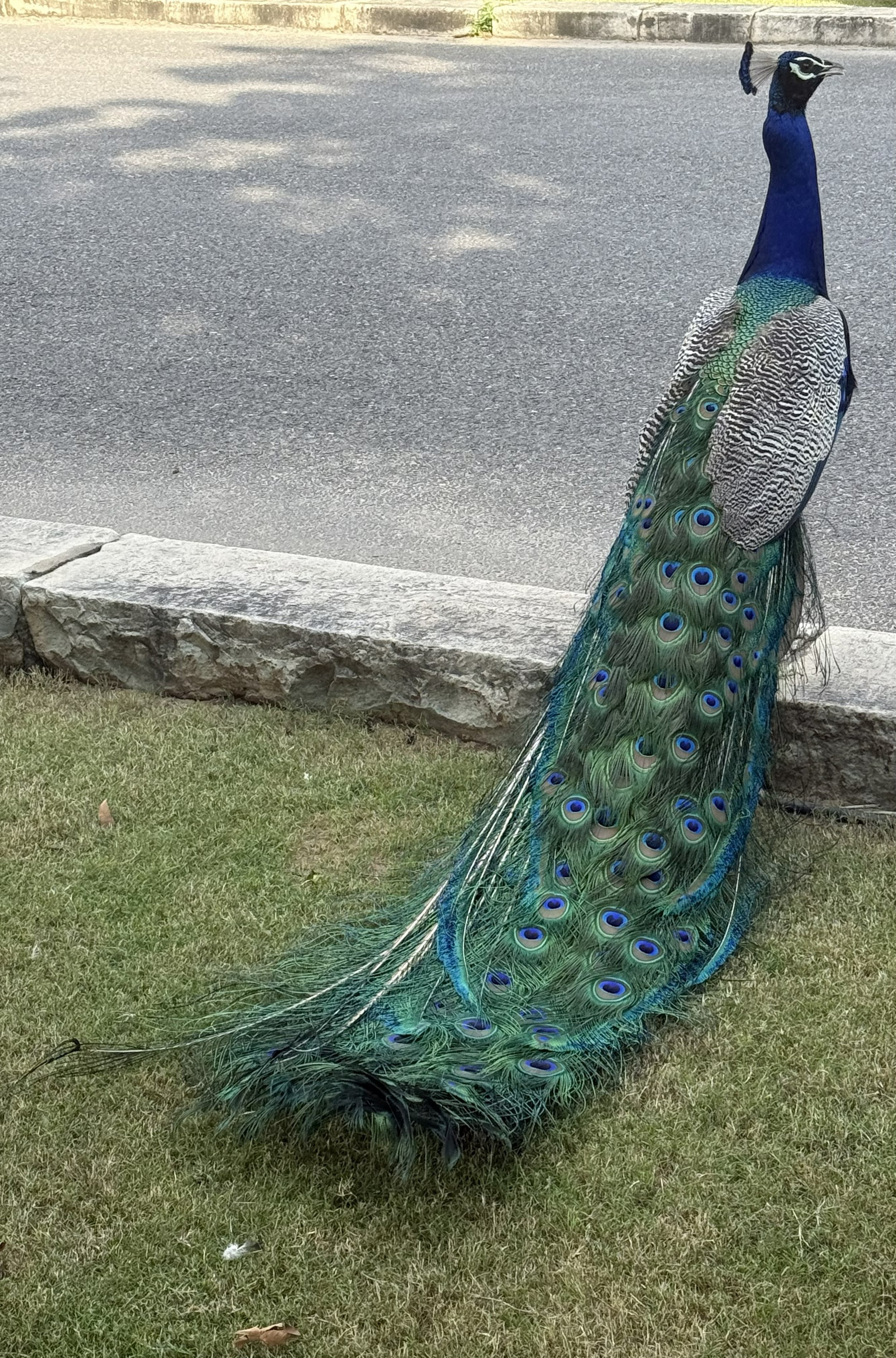
Peacocks are India's national bird and are considered a symbol of beauty, grace, and good fortune.
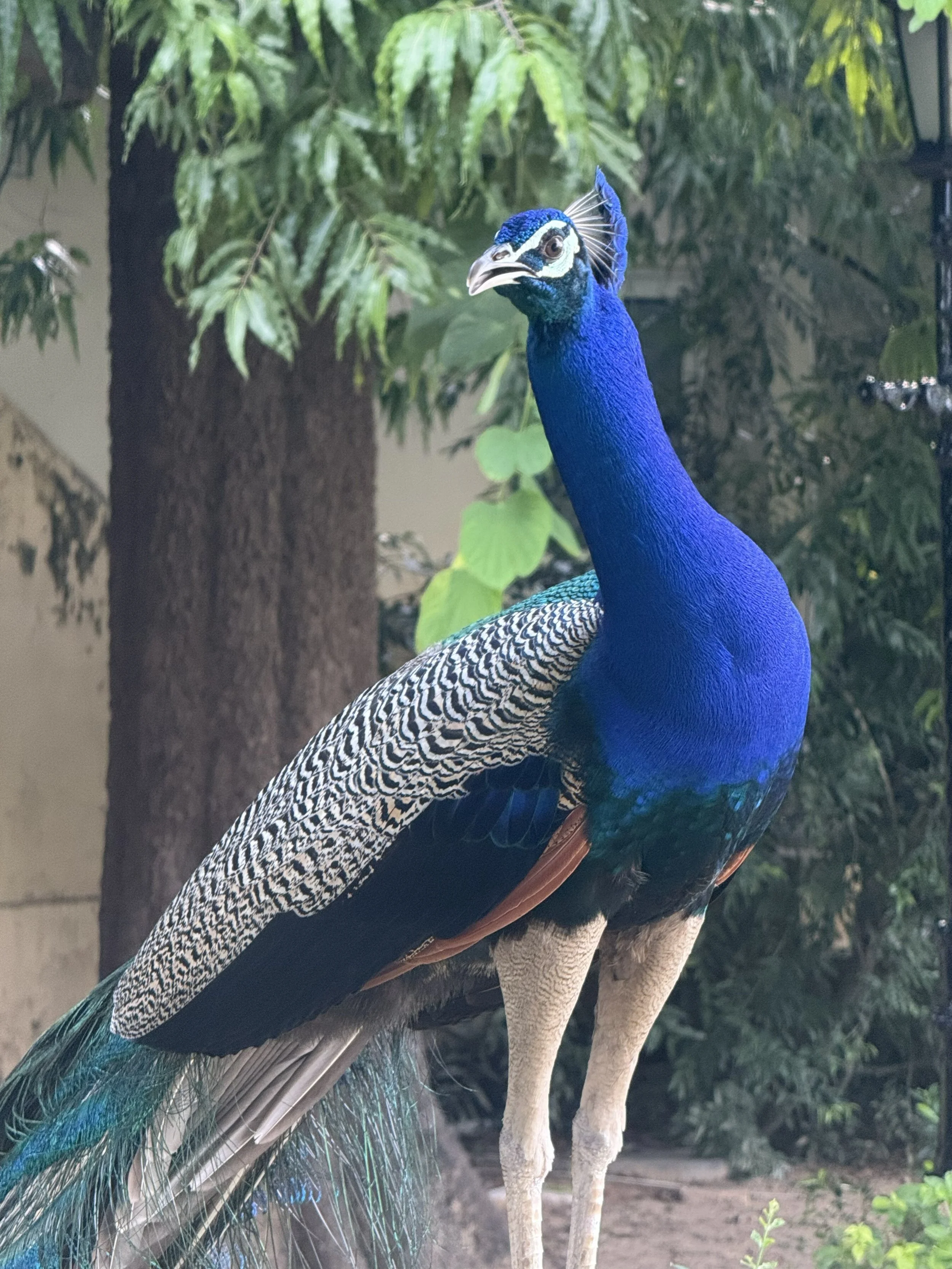
Around 150 peacocks and call the 47-acre estate home, and they've been roaming these gardens for generations—long before the palace became a luxury hotel.
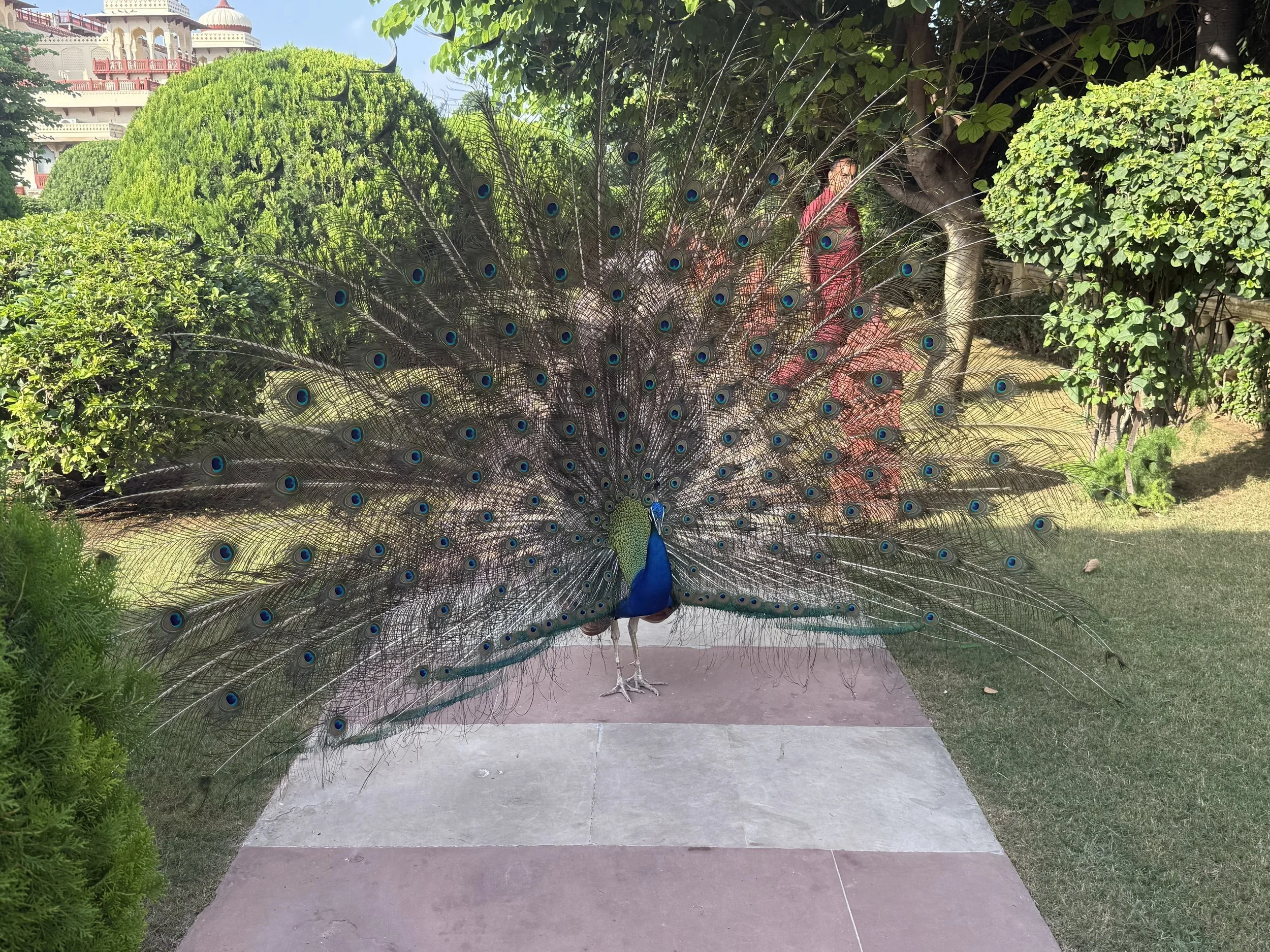
No matter where I was on the property, there always seemed to be a peacock nearby. They quickly became one of my favorite parts of my stay at Rambagh Palace.
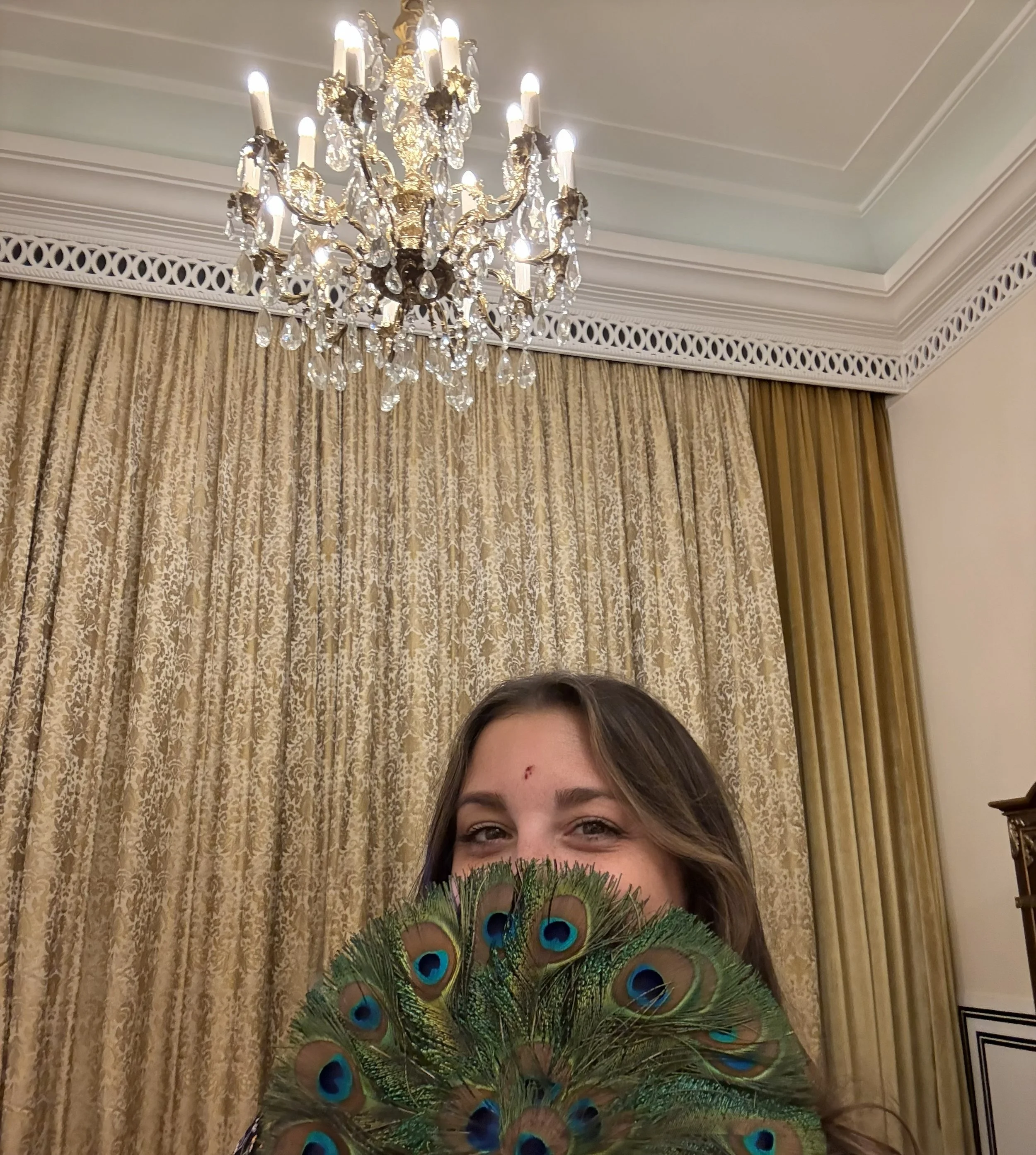
Of course, I had to get a peacock fan before leaving!
The next morning, our first stop was Jaipur's famous Palace of the Winds. Its beautiful pink sandstone façade, covered with hundreds of tiny windows, is one of the city's most iconic landmarks.
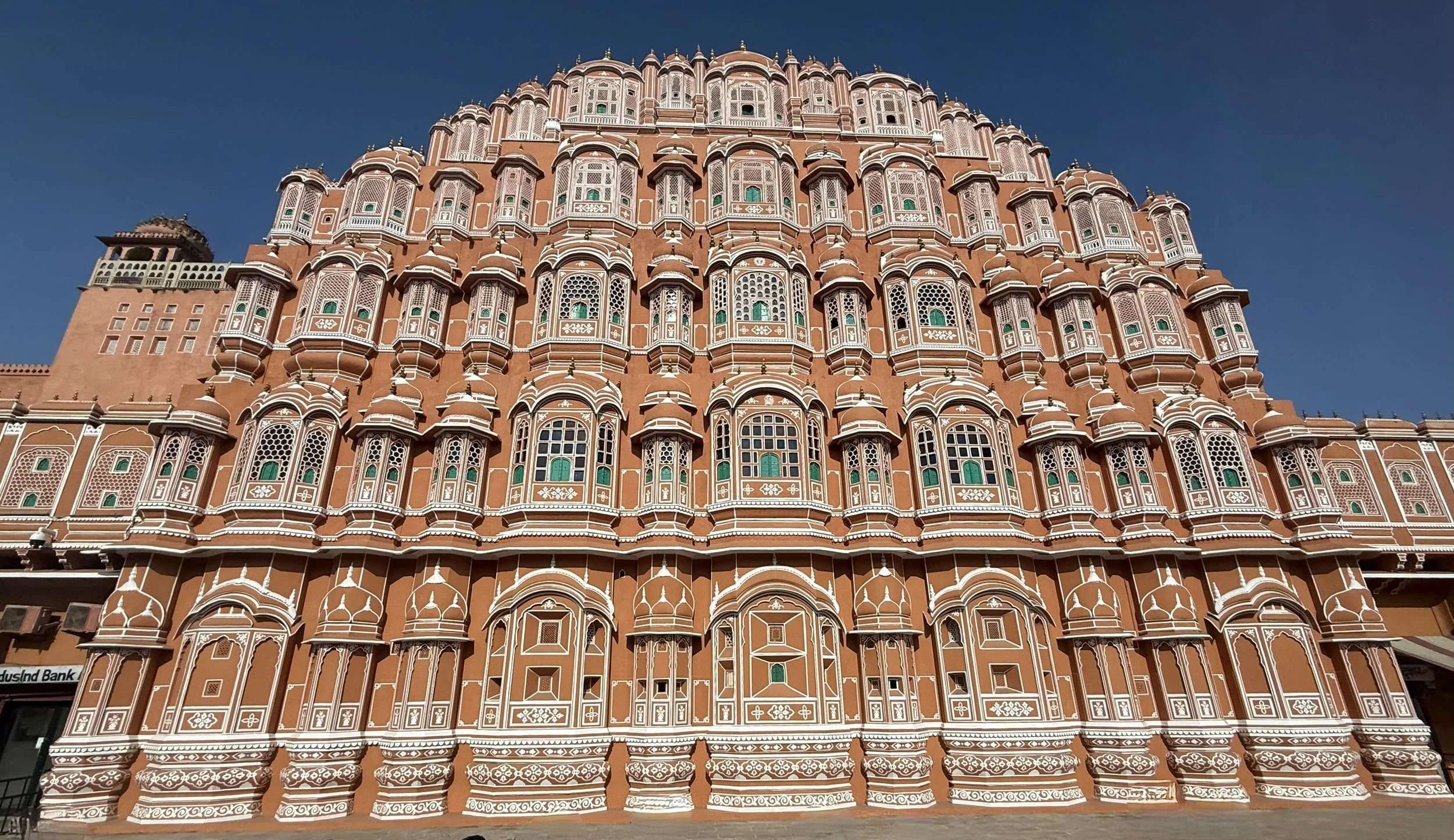
The Palace of the Winds, or Hawa Mahal, was built in 1799 with 953 tiny windows so royal women could watch life in the city without being seen.
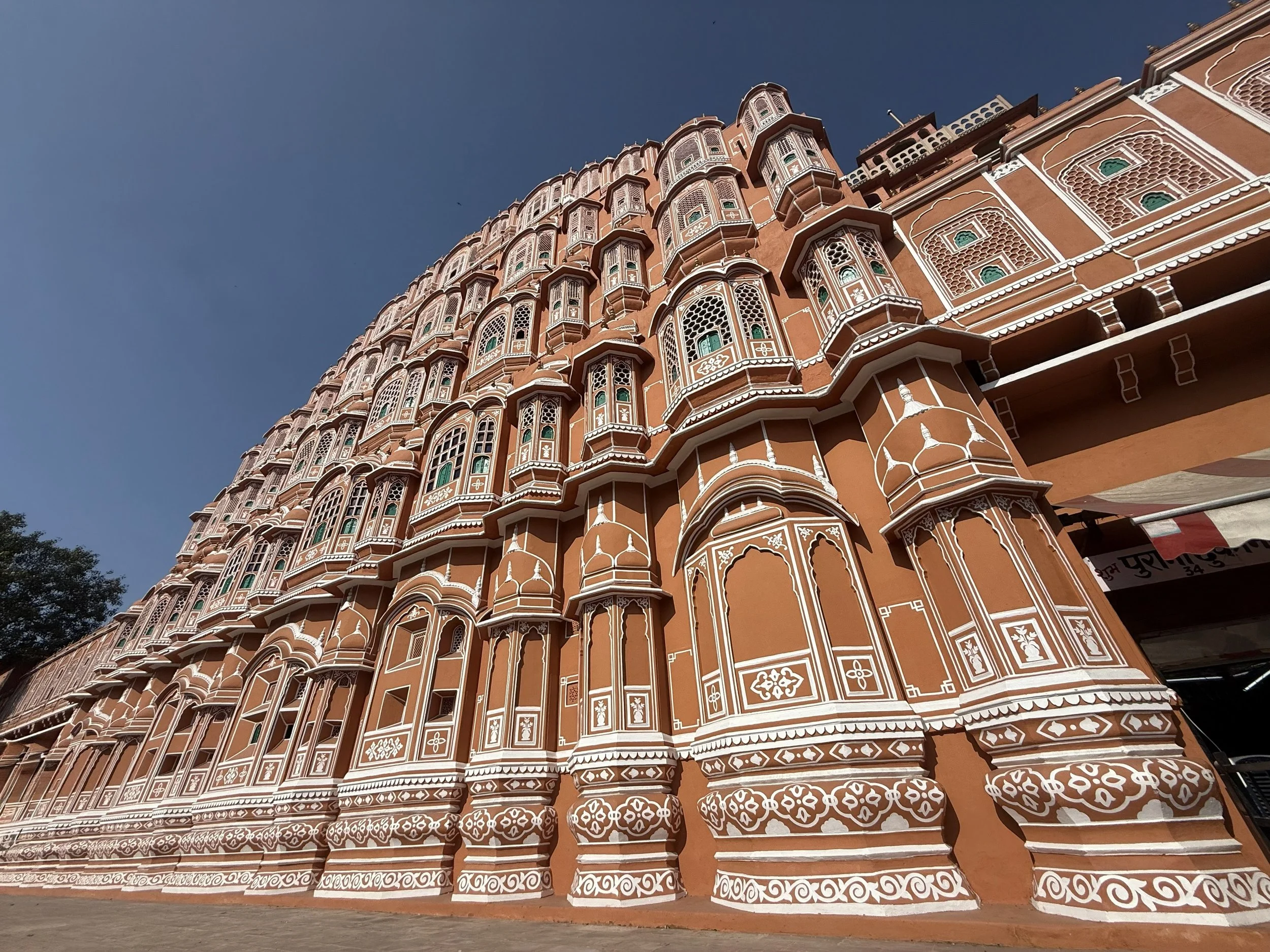
Despite its grand appearance, the Palace of the Winds is only one room deep. Its unique honeycomb design allowed cool breezes to flow through the palace, providing natural air conditioning in Rajasthan's hot climate.
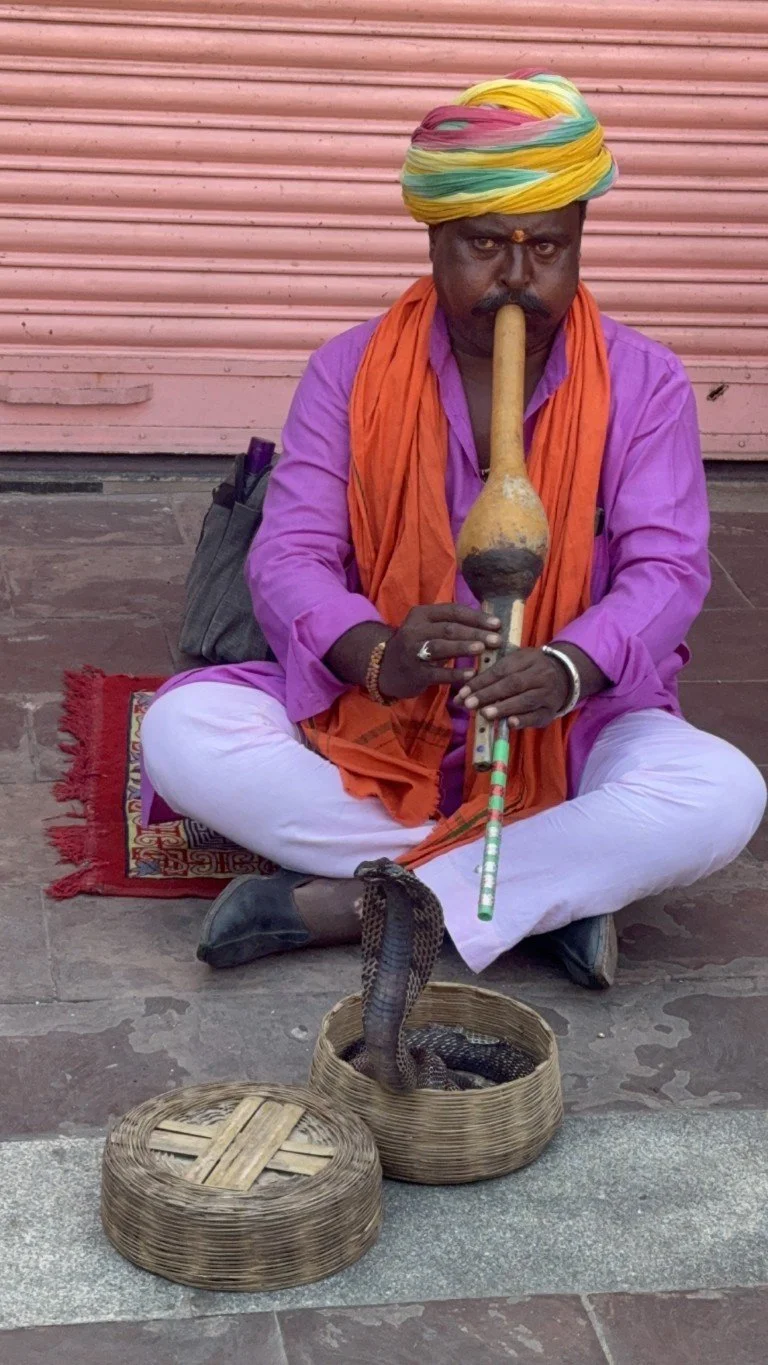
We even encountered a cobra charmer!
Next, we were off to Amber Fort. Perched high on a hill overlooking Maota Lake, the massive fort is known for its beautiful courtyards, intricate carvings, and sweeping views of the surrounding countryside.
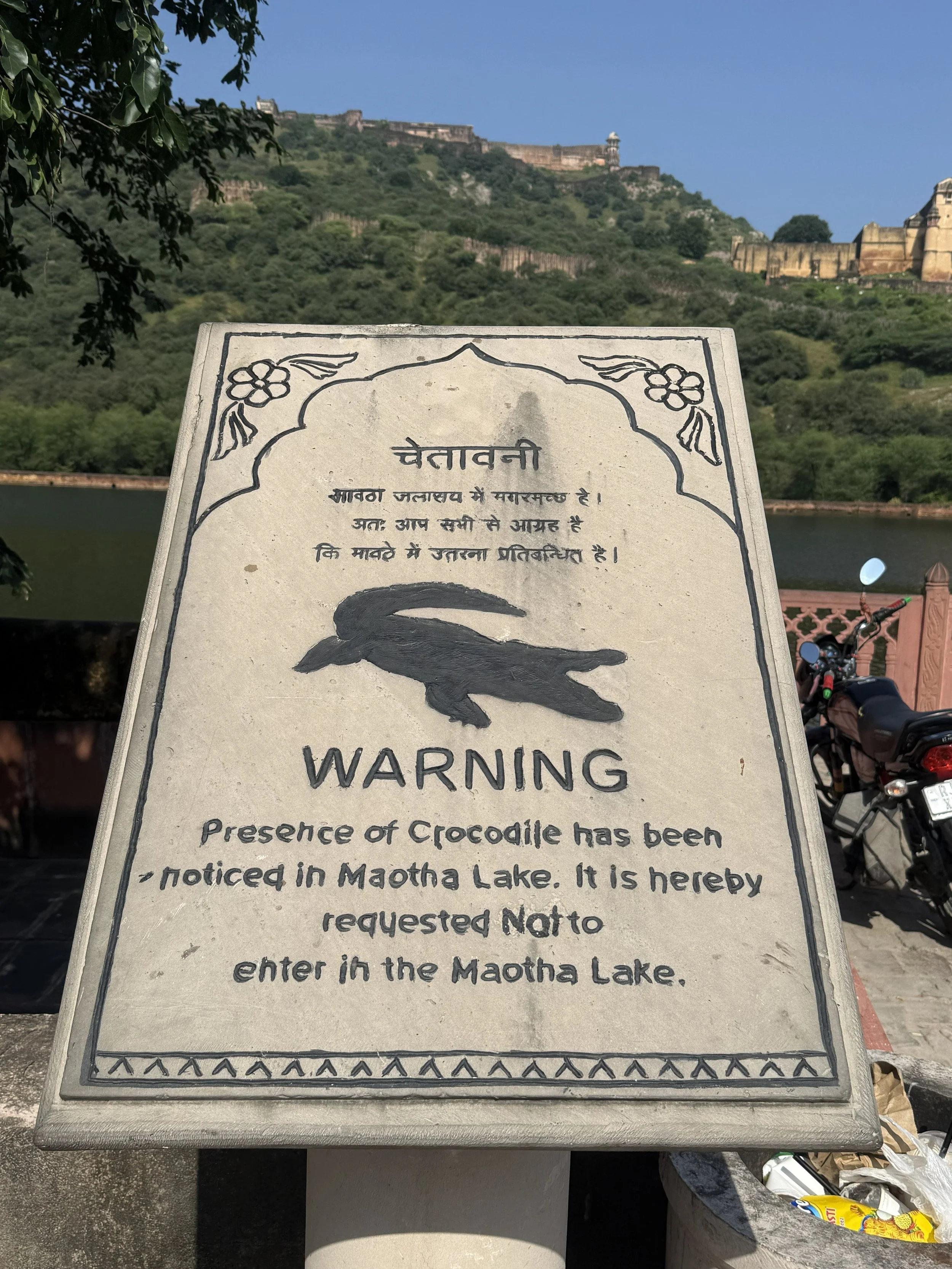
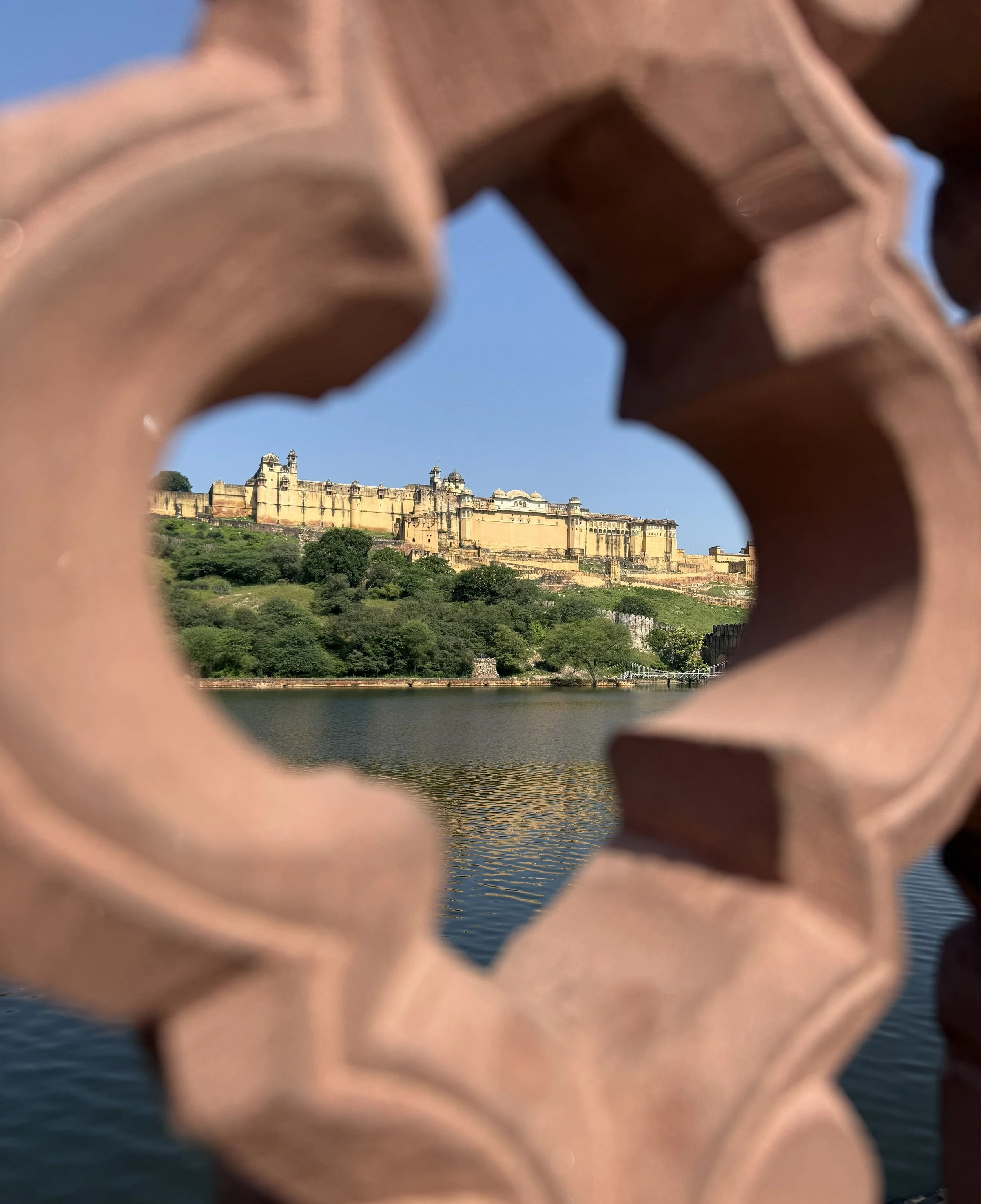
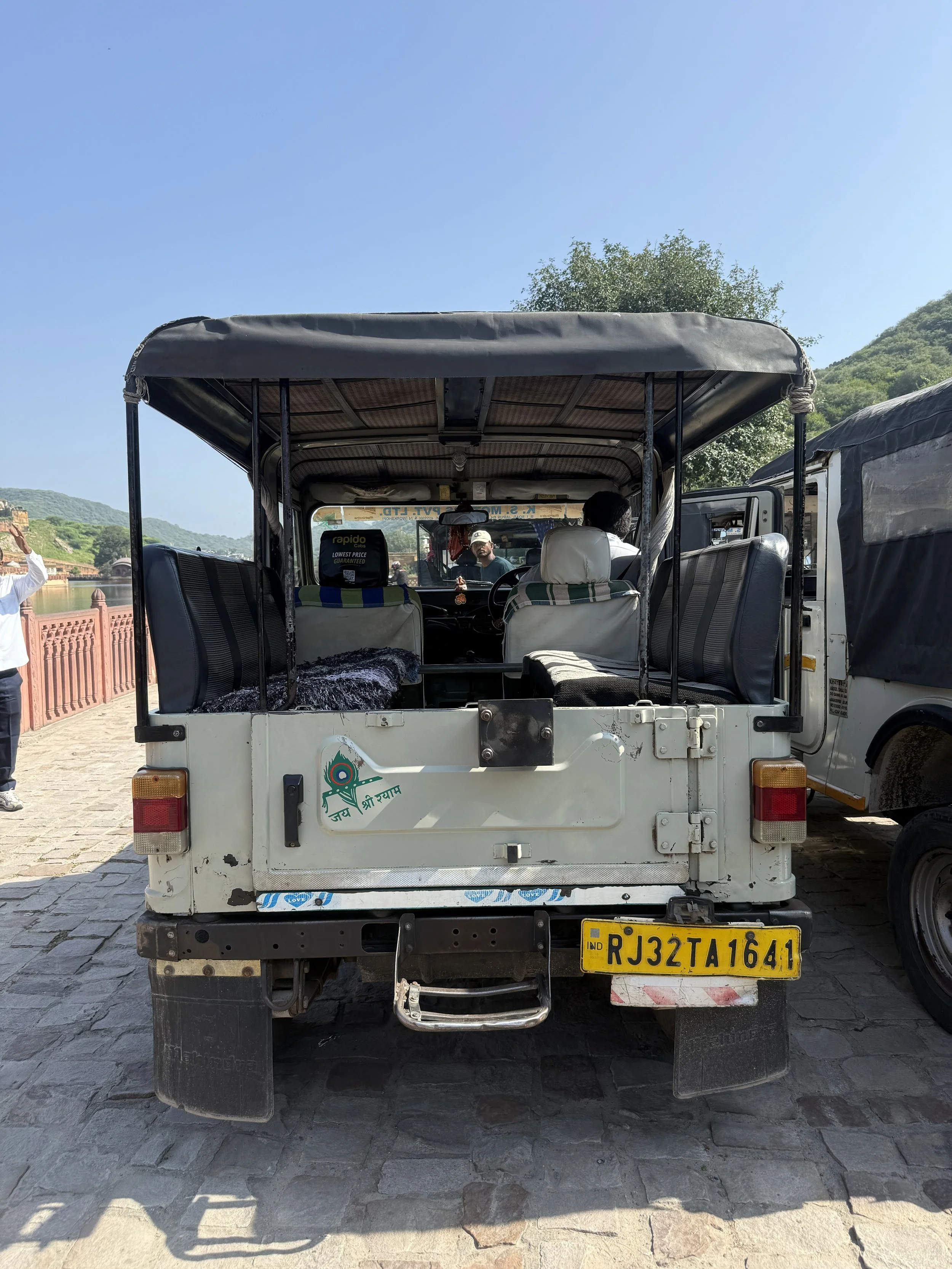
Our ride, up the steep ascent to the top.
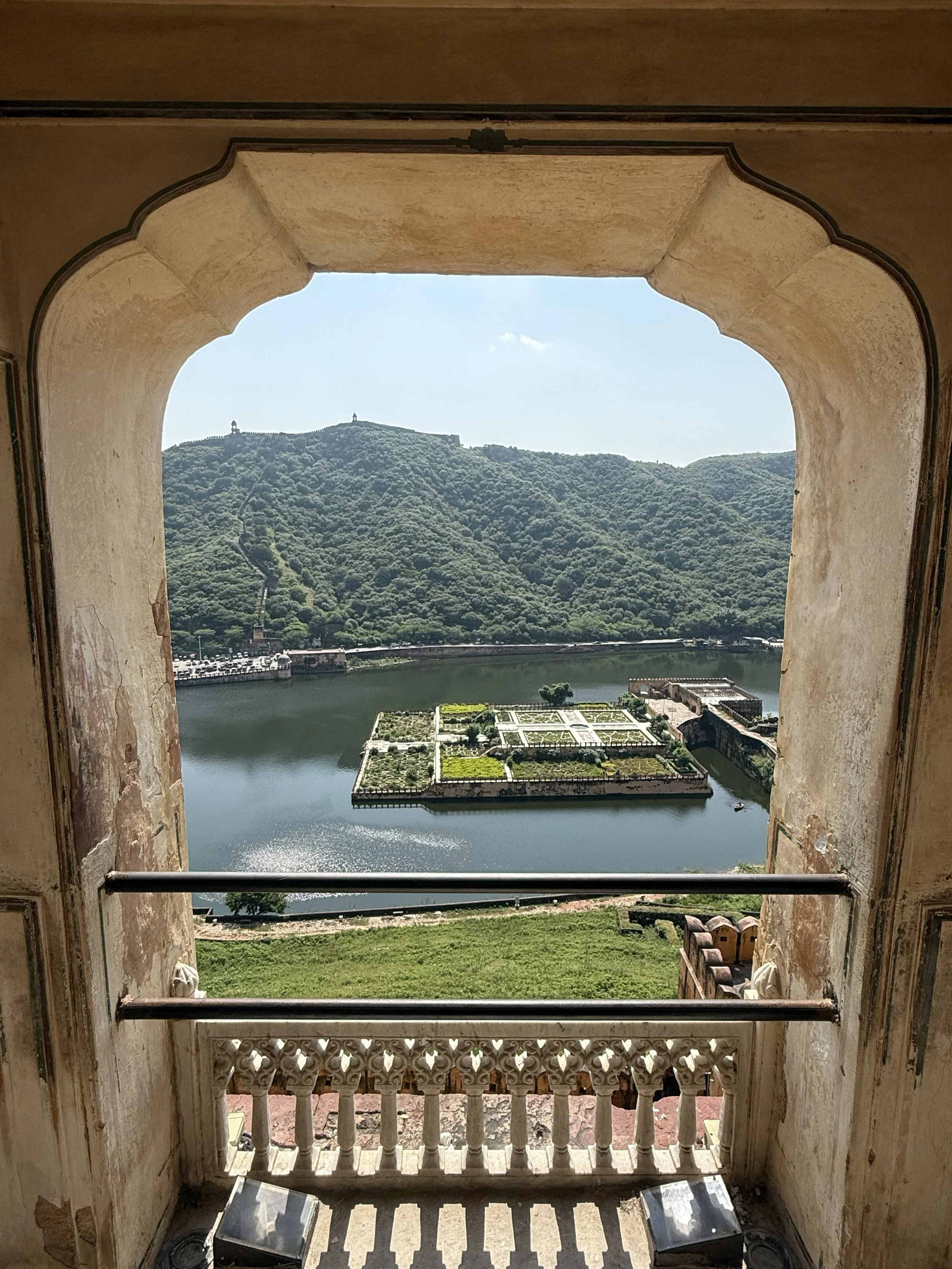
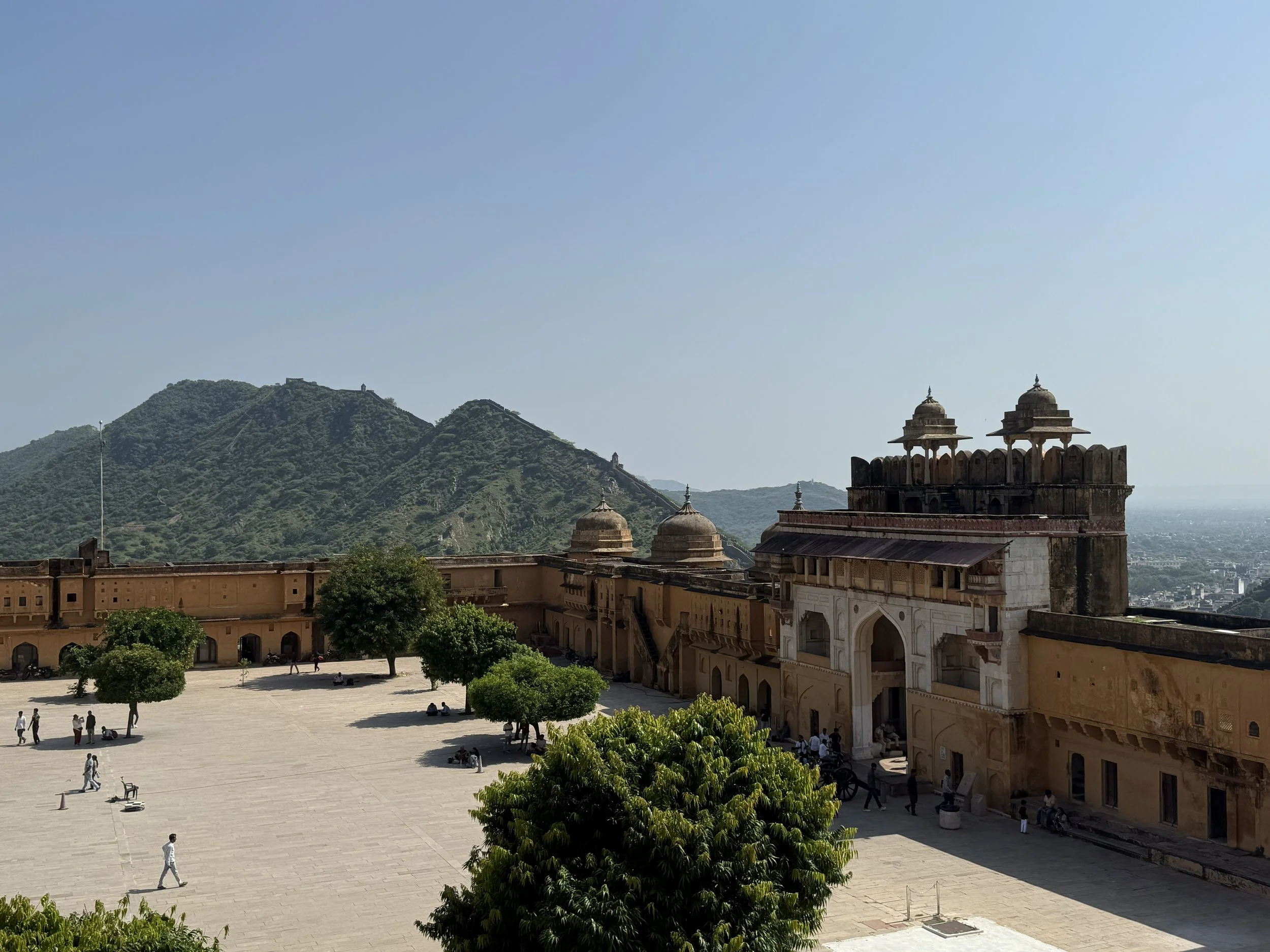
The massive fort is known for its beautiful courtyards, intricate carvings, and sweeping views of the surrounding countryside.
The next morning, we were off to Udaipur. A short flight on a small prop plane brought us to the beautiful "City of Lakes," our final stop in Rajasthan.
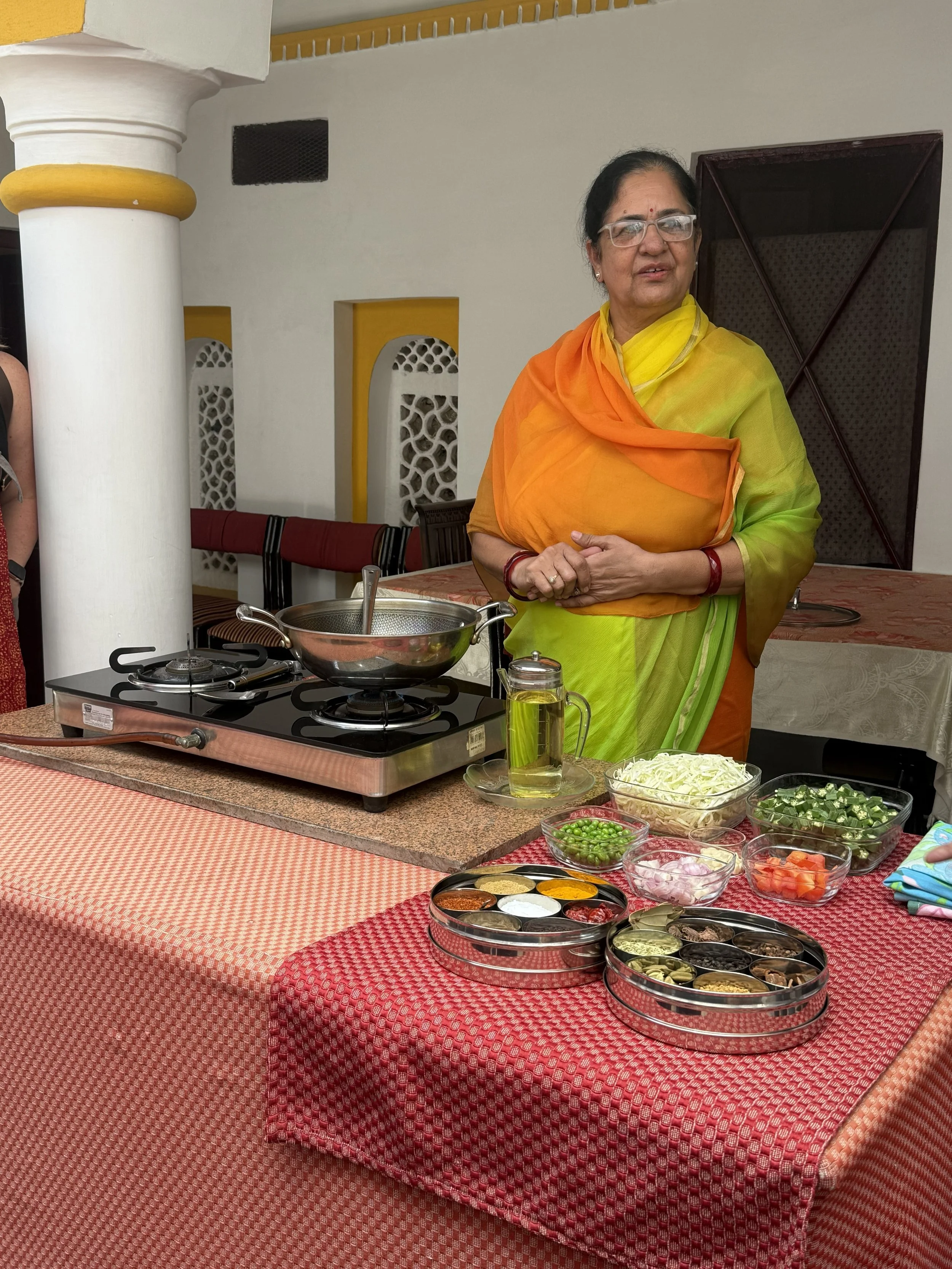
We spent the afternoon in a local family's home, learning how to prepare traditional dishes before sitting down together for a delicious homemade lunch.
That afternoon, we visited Udaipur's City Palace, which was filled with stunning courtyards, intricate details, and centuries of history. Construction began in 1559 under Maharana Udai Singh II, the founder of Udaipur.
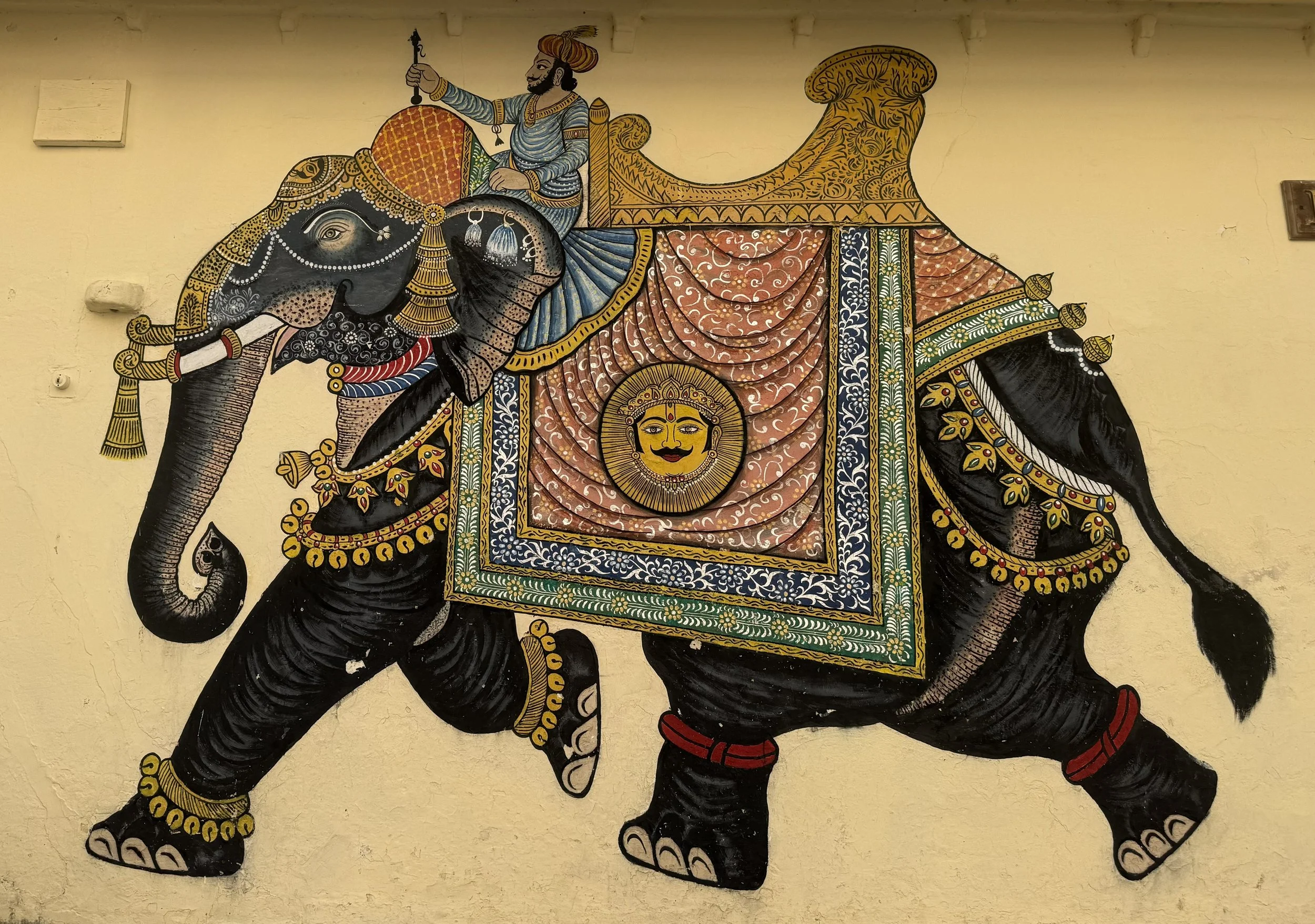
So much of the palace is covered in intricate paintings, mosaics, mirror work, and colorful tiles, the walls themselves are works of art.
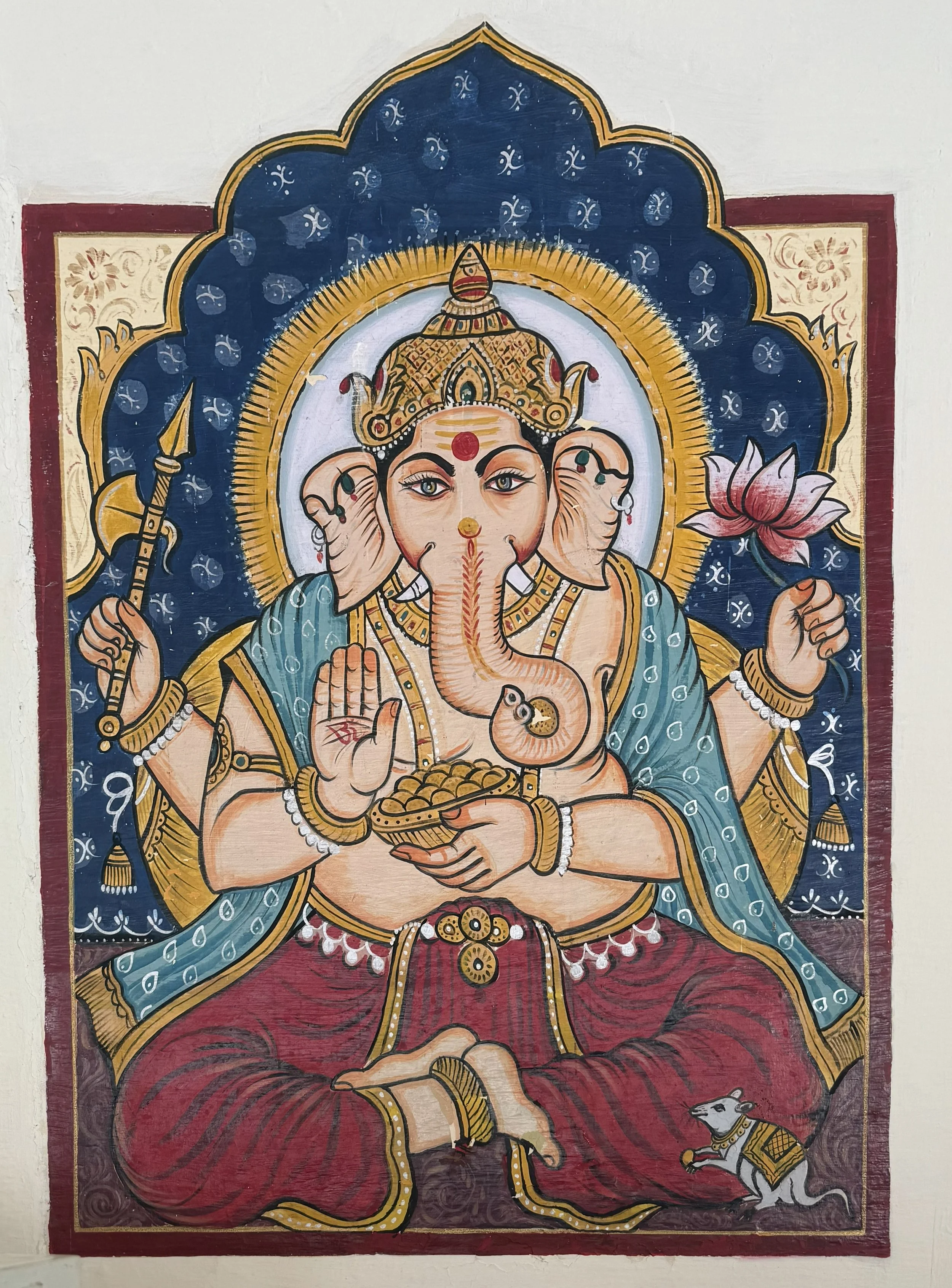
Lord Ganesha, the elephant-headed god, is known as the remover of obstacles and the god of new beginnings, making him one of the most beloved deities in Hinduism.
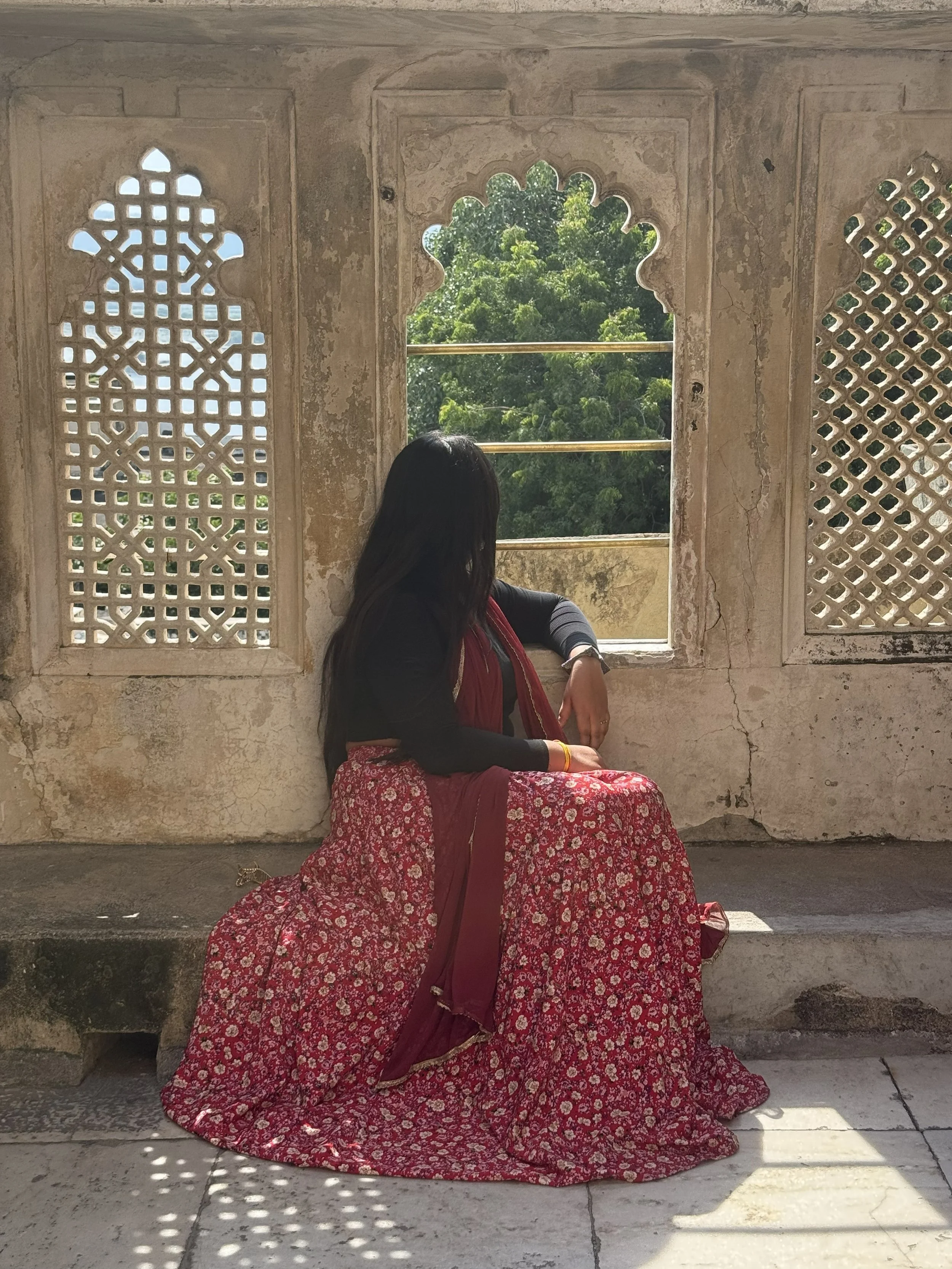
Many of the small windows and balconies were designed so members of the royal household could observe life below while maintaining privacy.
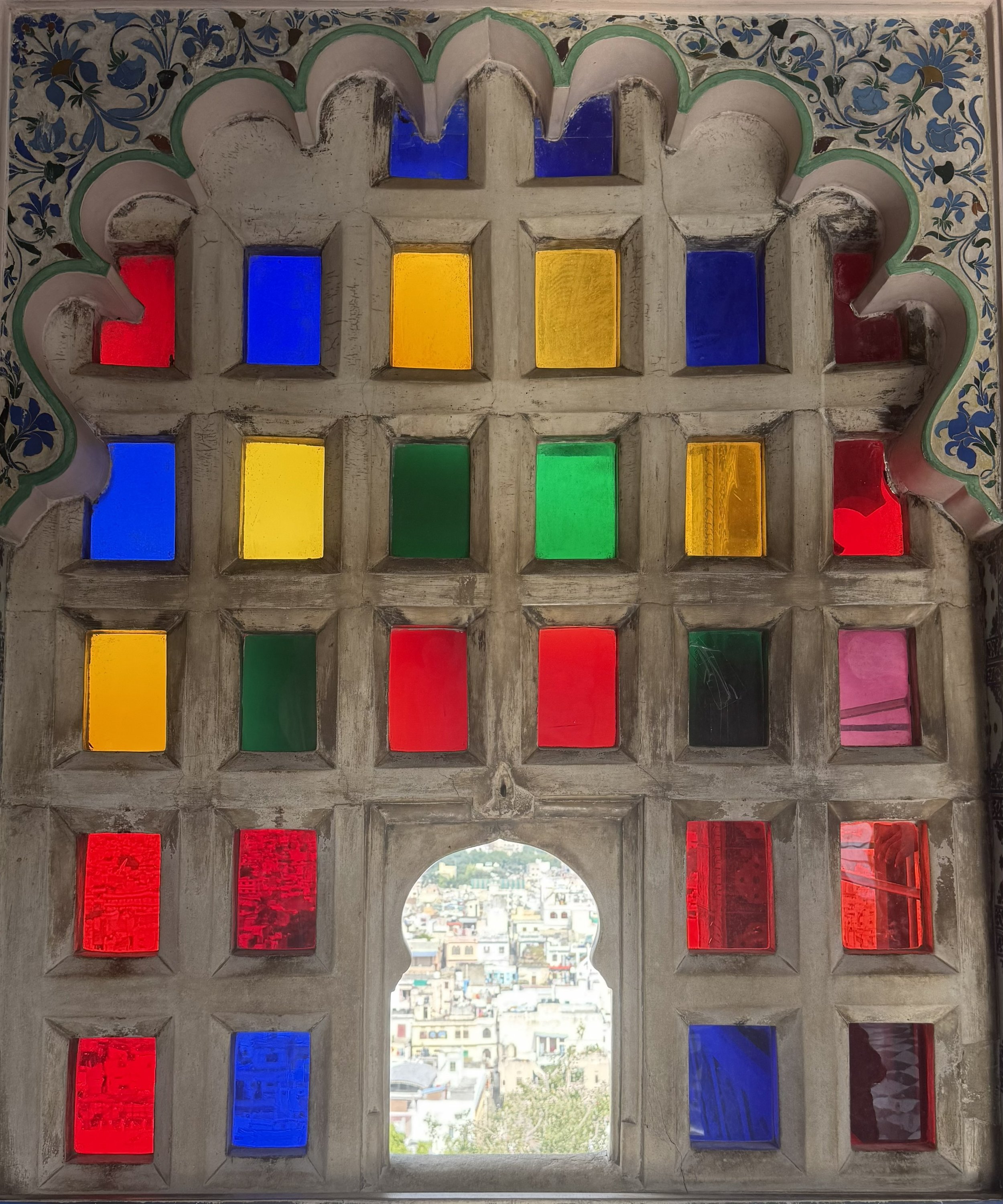
Colored glass and mirrors were used throughout the palace to reflect light and create beautiful patterns.
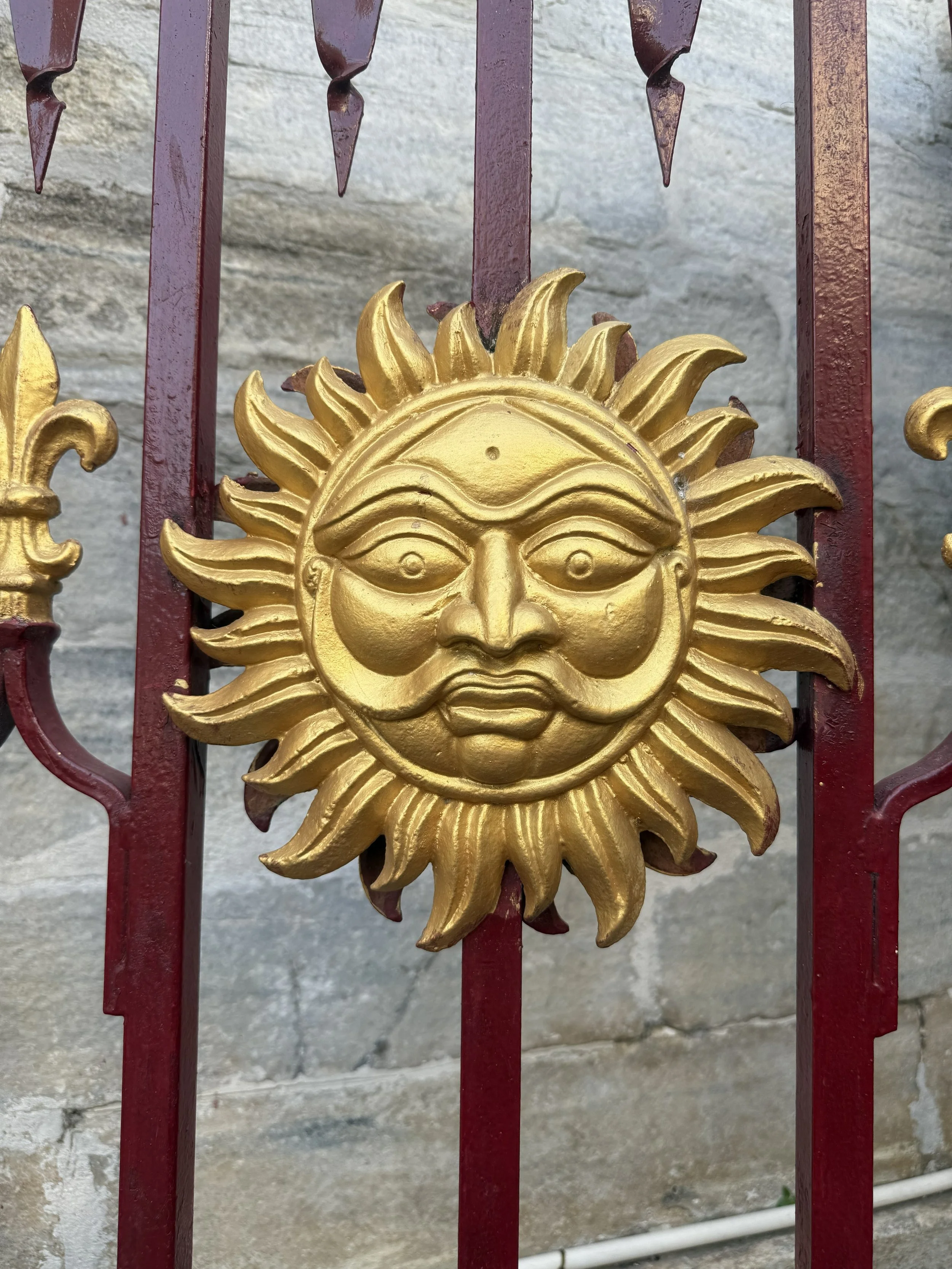
The golden sun is the royal emblem of the Mewar dynasty, whose rulers believed they were descendants of the Hindu Sun God, Surya.
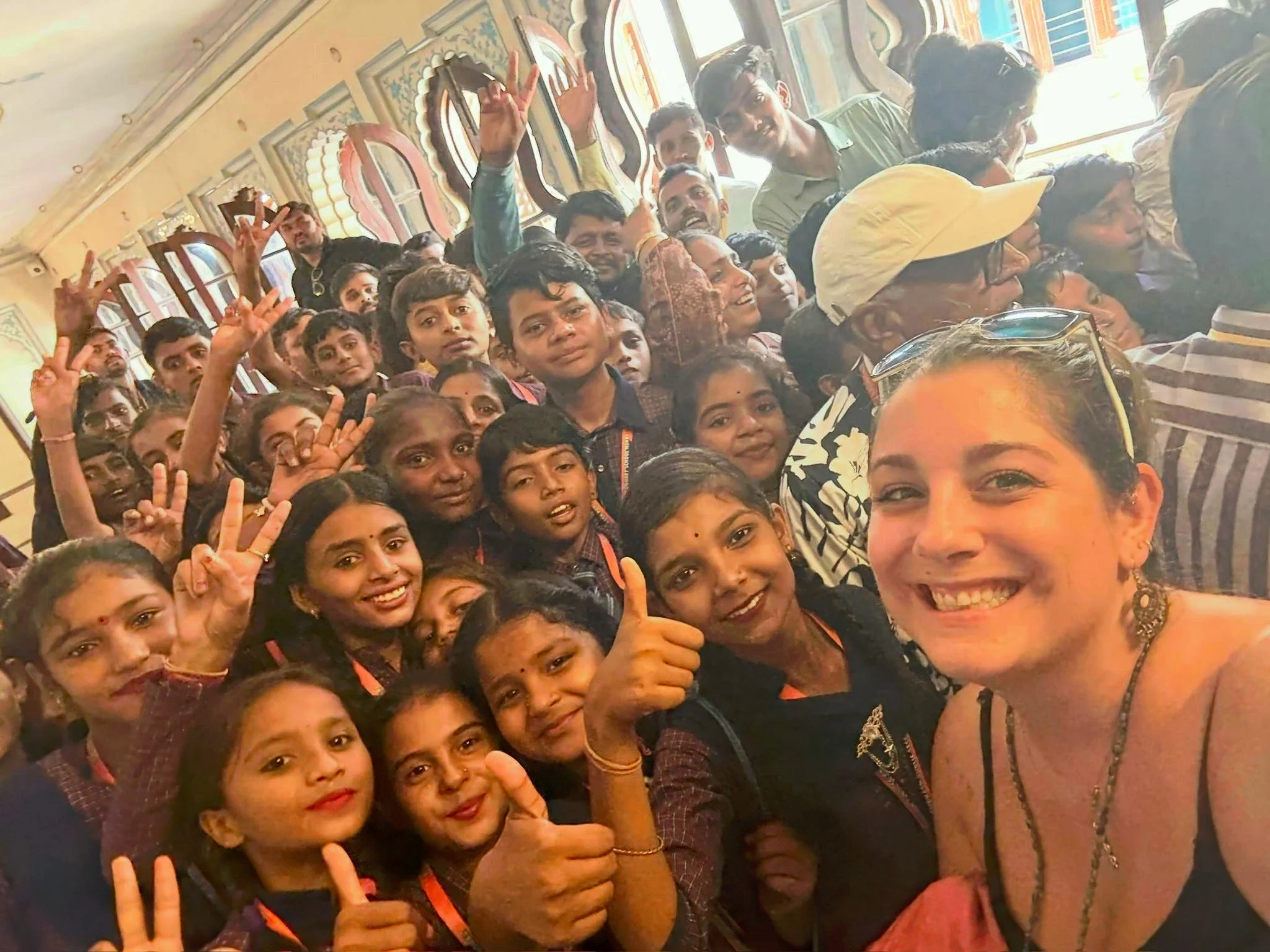
As we explored the palace, I was stopped by a school group who wanted to take a selfie with me. It was such a fun and unexpected moment.
After exploring the City Palace, we headed to our hotel for the next two nights, The Leela Palace Udaipur. The only way to arrive is by boat, so we boarded a private launch for the short ride across beautiful Lake Pichola.
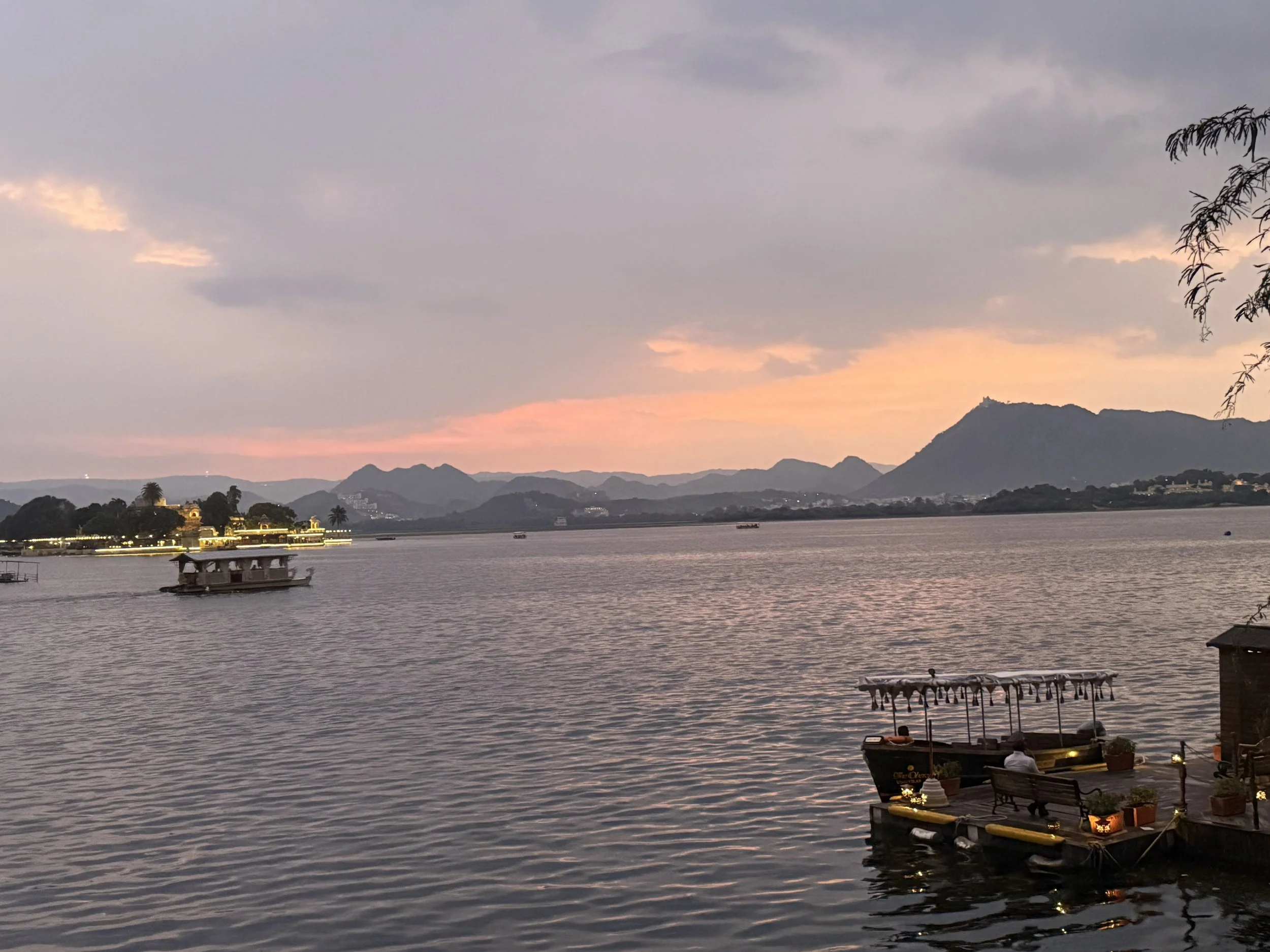
Such a beautiful sunset while waiting for our boat.
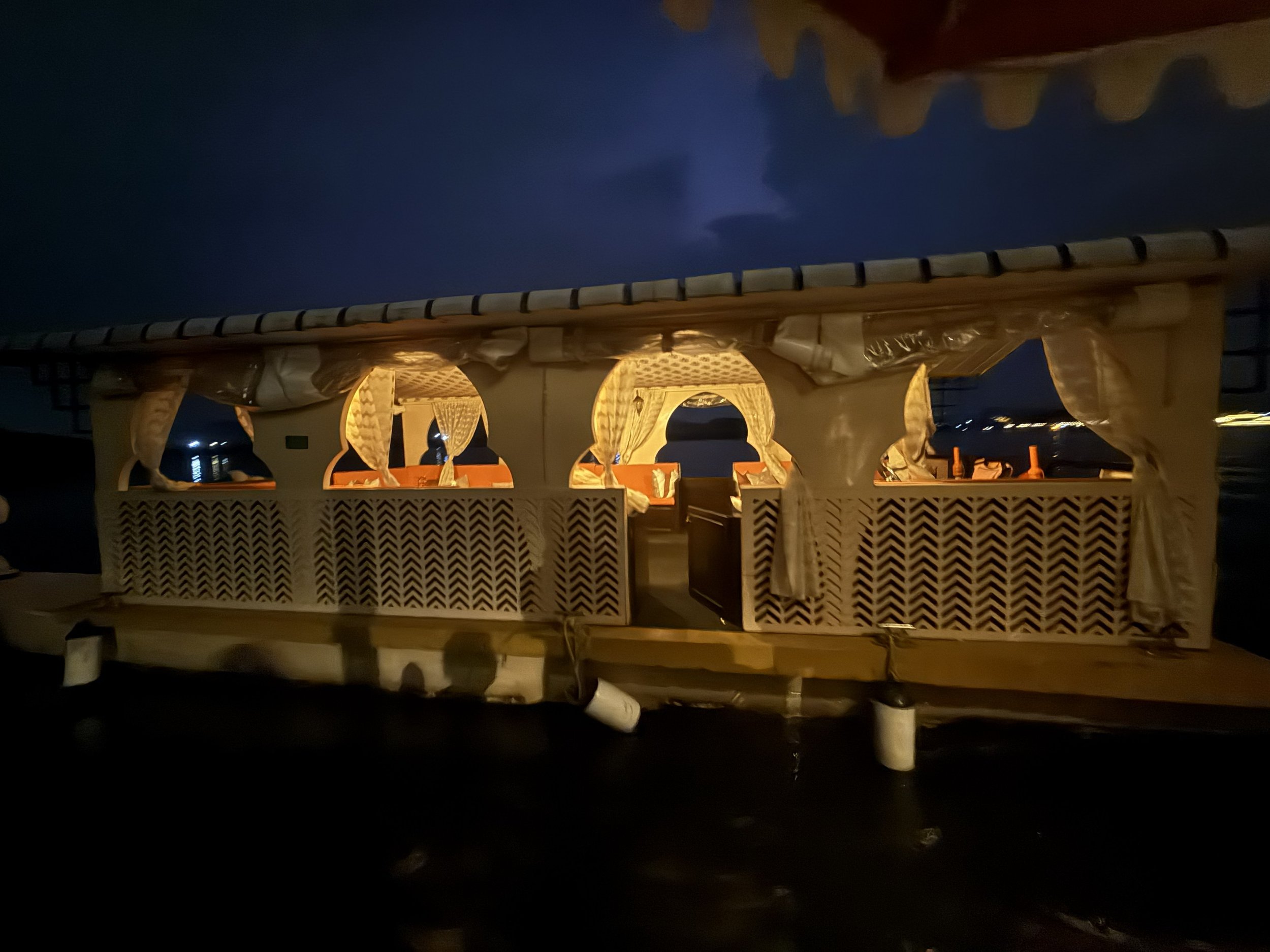
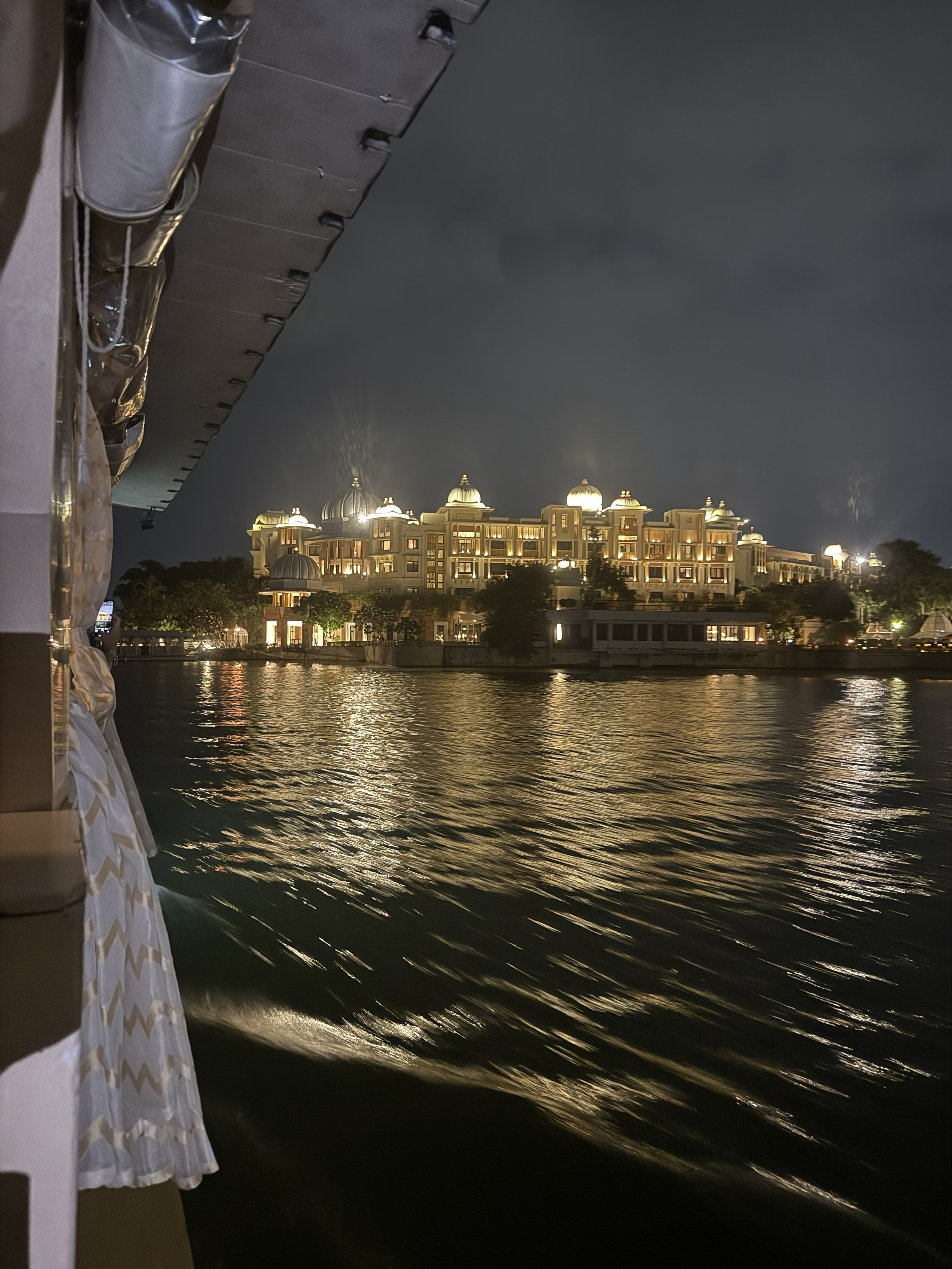
Our grand arrival from the water was absolutely breathtaking.
From the moment we arrived, the service at The Leela Palace was truly exceptional, and is consistently ranked among the world's top luxury hotels.
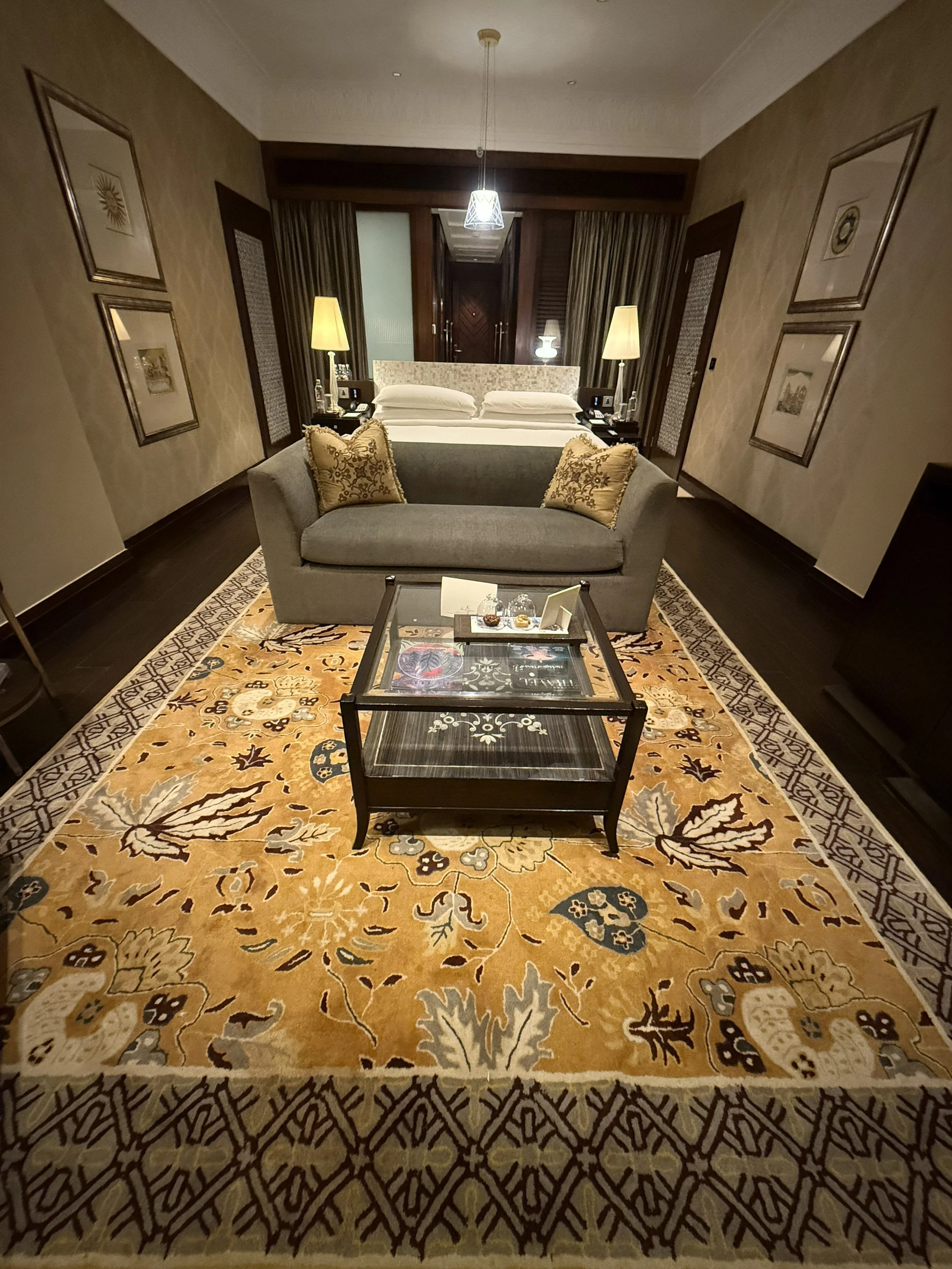
Every room at The Leela Palace blends traditional Rajasthani design with modern luxury.
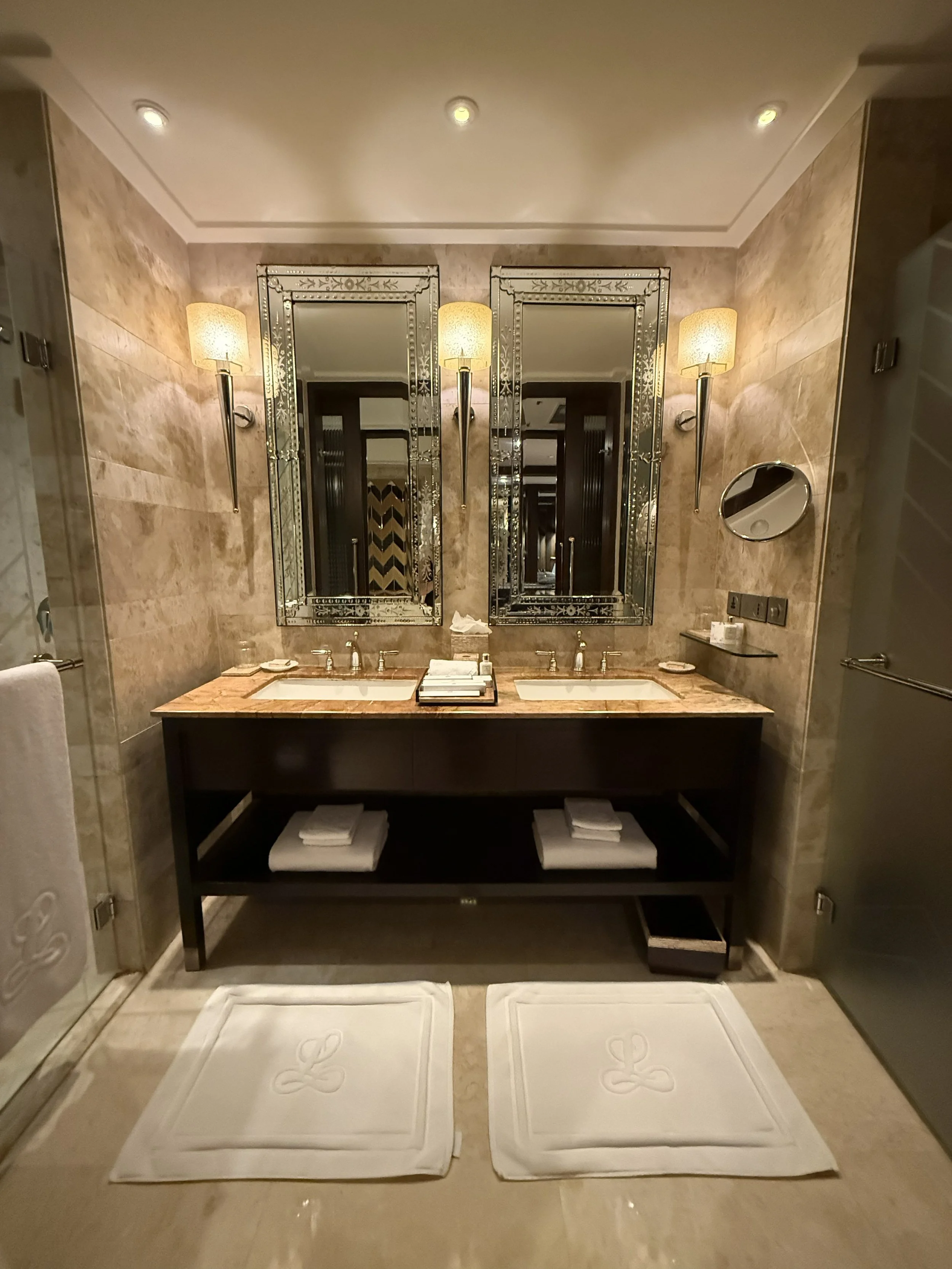
The marble bathrooms were just as stunning as the bedrooms!
I could have spent hours just sitting on this balcony, taking in the incredible views of the property and Lake Pichola.
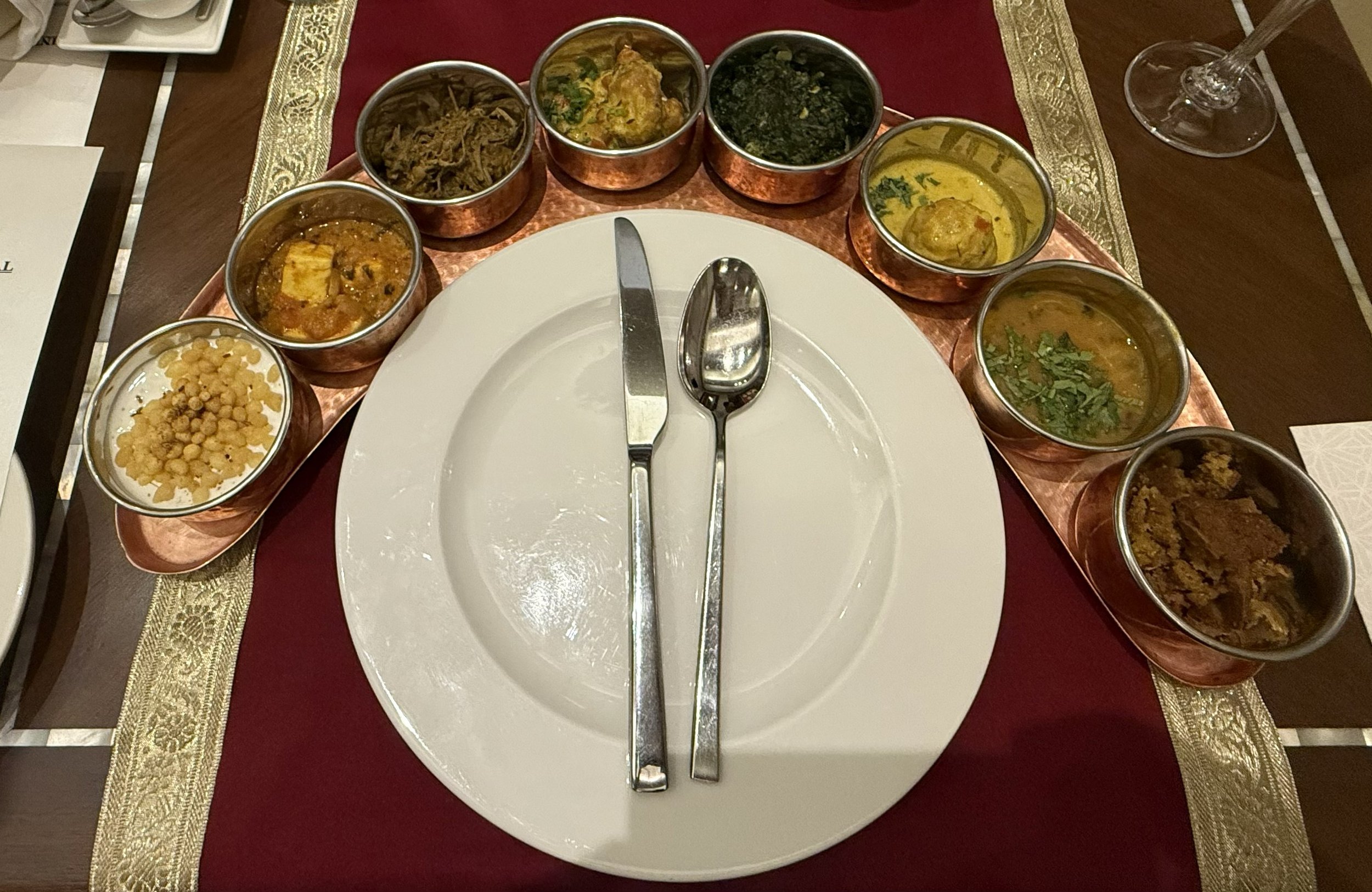
That evening, we enjoyed a wonderful dinner showcasing the traditional flavors and specialties of the Udaipur region.
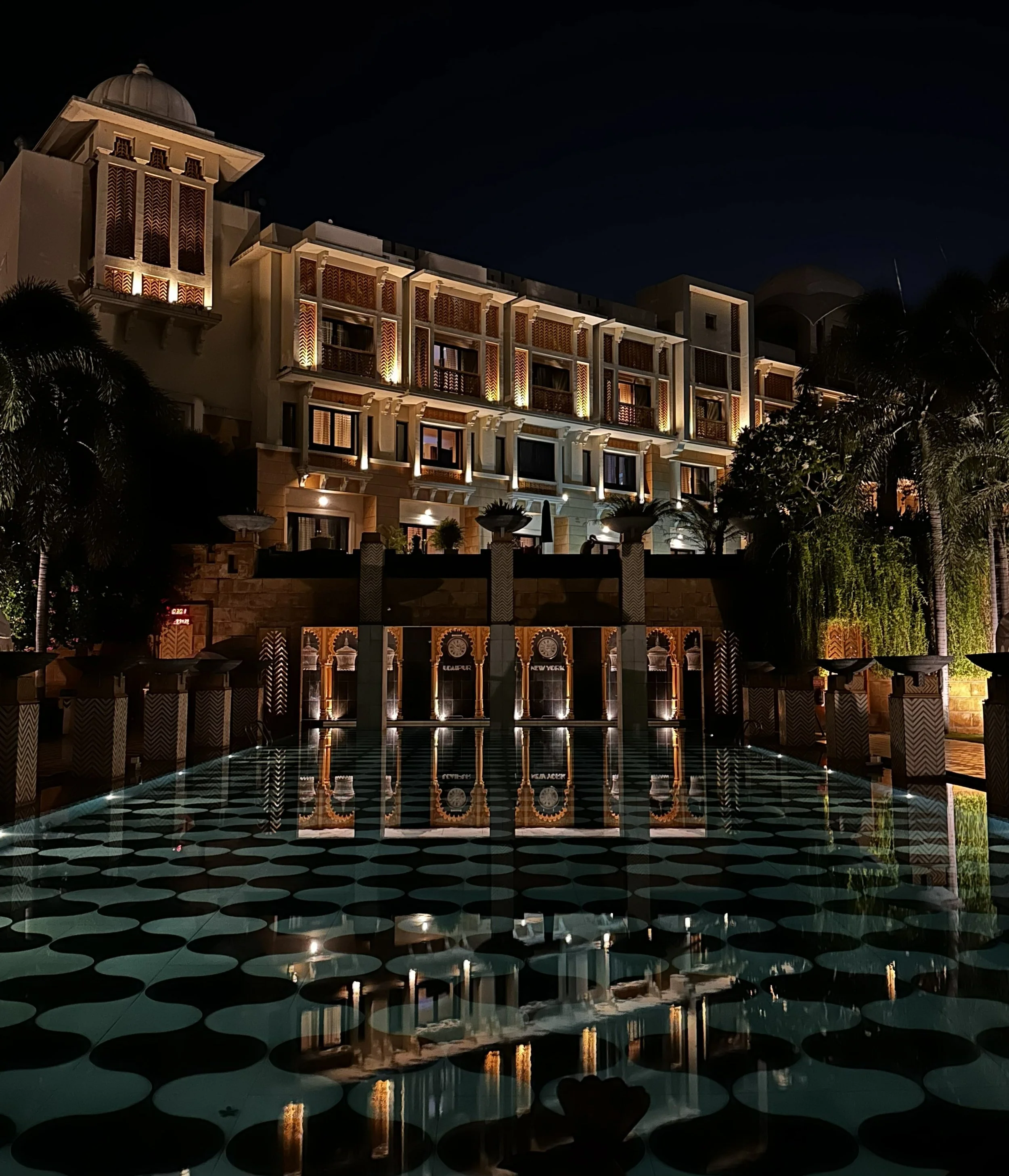
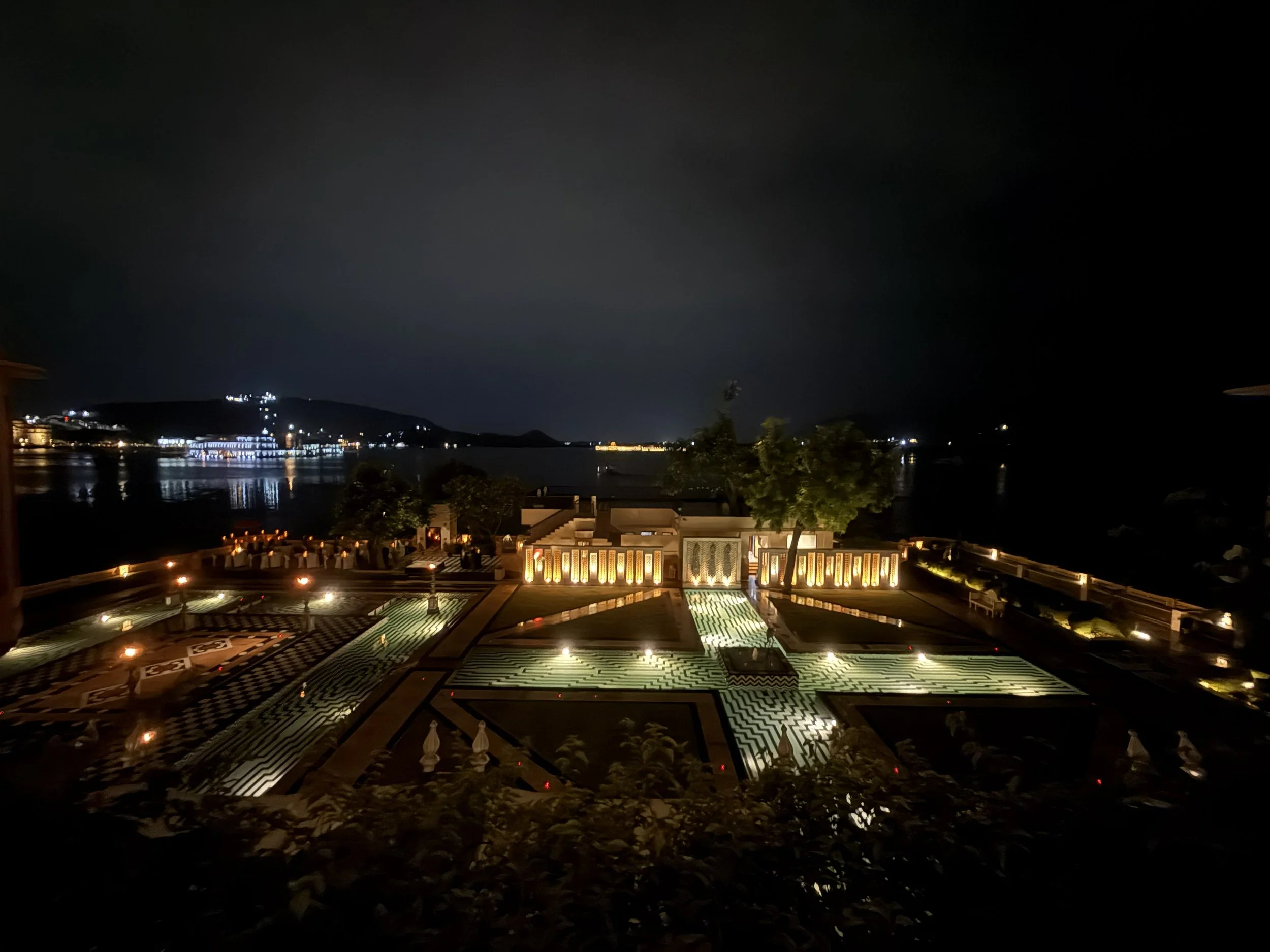
Walking the grounds after dinner was one of my favorite parts of the stay. The palace looked absolutely spectacular at night.
Our first stop of the day was the ancient ruins of Nagda, home to the 10th-century Sahastra Bahu (Sas-Bahu) Temples. Dedicated to Lord Vishnu, the temples are famous for their intricate stone carvings and remarkable craftsmanship. I've visited ancient sites throughout Thailand and Cambodia, and exploring places like this is one of my favorite parts of traveling.
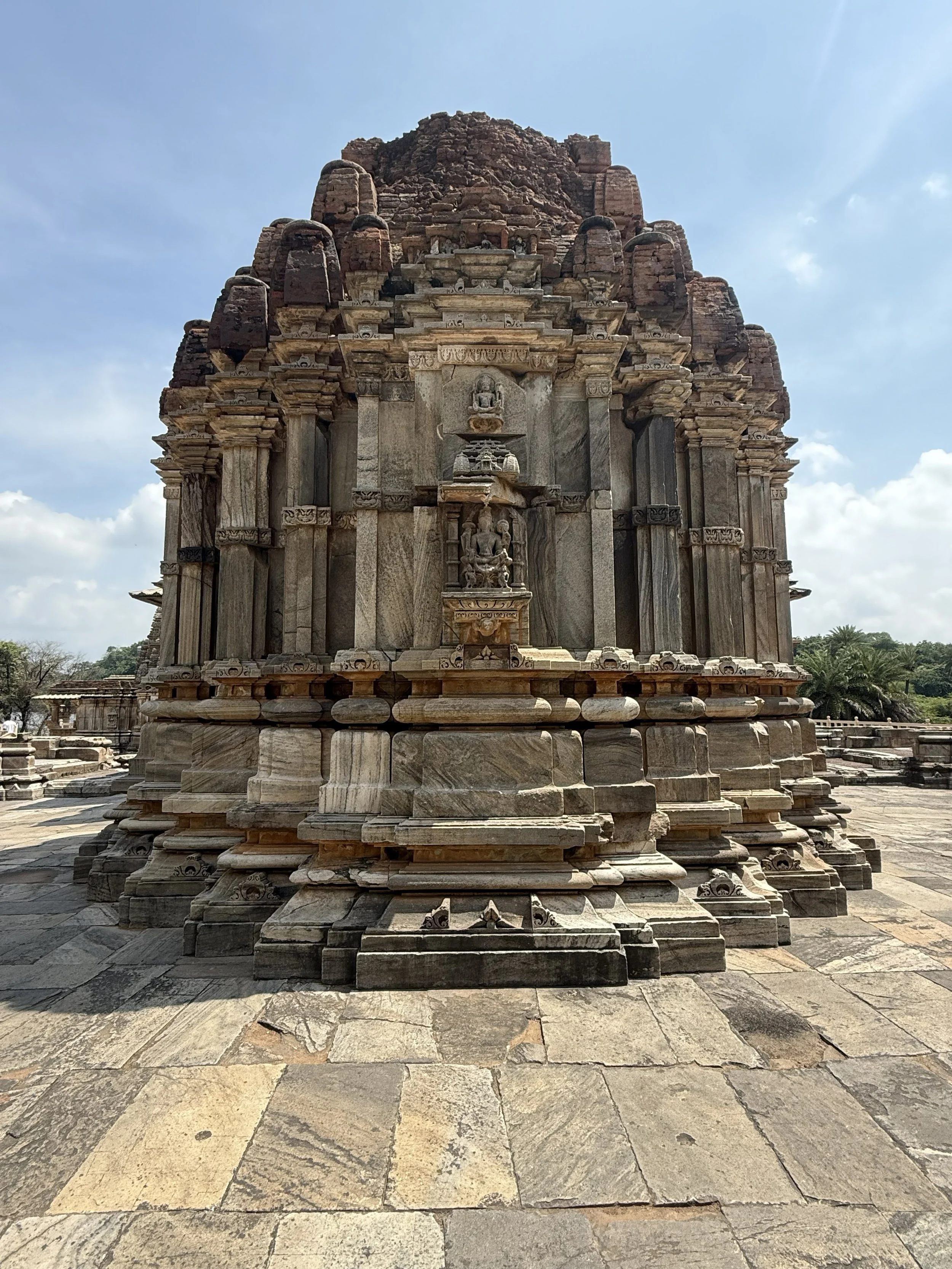
Nagda was once the thriving capital of the Mewar kingdom before Udaipur was founded.
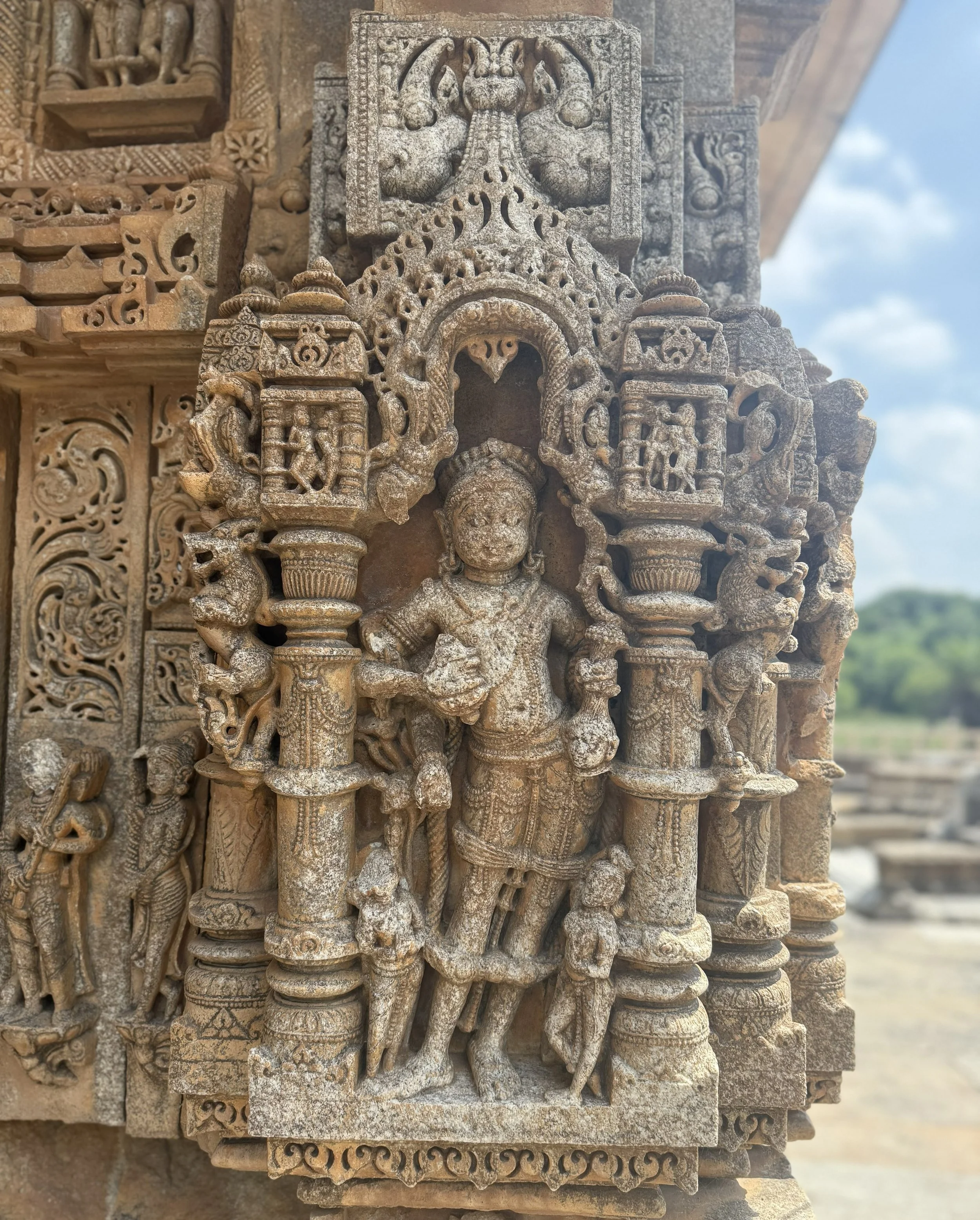
Every wall, pillar, and arch is covered with incredibly detailed stone carvings. Nearly 1,000 years later, the craftsmanship remains breathtaking… It's amazing to think every detail was carved by hand centuries ago!
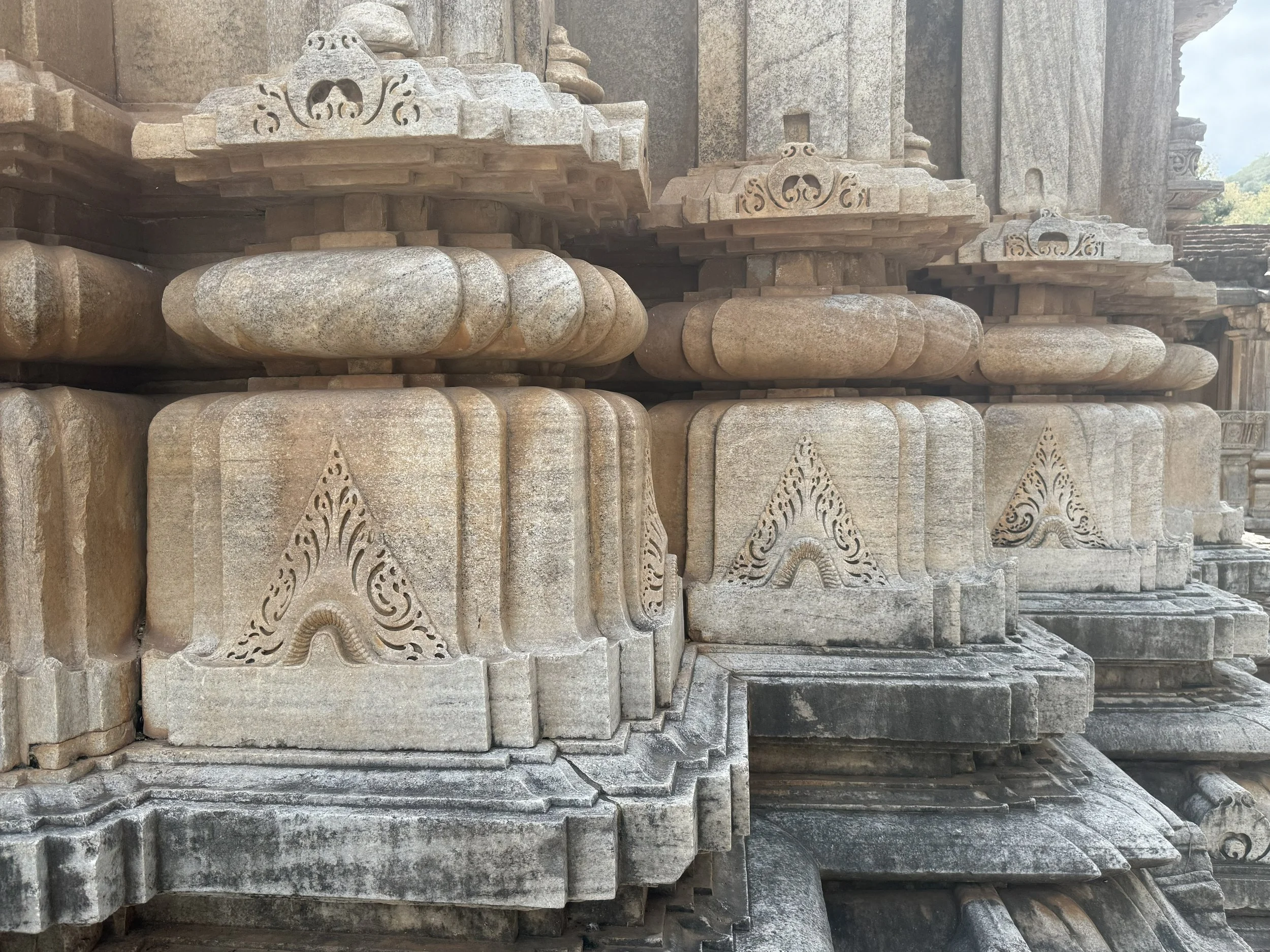
The ruins were damaged during an invasion in 1226, but their beauty still shines through today.
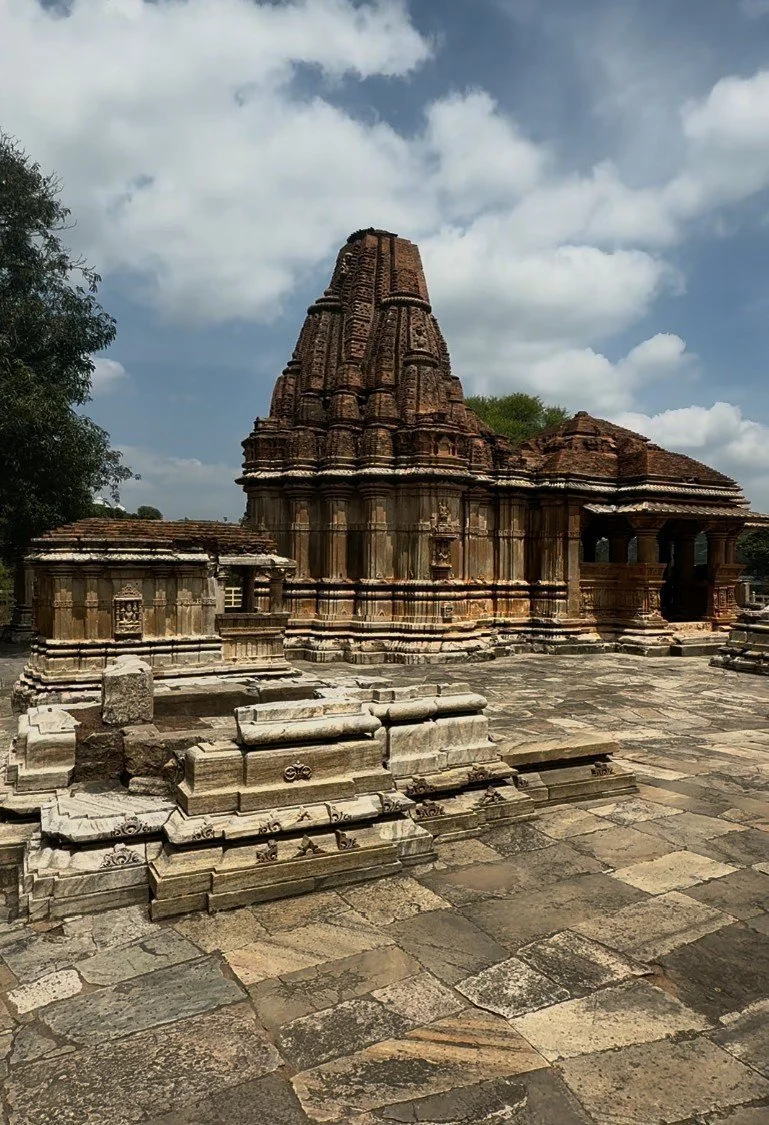
The weathered ruins tell the story of one of Rajasthan's oldest civilizations.
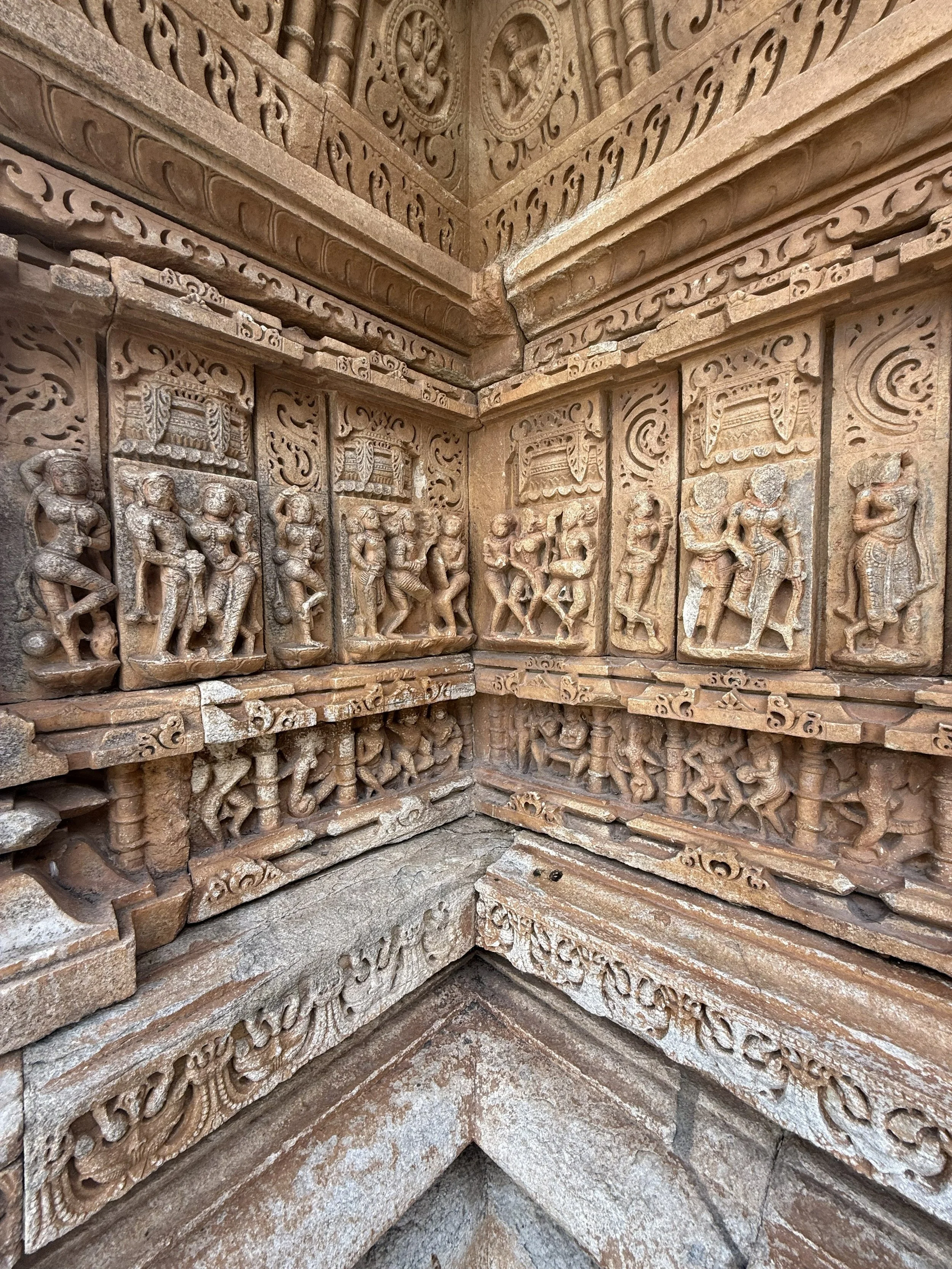
The intricate carvings depict Hindu deities, dancers, musicians, and scenes from everyday life.
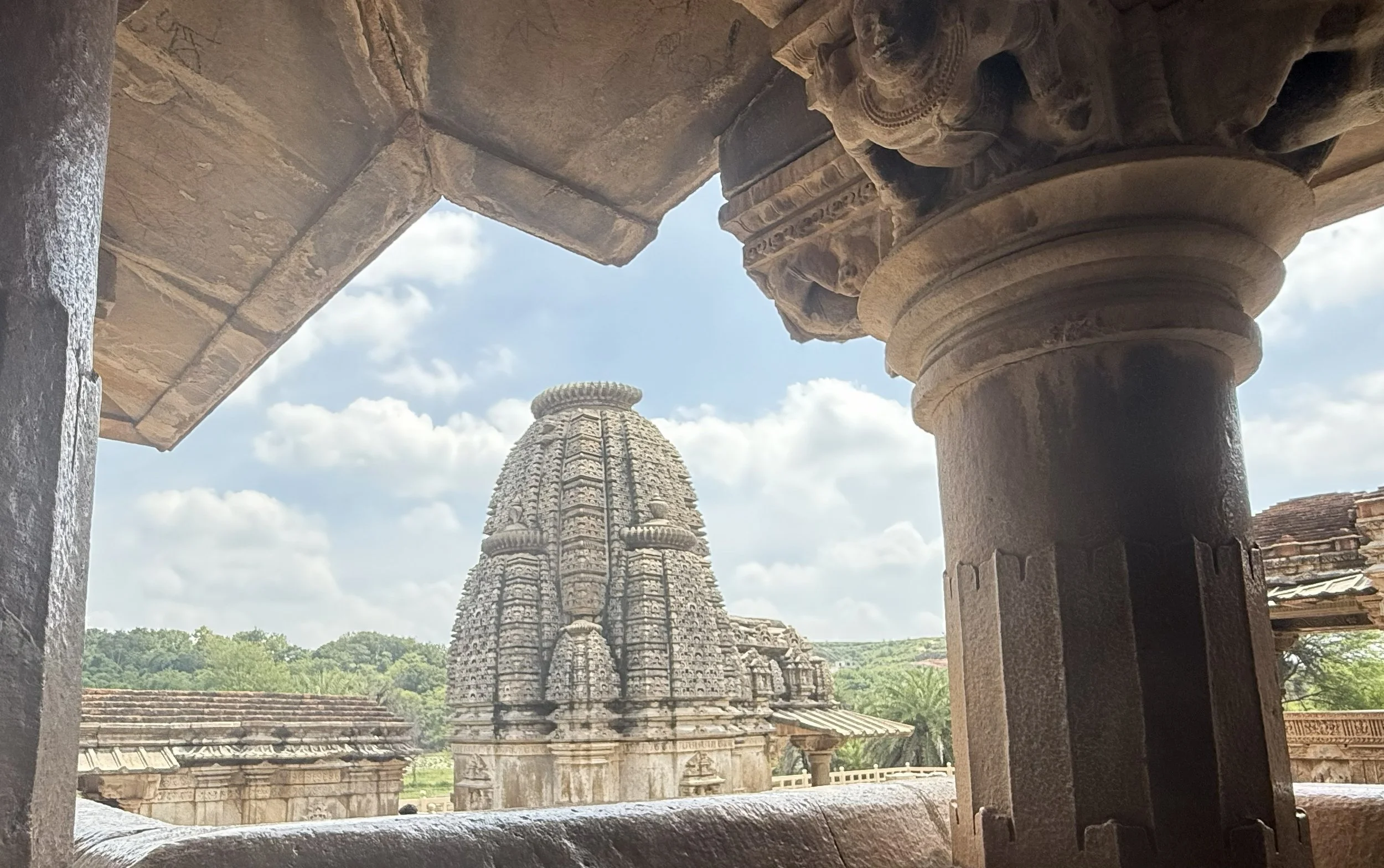
Even in ruins, the temples remain one of Rajasthan's architectural masterpieces.
That evening, we cruised across the peaceful waters of Lake Pichola before ending the day with a visit to the iconic Taj Lake Palace for dinner and a tour.
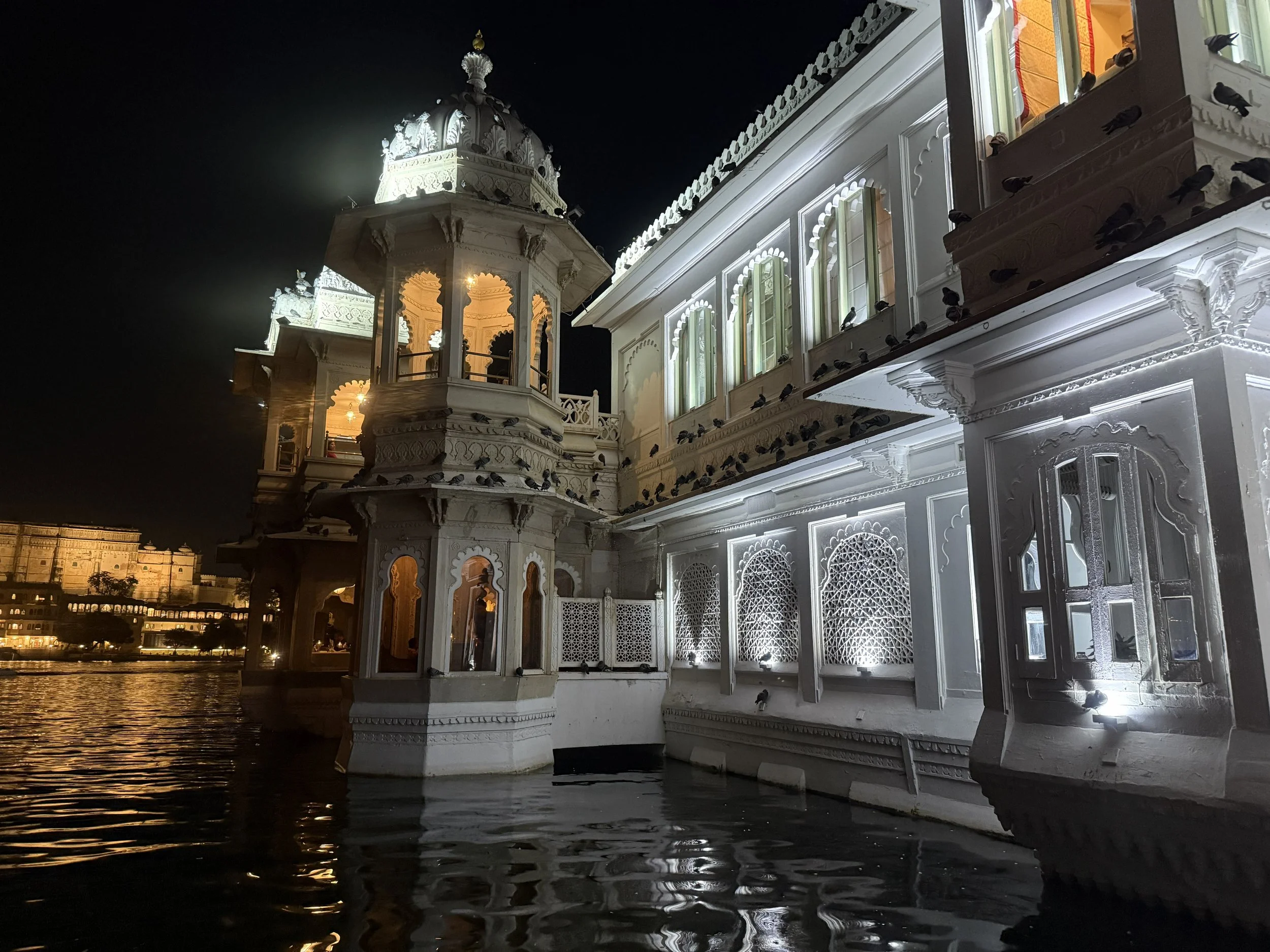
The only way to reach the Taj Lake Palace is by boat across beautiful Lake Pichola.
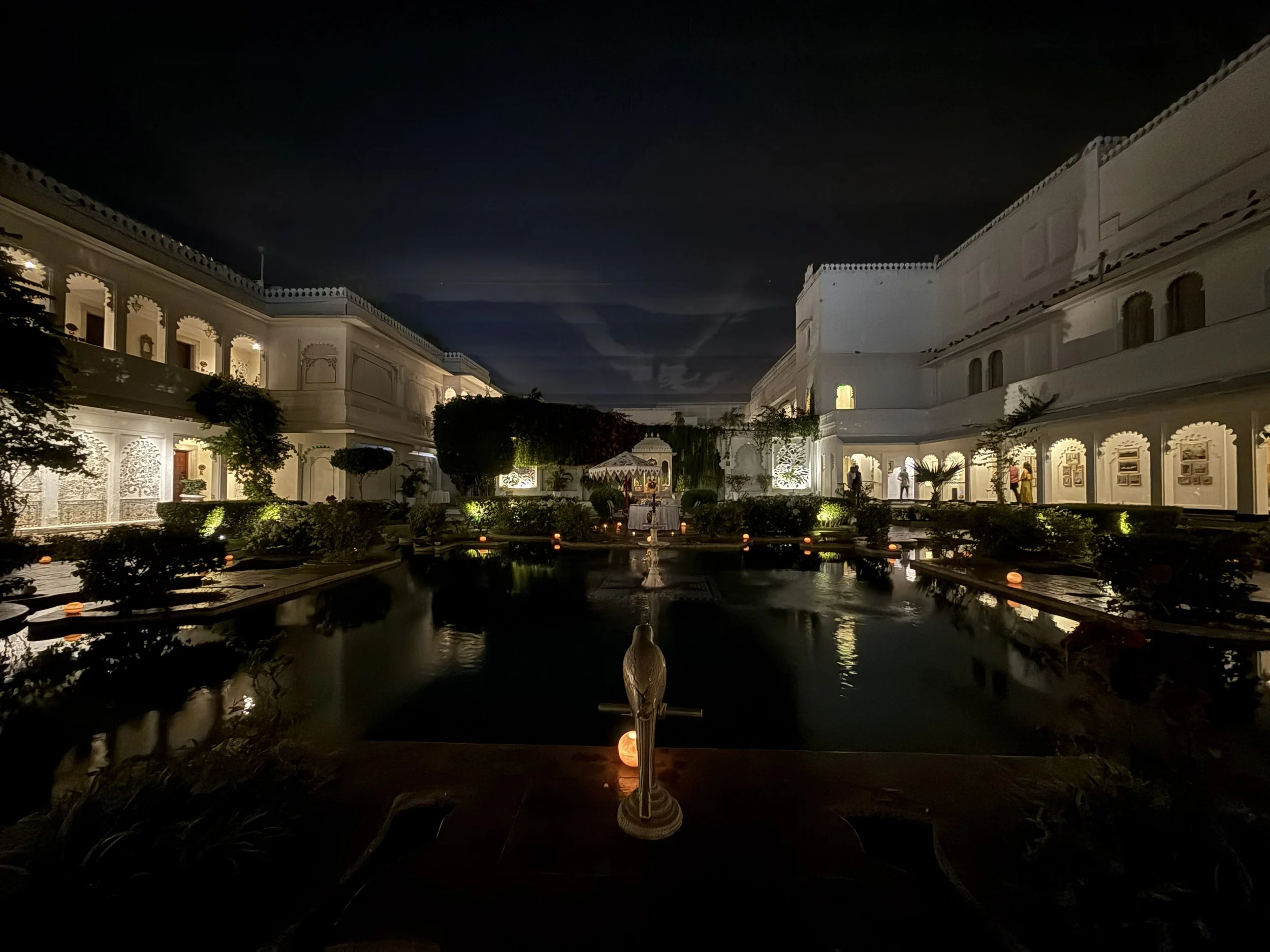
Built in 1746 as the summer palace of the Mewar royal family, the Taj Lake Palace has been welcoming guests for nearly 280 years—all while seemingly floating on the waters of Lake Pichola.
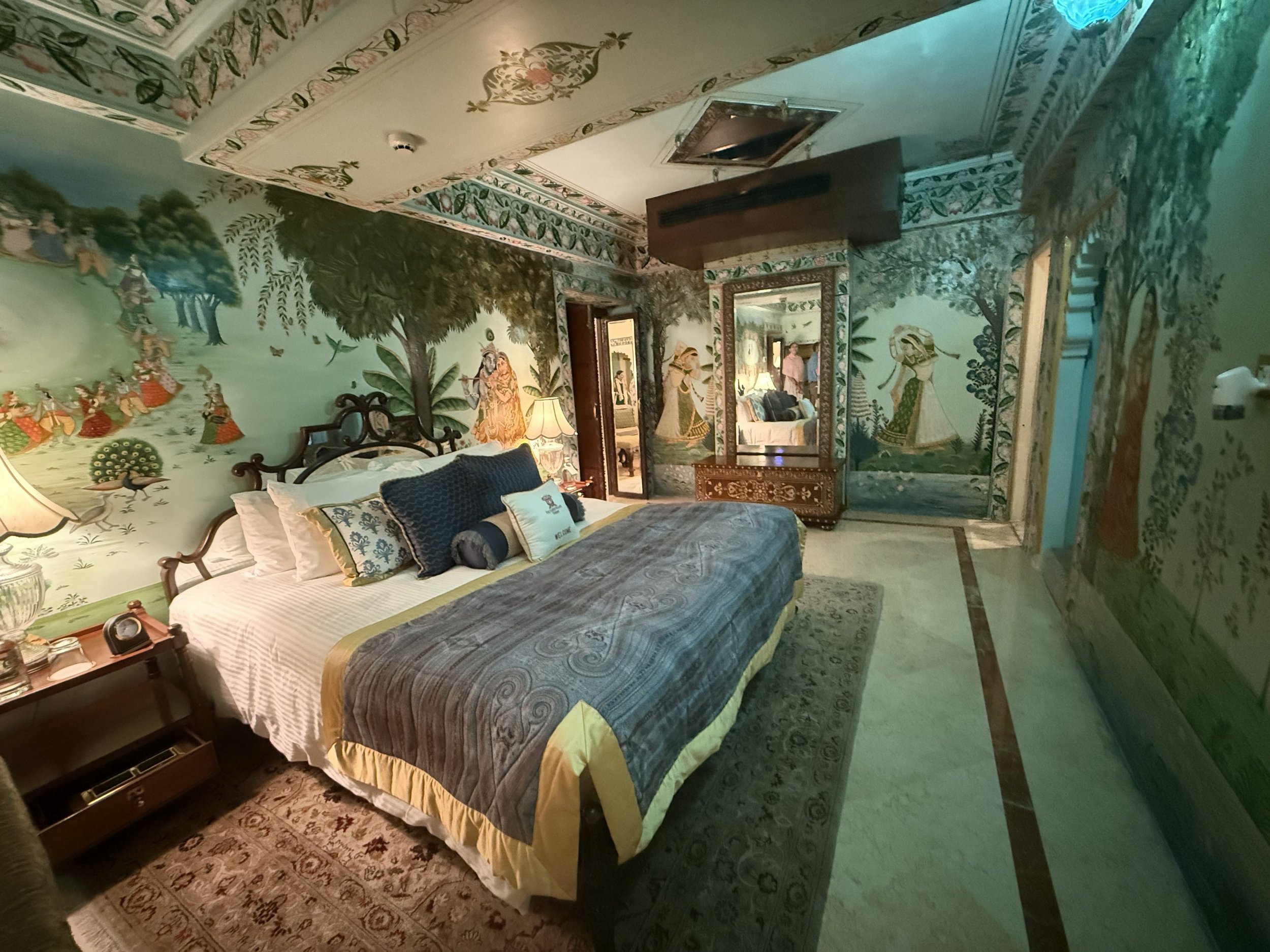
Every inch of the room was beautifully hand-painted, making it feel more like an art gallery than a hotel room.
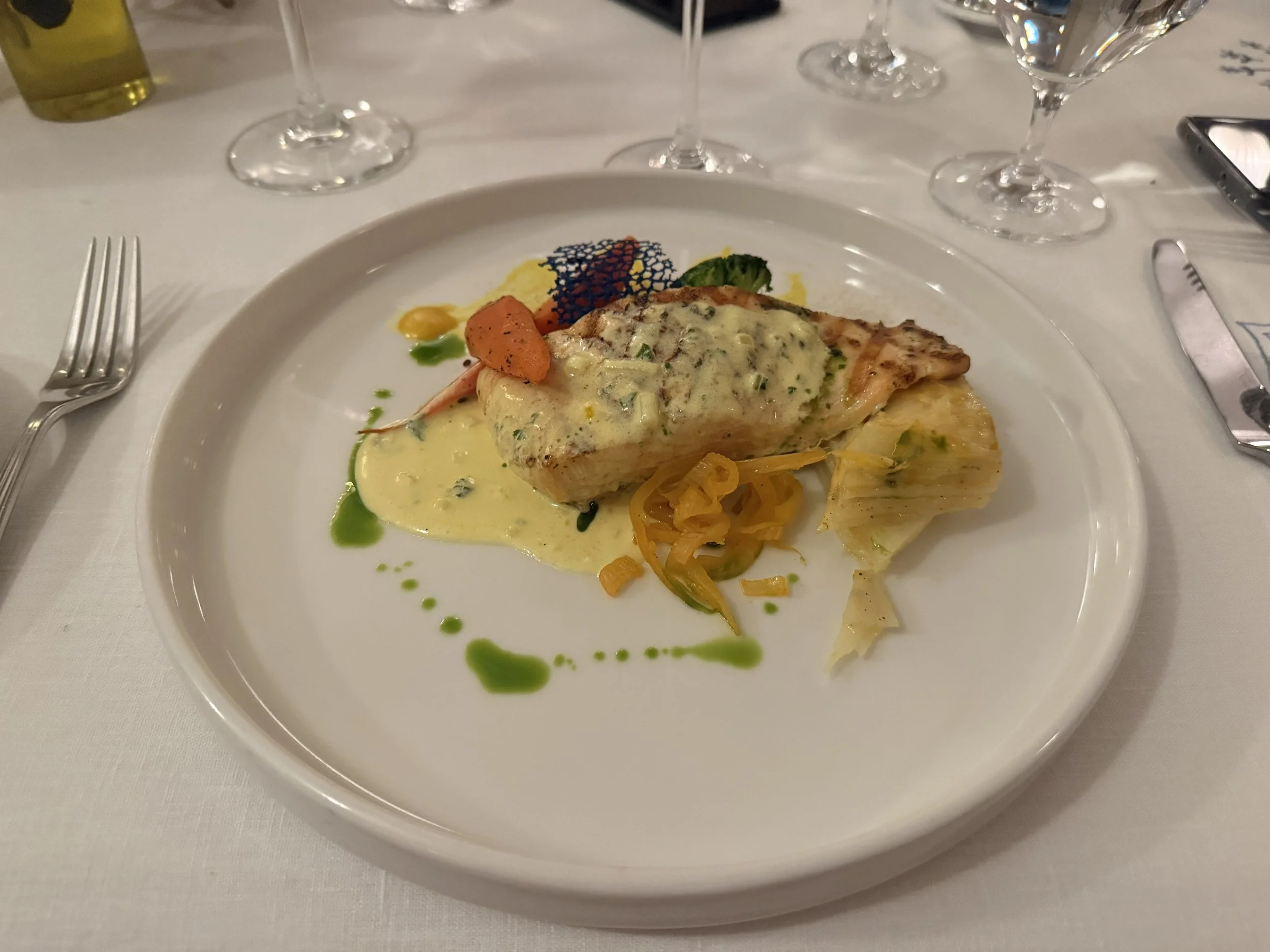
A beautiful setting, delicious food, and the perfect finale to our stay in Udaipur.
The following morning, we returned to Delhi for one final night before our flights home. After one last farewell dinner together as a group, it was time to say our goodbyes and begin the journey home, bringing our incredible Northern India adventure to a close.
India is one of those destinations that still feels real, raw, and incredibly authentic. You'll find rich culture, genuine hospitality, and moments that stay with you long after you've returned home. If you let it, India has a way of changing you.
